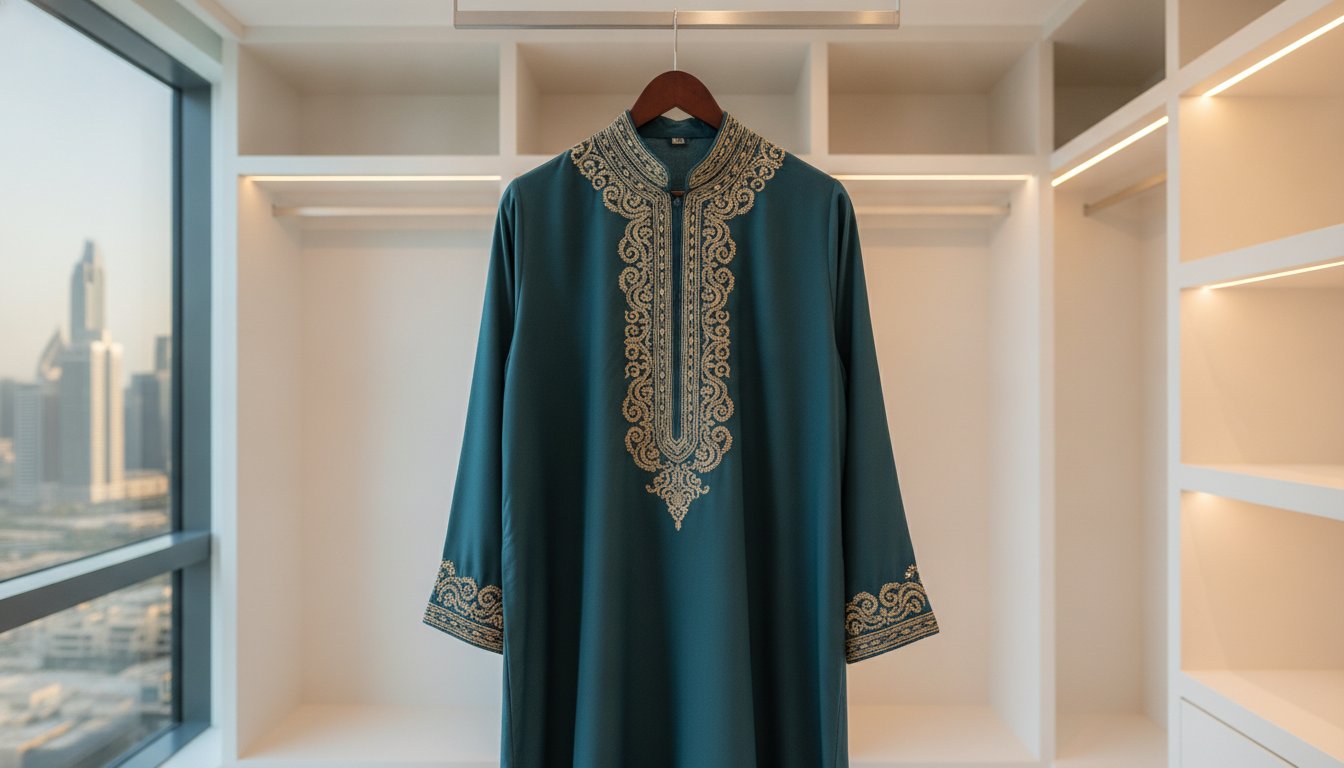
Could a single cleaning cycle turn your most exquisite hand-stitched couture into a collection of loose threads and faded memories? For many in Dubai, the anxiety of trusting high-end pieces to a generic laundry service is a constant reality. Professional dry cleaning for embroidered garments isn't just about removing stains. It's a sophisticated preservation science. You understand that these pieces are investments in artistry. They deserve a level of care that respects the delicate balance between textile integrity and aesthetic brilliance.
We recognize the fear that comes with metallic threads or intricate beadwork. It's a valid concern, especially as global regulations phase out harsh solvents like perchloroethylene by late 2026. This expert guide provides the clarity you need to protect your wardrobe. You'll discover the meticulous protocols used in signature couture care and learn how to identify a cleaner capable of handling artisanal details. We'll walk through the latest eco-friendly technologies, including the rise of GreenEarth solvents, and the specific steps required to ensure your garments remain as vibrant as the day you first wore them.
Key Takeaways
- Understand why professional dry cleaning for embroidered garments requires meticulous fiber inspection and protective netting to prevent thread pulls and structural damage.
- Identify the specific risks associated with metallic Zardozi and sequins, including potential tarnishing or melting when exposed to standard industrial chemicals.
- Learn how to evaluate a luxury cleaner's expertise in Dubai by asking about their on-site hand-cleaning capabilities and experience with delicate couture textiles.
- Discover the importance of specialized solvents and tension management in preserving the intricate artistry of your most valuable hand-stitched pieces.
- Realize the value of a high-end concierge service that manages every detail, from door-to-door pickup to the final artisanal finishing of your garments.
What Makes Embroidered Garments So Challenging to Clean?
Cleaning an embroidered masterpiece isn't a standard chore. It's a meticulous exercise in risk management. Unlike flat textiles, these garments are three-dimensional landscapes of varying tensions. When you introduce moisture or mechanical agitation, the base fabric and the decorative threads often react in opposing ways. This physical conflict is the primary reason why generic laundry services often fail to preserve the integrity of high-end couture.
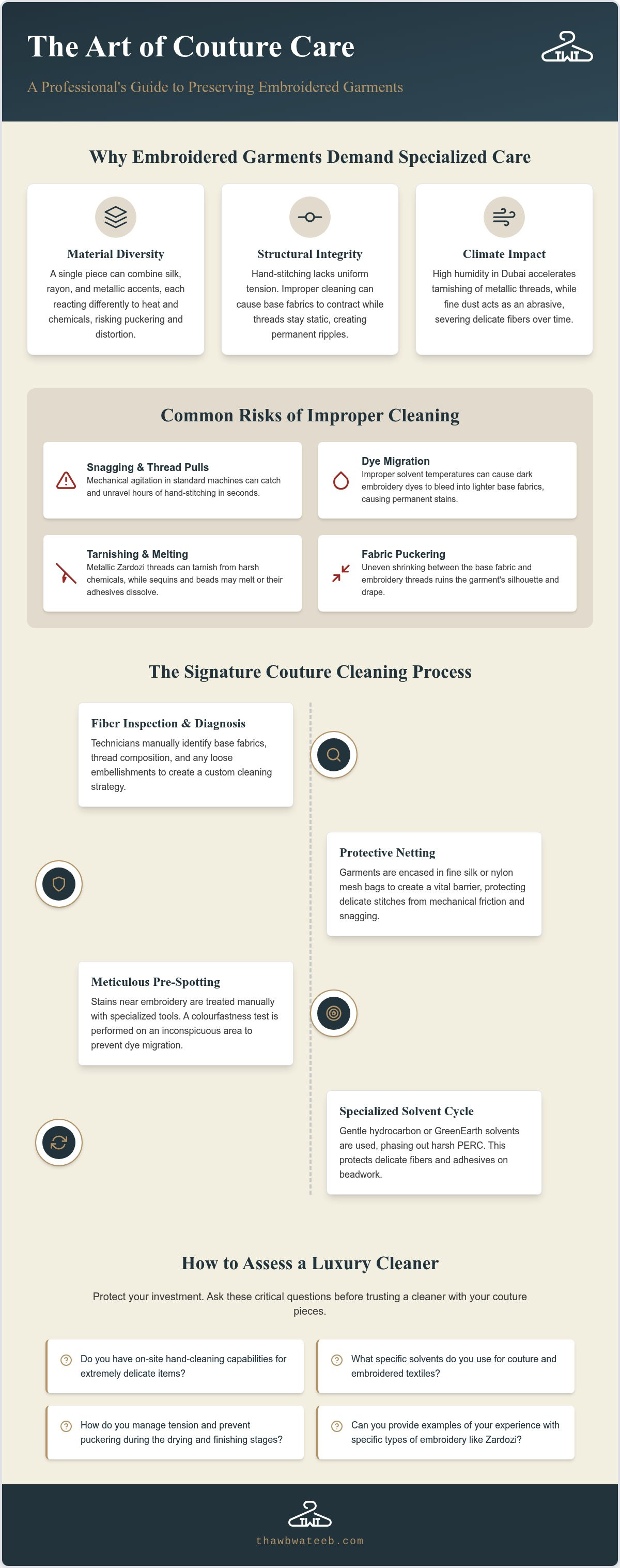
The core challenge lies in material diversity. A single garment might feature a silk base, rayon embroidery, and metallic accents. Each fiber has a different threshold for heat and chemical exposure. Silk might shrink while rayon stays taut. This leads to the dreaded puckering that ruins a garment's silhouette. Furthermore, the mechanical action of standard dry cleaning drums poses a constant snag risk. A single loose thread catching on a machine part can unravel hours of artisanal hand-stitching in seconds. Professional dry cleaning for embroidered garments must account for these variables through specialized equipment and expert manual oversight.
The Structural Integrity of Hand-Stitching
Hand-embroidered pieces are particularly vulnerable because they lack the uniform tension found in machine-made items. Every stitch represents a manual choice by an artisan. If a base fabric contracts during an improperly managed cycle, the threads remain static, creating unsightly ripples. There's also the persistent danger of dye migration. Darker embroidery threads can bleed into lighter base fabrics if the solvent temperature or chemical balance isn't perfectly calibrated. This level of complexity is why the Conservation and restoration of textiles emphasizes specialized handling for embellished works to prevent permanent fabric distortion.
Dubai's Climate and Embroidery Care
In the UAE, the environment adds a unique layer of difficulty to textile maintenance. Dubai’s high humidity levels accelerate the oxidation of metallic threads, a common feature in traditional Zardozi work. Moisture in the air reacts with the metal, leading to tarnishing that standard cleaning cannot reverse. Additionally, the fine dust and sand particles prevalent in the region become trapped deep within intricate needlework. These abrasive particles act like sandpaper against delicate fibers during regular wear and movement. Without expert intervention, these particles can sever threads from the inside out. This makes professional garment preservation Dubai an essential service for residents who view their wardrobe as a collection of valuable investments.
The Professional Dry Cleaning Process for Intricate Needlework
Every high-end garment follows a rigorous path through the facility. Dry cleaning for embroidered garments isn't a "one-size-fits-all" operation. It begins with a comprehensive diagnostic. Technicians identify base fibers and the specific composition of decorative threads. They look for loose embellishments that might detach during the cycle. To minimize mechanical friction, pieces are encased in fine silk or nylon netting. This barrier protects delicate stitches from the drum's motion; it's a simple yet vital step in preservation.
The choice of solvent is critical for maintaining thread integrity. While industrial cleaners once relied heavily on perchloroethylene (PERC), premium specialists now favor hydrocarbon solvents. These are gentler on delicate fibers and less likely to dissolve the adhesives often found in beaded work. By late 2026, most modern facilities will have fully transitioned to these safer alternatives, ensuring that your garments aren't exposed to aggressive chemical stripping.
Step 1: The Meticulous Pre-Spotting Phase
Before immersion, we test for colourfastness. We apply a small amount of solvent to an inconspicuous area. This ensures the dyes won't migrate from the threads into the base fabric. We also consult the garment's instructions, often guided by the FTC Care Labeling Rule, to verify manufacturer recommendations for professional handling. Stains near embroidery are treated manually with specialized brushes. We secure loose beads or sequins individually. This prevents loss during the cycle and maintains the garment's aesthetic value.
Step 2: Controlled Solvent Cycles
The actual cleaning cycle is shorter and cooler than standard runs. High heat can melt synthetic threads or cause metallic ones to snap under tension. We use only distilled, fresh solvent for every load. This prevents soil redeposition, which often makes embroidery look dull or "greyed" over time. This level of technical precision is what defines the couture dry cleaning Dubai experts provide for the city's most valuable wardrobes.
Once the cycle is complete, the garment undergoes "tipping." This is a hand-finishing technique where artisans use specialized tools to lift and realign individual threads. It restores the original luster and depth of the needlework. If you're concerned about the longevity of your hand-stitched pieces, choosing a service that prioritizes these artisanal steps is the only way to guarantee a safe result.
Common Embroidery Types and Their Specific Risks
Dry cleaning for embroidered garments requires a deep understanding of chemical reactivity. A single Thobe or Abaya often features several thread types, each demanding a unique approach. Silk threads are notoriously sensitive to pH imbalances. If the solvent is too acidic or alkaline, the fibers become brittle and lose their natural sheen. 3D or raised embroidery faces a different threat during the finishing stage. Standard pressing equipment can easily crush the delicate structure of padded motifs. Professionals use specialized forms and precision hand-steaming to maintain the intended volume and texture of the work.
The mechanical action of a drum is another variable. While a base fabric might be durable, the tension of the embroidery can cause the garment to pull or warp. This is why a technician must assess the "float" threads on the reverse side. If these are long or loose, they are highly susceptible to snagging. Expert dry cleaning for embroidered garments mitigates this by using shorter cycles and lower solvent levels to reduce the weight of the garment during the wash.
Caring for Metallic and Gold-Plated Threads
Traditional Zardozi work utilizes real gold or silver plating over a silk or cotton core. These threads are prone to snapping if the garment is over-agitated or subjected to high heat. Oxidation is the primary enemy here, especially in the humid coastal environment of the UAE. Harsh acids in low-grade solvents can cause instant tarnishing, turning brilliant gold into a dull, oxidized brown. Expert cleaners use specialized hydrocarbon solvents that clean without abrasion. This level of care aligns with professional Textile Conservation Tips, which suggest that maintaining a stable chemical environment is key to metal longevity. To prevent brittleness between wears, store these items in acid-free tissue paper and avoid plastic covers that trap moisture.
Handling Beaded and Crystal Embellishments
Embellishments add weight and complexity. We must first determine if beads are sewn or glued. Glued elements are high-risk; many solvents can dissolve the adhesive, causing stones to fall off or shift. For sewn beads, the risk shifts to mechanical scratching. Swarovski or glass crystals can lose their "finish" or become cloudy if they rub against other surfaces. We encase these garments in padded bags to provide a physical buffer throughout the cycle.
Heat management is equally vital during the drying phase. Many sequins are made of heat-sensitive plastics that warp or melt at standard temperatures. Cool-air drying is a non-negotiable step for any garment featuring synthetic embellishments. This patient approach ensures that the fire of the crystals and the shimmer of the sequins remain intact. It's the difference between a garment that looks refreshed and one that looks aged and worn.
How to Assess a Professional Dry Cleaner for Your Couture Pieces
Selecting a facility for your most prized wardrobe items requires more than a casual search. It demands a partner who views dry cleaning for embroidered garments as a craft rather than a commodity. Your first step should be to inquire about their specific experience with delicate fabric dry cleaning Dubai residents trust. High-volume, generic services often lack the specialized equipment needed to protect intricate needlework. Look for providers that offer a dedicated 'Signature' or 'Couture' tier. These services typically involve individual handling; a single technician oversees your garment from inspection to final finishing.
True artisanal care often involves on-site hand-cleaning for ultra-delicate pieces. If a garment features heavy Zardozi or fragile silk threads, full immersion in a machine might be too aggressive. Ask if they have the capability to spot-clean and hand-wash specific sections. Equally important is the pressing phase. Avoid cleaners who rely solely on industrial steam tunnels. These automated systems can flatten 3D embroidery and warp delicate fibers. A master cleaner uses specialized hand-irons and vacuum boards to restore a garment's shape without compromising the texture of the stitching.
Key Questions for Your Service Provider
Before handing over an expensive piece, pose specific technical questions. Ask if they use a tensioning machine or if they perform hand-finishing for embroidered hems. This distinction is vital for preventing the puckering discussed in earlier sections. Inquire about their protocol for loose embellishments. A professional service will have a plan to secure or repair beads that become unstable during the process. Finally, check if they provide archival-quality, breathable storage bags. Proper storage is the final step in preserving the financial and aesthetic value of your collection.
The Importance of Specialist Knowledge in Dubai
Dubai’s unique fashion landscape features garments like Abayas and Kanduras that often carry significant cultural and monetary value. Finding a trusted dry cleaning Dubai expert ensures your provider understands these nuances. They recognize the specific thread tensions and fabric weights common in regional couture. Consider the logistics of the service as well. Door-to-door pickup and delivery in climate-controlled vehicles protect your garments from the intense UAE heat during transport. This high-end concierge approach ensures that your items remain in a stable environment from the moment they leave your wardrobe until they return.
Give your most cherished pieces the expert attention they require. Contact Thawb Wa Teeb to schedule your Signature Couture Care and experience the difference of professional curation.
Signature Care: Preserving Your Masterpieces with Thawb Wa Teeb
At Thawb Wa Teeb, we believe that your most exquisite garments are more than just clothing. They are works of art. Our Signature Dry Cleaning & Couture Care service is specifically engineered to handle the intricate demands of dry cleaning for embroidered garments. We bridge the gap between traditional manual craftsmanship and modern technical precision. This ensures that every stitch remains as vibrant as the day it was created. Our approach positions professional care as a luxury necessity for your most valuable wardrobe investments.
Our expertise in dry cleaning for traditional wear Dubai is unmatched. We recognize the cultural and financial value of your Abayas and Kanduras. These pieces often feature delicate hand-stitched details that require a specialized touch. By choosing a dedicated couture service, you're choosing a partner that values quality as much as you do. We treat every item with individual respect and professional curation.
Our Artisanal Approach to Couture
Every piece enters our facility through a rigorous multi-point inspection. Senior technicians evaluate the fiber types and the structural integrity of the embroidery. We don't use generic cleaning protocols. Instead, we develop customized plans based on the specific thread and bead composition of your garment. Our hand-finishing process is equally meticulous. We use specialized techniques to restore the original drape and luster. This preserves the sensory and aesthetic results of the work while respecting the artisan's original vision.
Seamless Luxury at Your Doorstep
Convenience should never come at the expense of quality. You can schedule your free pickup via WhatsApp for immediate, concierge-level service. This modern digital convenience is backed by traditional standards of manual finishing. Our climate-controlled transport is a critical feature for the UAE market. It ensures your garments are never exposed to Dubai's intense heat during transit. This stability is vital for preventing the oxidation and brittleness discussed in earlier sections.
Experience the ultimate peace of mind with the premium laundry Dubai residents trust for their most valuable wardrobes. Our service is a sophisticated solution for the city's most discerning individuals. We act as the trusted guardian of your personal items, ensuring they return to you in pristine condition. From the initial booking to the final delivery, we manage every detail with absolute clarity and professional confidence.
Elevate Your Wardrobe Preservation
Preserving the intricate beauty of your collection requires more than standard maintenance. It demands a partnership with experts who understand the delicate chemistry of modern solvents and the physical mechanics of needlework. As we move through 2026; the transition toward eco-friendly, gentle cleaning methods is no longer optional. It is essential for protecting the metallic threads and hand-sewn embellishments that define your personal style. By prioritizing artisanal hand-finishing and climate-controlled logistics, you ensure that every Abaya, Kandura, and designer piece retains its structural integrity and aesthetic depth.
Expert dry cleaning for embroidered garments is the final, vital step in a lifecycle of luxury. Thawb Wa Teeb offers the specialized Signature Couture Care your wardrobe deserves; combined with the effortless convenience of free Dubai-wide pickup and delivery. Trust our specialists to handle your traditional and designer embroidery with the respect and precision it requires. Your most cherished pieces are ready for their next occasion.
Schedule your premium embroidery care via WhatsApp and experience a new standard of garment curation today.
Frequently Asked Questions
Can dry cleaning damage the beads on my embroidered dress?
Standard dry cleaning can damage beads, but professional couture care prevents this through protective netting and specific solvent choices. Glued beads are at high risk of dissolving in harsh chemicals like PERC. Specialist cleaners use hydrocarbon solvents to maintain the adhesive and the original finish of crystals or glass beads. This ensures the embellishments remain secure throughout the cycle.
Is it better to hand wash or dry clean embroidered silk Abayas?
Professional dry cleaning is superior to hand washing for silk Abayas featuring intricate needlework. Hand washing often leads to uneven shrinkage or dye bleeding between the silk base and the decorative threads. Specialist dry cleaning for embroidered garments uses non-aqueous solvents that preserve the fabric's original drape. This prevents the water-based puckering that typically ruins a garment's silhouette.
How do I prevent metallic threads from tarnishing on my traditional wear?
You can prevent tarnishing by storing garments in acid-free tissue paper and avoiding plastic covers that trap humidity. In Dubai's climate, oxidation is a constant risk for Zardozi and gold-plated work. Professional cleaning removes skin oils and pollutants that accelerate this chemical reaction. This process keeps the metallic plating brilliant and prevents the threads from becoming brittle over time.
What should I do if a thread starts pulling on my embroidered garment?
Don't cut a pulling thread; instead, secure it with a small safety pin and seek professional help immediately. Cutting the thread can cause the entire motif to unravel or create a hole in the base fabric. A specialist cleaner can often "tip" the thread back into place or suggest minor stabilization. This protects the garment's structural integrity before the next cleaning cycle.
How often should embroidered couture pieces be dry cleaned?
Clean your embroidered couture pieces after every two to three wears or immediately if they're exposed to perspiration. Leaving body oils on delicate threads can lead to permanent yellowing or fiber degradation. Regular dry cleaning for embroidered garments ensures that dust particles don't become embedded in the needlework. This prevents internal abrasion that can snap threads during movement.
Can stains be removed from embroidery without ruining the stitching?
Stains can be removed through targeted pre-spotting by skilled technicians using precision tools. We use mild solvents to lift the soil without saturating the surrounding decorative threads. This manual approach avoids the aggressive mechanical agitation that typically ruins intricate stitching during bulk cleaning. It allows for the removal of localized spots while keeping the rest of the garment's texture intact.
Does Thawb Wa Teeb offer pickup for delicate embroidered items in Dubai?
Thawb Wa Teeb provides free door-to-door pickup and delivery across all major Dubai districts for your convenience. You can easily schedule your service via a simple WhatsApp message. Our climate-controlled vehicles ensure that your delicate items are protected from the intense UAE heat and humidity during transport. This maintains a stable environment for your garments from your home to our facility.
What is the difference between standard dry cleaning and couture care for embroidery?
Couture care involves individual garment handling and manual finishing rather than bulk processing. In a couture service, technicians perform a multi-point inspection and use protective barriers for every item. This artisanal approach includes hand-steaming and precision pressing that respects the 3D structure of the embroidery. It's the gold standard for preserving the aesthetic and financial value of complex needlework.