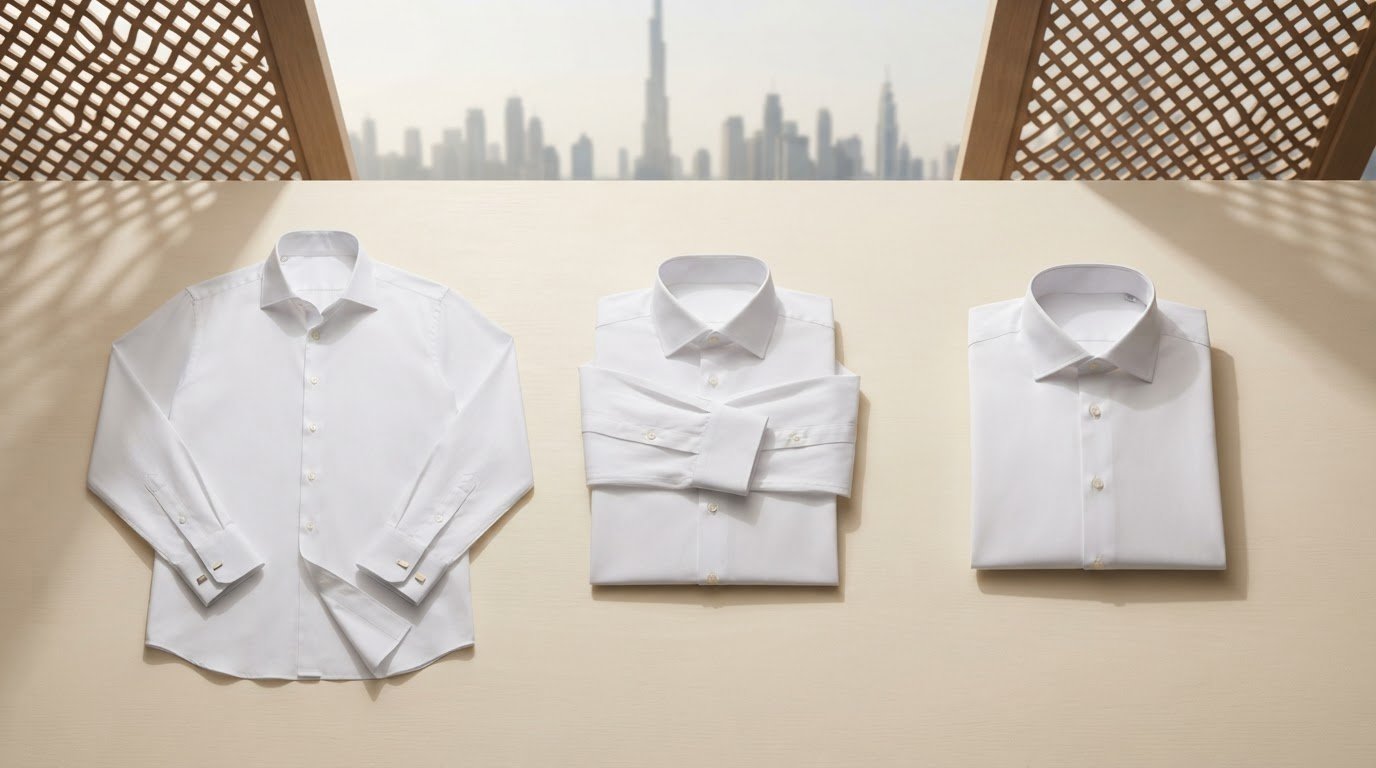
A dress shirt can be folded neatly and still emerge with a crushed collar or stubborn creases. The order of the folds and the way they support the shirt’s shape make a difference. If you’ve wondered how to properly fold a dress shirt without distorting its collar, sleeves, or placket, a simple, repeatable method can help.
Folding works for drawers and luggage, but it can’t prevent every crease, especially when a shirt is packed tightly or stored for a long time. This guide explains a careful step-by-step fold, how to adapt it for travel or everyday storage, and when hanging may be more practical. You’ll also find ways to keep a folded shirt tidy and common mistakes to avoid. When a shirt needs more than careful folding, Thawb Wa Teeb’s Wash & Iron or Steam Pressing in Dubai can help restore a polished finish.
Key Takeaways
- Learn how to properly fold a dress shirt with a clear sequence that keeps the sleeves and side edges aligned.
- Choose between a flat fold, a compact travel fold, and hanging based on where the shirt will be stored.
- Keep drawer and suitcase folds tidier by giving shirts enough space and avoiding excess pressure.
- Spot common folding mistakes early and correct them without stretching or repeatedly refolding the fabric.
- Know when careful folding is enough and when a professional finish can help refresh a shirt.
Why Properly Folding a Dress Shirt Matters
A dress shirt can look crisp when you take it off, then lose its polished appearance in a crowded drawer or suitcase. The collar may flatten, sleeves can bunch, and pressure from other garments can leave creases across the front. A considered fold gives the shirt a tidy shape and makes it easier to store or pack. It can’t guarantee a wrinkle-free result: the fabric, how long the shirt stays folded, and how it’s handled all affect creasing.
The aim isn’t to force the shirt into the smallest possible bundle. Keep the collar, sleeves, and body arranged without adding unnecessary folds or pressure. When deciding how to properly fold a dress shirt, start with where it’s going. Folding works well when drawer space is limited or a shirt needs to fit in luggage. For longer storage, or when preserving a freshly pressed look matters most, hanging may be a better choice.
A hanger lets the shirt fall naturally, but it takes closet space and isn’t practical for packing. Folding is more compact and can keep a drawer organized, as long as the shirt isn’t squeezed beneath heavy clothing. Choose based on where the shirt is going, rather than assuming one method prevents every crease. For an overview of dress shirt components and styles, consider how details such as the collar and cuffs affect the way a shirt lies.
What a neat dress-shirt fold should protect
Keep the collar upright and clear of sharp bends. Fold the sleeves inward smoothly rather than twisting or bunching them, and align the sides so the body forms an even shape. This helps prevent bulky spots that can press into the fabric. A proper dress-shirt fold is a balanced, compact shape that keeps the collar supported and the sleeves and body lying neatly, without sharp, unnecessary creases.
Prepare the shirt before folding
A little preparation makes the folds easier to control. Choose a clean, flat surface with enough room to spread out the shirt. Fasten a few buttons, including one near the middle, to keep the front panels aligned as you handle the garment. You don’t need to button every button.
- Lay the shirt face down, with the back smooth against the surface.
- Set the collar into its natural shape instead of pressing it flat or pulling at its points.
- Gently smooth the fabric outward with your hands, guiding loose sections into place.
- Check that the sleeves and side seams lie flat, without stretching the seams or tugging the cuffs.
Correct any twists before folding. Pulling hard can distort the fabric, while repeated smoothing can create new creases. Starting with the shirt lying evenly makes the next steps easier and helps it keep its shape in storage.
How to Properly Fold a Dress Shirt: The Classic Step-by-Step Method
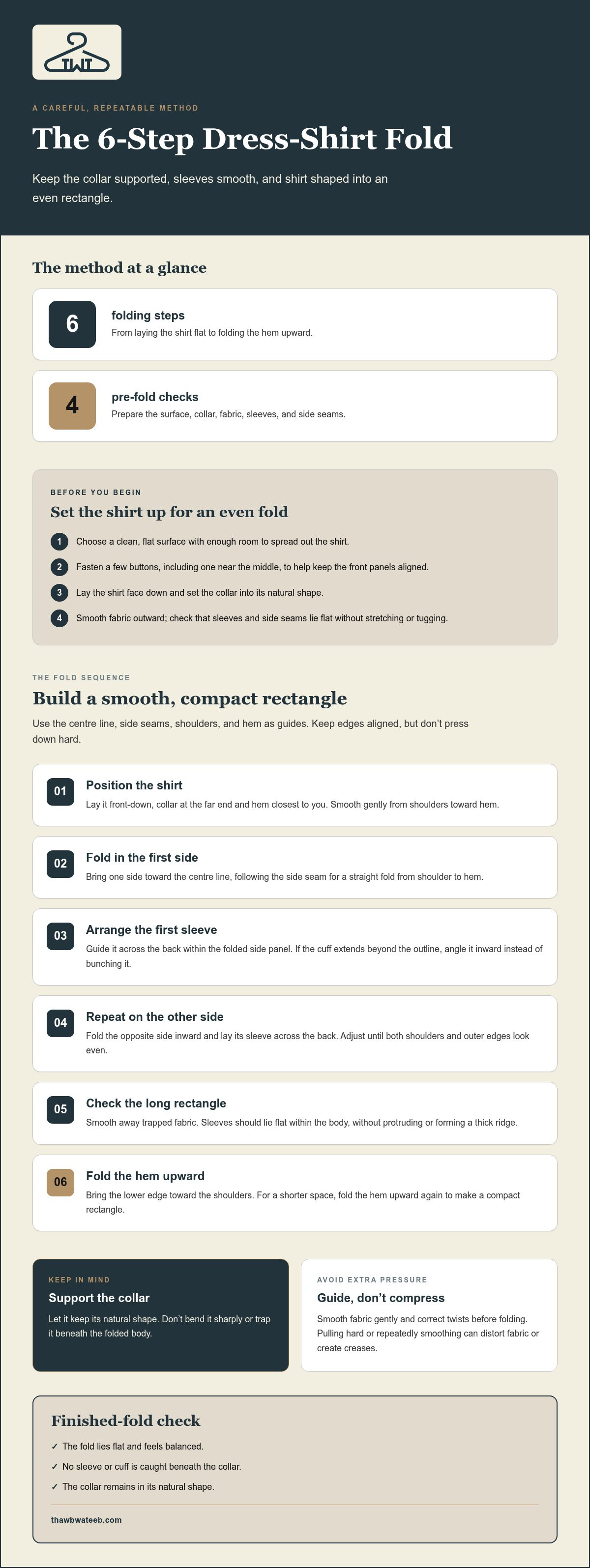
A balanced fold uses the shirt’s centre line, side seams, shoulders, and hem as guides. Keep those edges aligned as you work, but don’t press down hard. The goal is a smooth, compact rectangle, not a compressed bundle. This method suits a drawer or suitcase. Adjust the final fold to fit the space without forcing the shirt into it.
Position the shirt and arrange the sleeves
Lay the shirt front-down on a clean, flat surface. Smooth the back from the shoulders toward the hem, then use the side seams as guides. Fold each side inward and arrange its sleeve across the back so the shoulders stay even and neither sleeve bunches beneath the body.
- Set the shirt in position. Lay it front-down with the collar at the far end and the hem closest to you. Smooth the body gently from shoulders toward hem.
- Fold in the first side. Bring one side inward toward the centre line, following the side seam so the fold runs straight from shoulder to hem.
- Arrange the first sleeve. Guide the sleeve across the back, keeping it within the folded side panel. If the cuff extends past the shirt’s outline, angle it inward rather than bunching it.
- Repeat on the other side. Fold the opposite side inward and lay its sleeve across the back. Adjust both sides so the shoulders and outer edges form a similar, even shape.
- Check the long rectangle. Look along the shirt’s sides and smooth away trapped fabric. The sleeves should lie flat within the body, without protruding or creating a thick ridge.
- Fold the hem upward. Bring the lower edge toward the shoulders, choosing a fold that suits the drawer or luggage. For a shorter space, fold the hem upward again to make a compact rectangle.
Fold the body and check the finished shape
As you bring the hem upward, keep the folded edges aligned. Guide the fabric into place instead of making a sharp crease with your palm. Professional fabric-care practices emphasize thoughtful handling, and the National Cleaners Association’s garment-care expertise provides broader context for caring for clothing and household fabrics.
Before storing the shirt, check that the fold lies flat and feels balanced, with no sleeve or cuff caught under the collar. The collar should sit in its natural shape, not bent beneath the folded body. If it’s trapped, lift the shirt with both hands, set it back on the surface, free the collar, and reposition the fold. Don’t pull at the collar or stretch the seams to correct it.
A gentle finish matters as much as the folding sequence. If a shirt needs professional finishing before it’s folded, Wash & Iron or Steam Pressing in Dubai can help prepare it for storage or packing.
Does Folding Always Prevent Wrinkles? Choose a Method for the Situation
No fold can promise a wrinkle-free shirt. Folding keeps a garment organized, but creasing still depends on the fabric, how long it stays folded, and what presses against it. A shirt in an overfilled bag may crease regardless of how carefully it was folded. Choose the approach that suits the shirt’s next stop and avoids unnecessary pressure.
Use this comparison to choose a practical option. Each method has trade-offs, so consider the available space and how soon you plan to wear the shirt.
| Method | Best use | Space needs | Handling considerations |
|---|---|---|---|
| Flat fold | Drawers, shelves, or a suitcase with room to lay garments flat | Needs a wider, stable surface or stack | Keep the stack moderate so lower shirts aren’t compressed |
| Compact travel fold | Luggage where a smaller, contained shape is useful | Uses less space than a broad flat fold | Extra folds can create crease lines; don’t compress the collar |
| Hanging | A wardrobe with room, especially if the shirt will be worn soon | Requires closet or hanging space | Choose a hanger that supports the shoulders without pulling them out of shape |
Flat folding for drawers and shelves
A flat fold makes shirts easy to see and retrieve, especially when they’re arranged in a stable stack or in a single layer on a shelf. It can be more convenient than hanging if closet space is limited or you want to keep several shirts together in a drawer. Avoid a tall, tightly packed pile. Garments above can flatten collars or press creases into shirts at the bottom.
Packing a folded shirt for a journey
Choose a fold that fits the luggage without squeezing the shirt into a smaller bundle. Leave the collar room to hold its natural shape, and place the shirt away from shoes, toiletries, and other dense items that could press against it. If you’re preparing a shirt that needs a fresh professional finish before travel, this premium laundry and garment care guide offers further context on garment care.
When hanging is the more practical choice
If wardrobe space is available and you expect to wear the shirt soon, hanging can avoid the extra fold lines that come with storage or packing. Use a hanger broad enough to support the shoulders. A narrow hanger may leave the fabric unsupported, while an oversized one can distort the shoulders. Hanging isn’t a universal solution: it may not suit a packed suitcase or crowded wardrobe, and fabric and handling still affect the result.
Think of how to properly fold a dress shirt as a choice guided by context: use a flat fold for orderly storage, a compact fold when luggage space is limited, and a hanger when the shirt can hang freely. Whatever you choose, don’t overfill the space around it.
How to Keep a Folded Dress Shirt Neat in a Drawer or Suitcase
A careful fold can lose its shape if the shirt is wedged into a crowded drawer or packed beneath heavier items. Give it room to rest in a clean, dry place away from spills. Placement matters: it affects how easily you can retrieve the shirt and how much pressure reaches the collar, sleeves, and body.
Arrange folded shirts in a drawer
Group shirts with similar folded shapes so they stack evenly and are easier to maintain. Place them where you can lift one out without dragging neighbouring garments along with it. Leave enough clearance above the stack to remove a shirt without pushing down on the others. If the drawer is full, reduce the stack rather than forcing the drawer closed over compressed clothing.
- Keep shirts away from damp areas and anything that could leak or spill.
- Position frequently worn shirts where they’re easy to reach without shifting the whole stack.
- Leave a little space around the folded edges so fabric isn’t pressed against the drawer sides.
Pack dress shirts with care
Pack shirts after heavier items such as shoes and toiletry bags are in place. Lay each shirt in a stable area of the suitcase, using its folded shape to organize the remaining space rather than forcing it into a narrow gap. Avoid placing dense belongings on top, and keep the shirt away from liquids that could spill. Careful packing limits pressure, but movement during travel can still leave creases.
If a shirt needs professional garment care before a journey, this Dubai laundry pickup and delivery guide offers a related resource. To limit creasing, give a folded shirt a clean, dry space where heavier items won’t press on it.
Unpack and prepare a shirt for wearing
After arrival, take the shirt out of the suitcase promptly instead of leaving it under other packed items. Place it on a clean surface, then gently reshape the collar and cuffs with your hands. If the fabric needs time to settle, hang the shirt briefly on a hanger that supports its shoulders. Avoid pulling at seams or stretching the collar to smooth a crease.
For drawer storage, keep the stack accessible. For travel, protect the folded shirt from pressure and spills. To make garment care in Dubai more convenient, schedule a garment-care pickup online or through WhatsApp.
Fix Folding Mistakes and Know When a Professional Finish Helps
A bulky fold doesn’t always mean you need to start again. Often, one small adjustment can free a trapped sleeve or restore the shirt’s balance. Correct the cause gently. Pulling hard at a seam, cuff, or button can distort the fabric, while pressing down repeatedly may set in more creases. A careful check works better than forcing the shirt into shape.
Correct an uneven or bulky fold
If the sides don’t line up, unfold only as far as needed to reach the uneven section. Realign the shirt body, then guide each sleeve back into a smooth, flat position. For a bulky spot, lift the fabric and let it settle rather than tugging at seams, cuffs, or buttons.
Before returning the shirt to a drawer or suitcase, check that the finished rectangle lies evenly and that no sleeve is caught beneath the collar. Make one deliberate correction if needed, then leave the fabric undisturbed.
When pressing is more suitable than refolding
A temporary fold line may soften after the shirt is unpacked and allowed to hang. If a crease remains visible, especially across the front or along a sleeve, another folding attempt won’t remove it. Check the garment care label before applying heat or steam, since the suitable method depends on the shirt’s care instructions.
For a shirt that needs a more polished appearance, professional finishing can be a convenient alternative to repeated handling. Thawb Wa Teeb offers Wash & Iron and Steam Pressing in Dubai, with professional garment handling to help prepare shirts for wearing.
Make garment care easier in Dubai
Careful handling at home helps a shirt stay presentable between wears, but a busy schedule can make garment care harder to fit in. If a shirt needs more than a tidy fold, schedule free door-to-door pickup online or through WhatsApp for garment care in Dubai.
Keep the principle behind how to properly fold a dress shirt simple: correct small mistakes gently, and don’t use force to chase a perfectly smooth finish. For professional care, explore garment-care services.
Make Your Next Shirt Easier to Wear
Give each shirt a moment of attention before putting it away. Decide where it will be next: in a drawer, in a suitcase, or ready for tomorrow. That small choice helps you pick a practical approach instead of folding on autopilot. With a little practice, how to properly fold a dress shirt becomes a simple habit that supports your routine.
If a shirt still needs a polished finish after storage or travel, professional garment care can make preparations easier. Choose the kind of support that fits your schedule, then focus on the details that matter to you.
Explore professional garment care and schedule a free pickup when you’re ready. A thoughtful approach, at home or with professional care, can make getting dressed feel easier.
Frequently Asked Questions
Can I fold a dress shirt while it is still warm from ironing?
Let the shirt cool fully before folding it. Warm fabric can be more pliable, making it easier to set an unintended line as you handle it. Check that it’s dry, especially around the collar, cuffs, and placket, then smooth it lightly on a clean surface. If you’re deciding how to properly fold a dress shirt after ironing, follow the care label and the pressing equipment instructions first.
Is it better to button a dress shirt before folding it?
Fastening a few buttons can help keep the front panels together, but you don’t need to button every one. Try closing a middle button and one near the chest or waist if the shirt shifts easily. Keep the placket relaxed rather than taut. Before finishing the fold, check that no button is pressed beneath a sharp fold or caught against another button, which can create an uneven ridge. This can be especially useful with lightweight fabric.
Can I fold a dress shirt with cufflinks attached?
It’s generally more practical to remove cufflinks before folding and store them separately so they don’t snag the shirt or press into another garment. For French cuffs, bring the edges together gently and let the fabric rest in its natural shape. Don’t flatten the fabric around attached links. If the cuff details are delicate or decorative, follow the garment-care label before cleaning or pressing the shirt.
How do I fold a dress shirt with a button-down collar?
Let the collar points rest naturally, and fasten their small buttons if that helps keep them in place. Avoid folding directly across a collar button or tucking a point beneath a tight layer of fabric. Once the shirt is folded, check that both collar points remain visible and lie without a sharp bend. This helps the collar keep its intended shape in storage.
How long can a folded dress shirt stay in a suitcase?
There’s no fixed suitcase time limit that suits every shirt. A lightly packed case may leave it more presentable than a tightly filled one, and some fabrics show marks more readily than others. If you won’t wear the shirt soon after arrival, take it out instead of leaving it packed for the rest of the trip. Hang it freely, away from bathroom moisture and crowded closet items.
Can I fold a dress shirt made from linen?
Yes, but handle linen gently because its texture can show fold lines clearly. Choose a broad fold with fewer sharp edges, and avoid pressing each line flat with your hands. In luggage, place the shirt above lighter garments rather than beneath shoes or packed accessories. Check the care label for laundering and pressing guidance, since folding won’t remove creases that are already present.