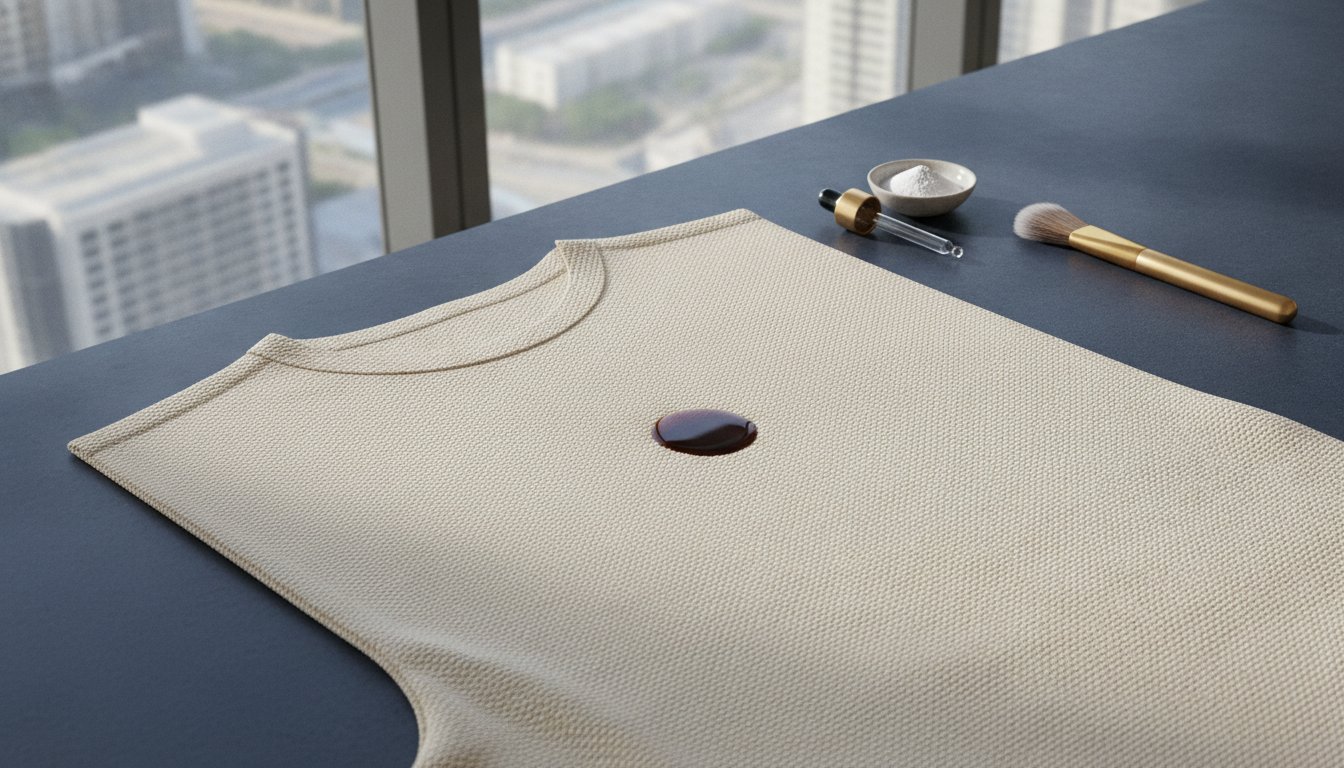
A single drop of oil shouldn't dictate the lifespan of your favorite silk blouse or bespoke Kandura. For many, a grease spot feels like a permanent mark of defeat. It's deeply frustrating to see those stubborn shadow stains reappear after a standard wash. You've likely searched for how to remove oil stains from clothes only to find conflicting DIY advice that risks stripping the color or ruining delicate fibers. It's a common concern for any collector of fine textiles, but a spill doesn't have to be the end of your garment’s story.
This professional care guide provides the clarity you need to handle spills with confidence. You’ll master expert techniques that focus on chemical extraction rather than aggressive scrubbing. This preserves the fabric’s integrity while restoring its original luster. We’ll explore the science of oil removal, the latest 2026 eco-friendly standards, and the critical moment when you should stop and call a specialist. From immediate first aid to advanced professional treatments, you’re about to become the ultimate guardian of your wardrobe.
Key Takeaways
- Learn why the 'Golden Hour' is critical for lipid extraction before oil creates a permanent hydrophobic bond.
- Discover how to remove oil stains from clothes by matching specific absorbents and surfactants to the delicate weave of your garment.
- Identify the distinct protocols required for natural fibers versus the oil-attracting properties of synthetic blends.
- Master meticulous blotting and isolation techniques that prevent stain transfer.
- Recognize the threshold where home remedies shouldn't be used, yielding to professional couture care and advanced solvent technology.
The Science of Oil Stains: Why They Bind to Your Clothes
Successfully learning how to remove oil stains from clothes starts with understanding the molecular battle occurring on your sleeve. Oil molecules are lipids, which are naturally hydrophobic. This means they repel water and seek out non-polar environments, such as the fibers of your favorite garments. When a spill occurs, these molecules don't just sit on the surface. They create a strong bond with the fabric. Understanding The Science of Stain Removal is essential for anyone who values high-end apparel. Without the right approach, you aren't just cleaning; you're potentially pushing the oil deeper into the weave.
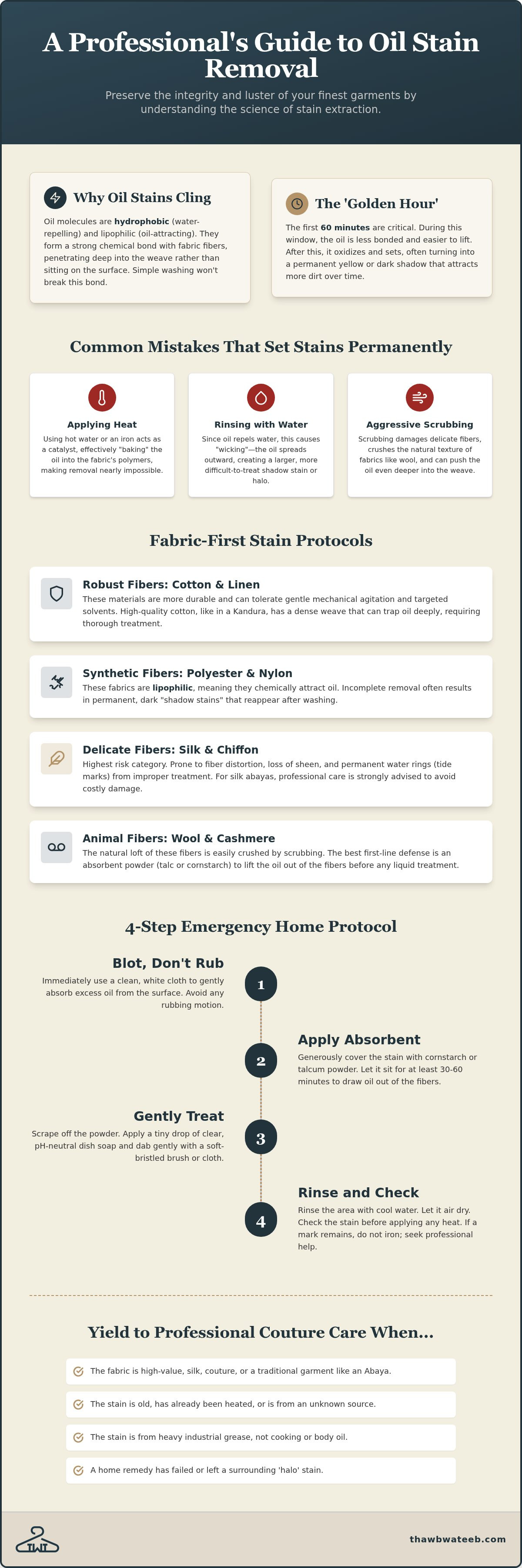
The first sixty minutes after a spill are known as the Golden Hour. During this window, the oil remains relatively accessible on the fiber's surface. As time passes, the oil migrates into the core of the thread. It can even begin to oxidize, a process that turns clear spots into permanent yellow shadows. Speed is your greatest ally. However, speed must be tempered with caution. Applying heat through hot water or an iron is a common mistake. Heat acts as a catalyst that cross-links the oil to the fabric's polymers. Once an oil stain is "baked" into the material, it often becomes impossible to extract without damaging the garment's texture. For residents in Dubai wearing delicate silks or traditional Kanduras, this chemical bond is a significant threat to garment longevity.
Why Oil Stains Are Different from Water-Based Stains
A coffee spill is polar and dissolves easily in water. A salad dressing drip is the opposite. Standard laundry detergents often lack the concentration of surfactants needed to break the surface tension of dense lipids. If you attempt to rinse an oil spot with plain water, you risk wicking. This is a phenomenon where the oil spreads outward, creating a larger halo or shadow stain that is far more difficult to treat than the original drop. Truly knowing how to remove oil stains from clothes requires a departure from standard laundry habits.
Identifying the Source: Cooking Oil vs. Body Oil vs. Industrial Grease
Viscosity dictates the extraction method. Thin cooking oils spread rapidly and require immediate absorbents. Thick industrial grease or heavy body oils from collars require specialized emulsifiers to loosen the bond. Clear substances, such as coconut or baby oil, are particularly deceptive. They may appear to vanish as they dry, only to reappear as dark, unsightly patches weeks later after the oil has trapped dust and oxidized. Lipophilic fibers, which are common in synthetic materials like polyester and nylon, possess a natural chemical attraction to grease that makes them particularly prone to permanent staining.
Fabric-First Protocols: Tailoring the Solution to the Material
Effective stain removal isn't a one-size-fits-all process. The success of how to remove oil stains from clothes depends entirely on the fabric's composition. Cotton and linen, for instance, are robust. They can tolerate mechanical agitation and warmer water temperatures that help break down lipids. In contrast, synthetic fibers like polyester and nylon are lipophilic. They have a chemical affinity for oil. This often results in permanent shadow stains if the oil isn't extracted completely on the first attempt. These shadows are faint, dark patches that remain even after the garment appears clean. For delicate silks and chiffon, the stakes are even higher. These materials are prone to water rings and fiber distortion. A single drop of water can leave a permanent border around the treated area, effectively replacing one stain with another.
Treating Traditional and Couture Fabrics
In Dubai, garments like the Abaya and Kandura require a specialized approach. Meticulous care is essential for silk abayas, where DIY treatments often strip the fabric's natural sheen or leave unsightly tide marks. Similarly, maintaining the crisp, pristine white of a Kandura requires addressing specific areas like the neck and cuffs. These areas accumulate body oils that can turn yellow if not treated with professional precision. The density of the weave in high-quality cotton kanduras can trap oils deep within the threads. For those managing high-value wardrobes, understanding Traditional Wear Dry Cleaning in Dubai ensures your items receive the artisanal handling they deserve. This specialized knowledge prevents the premature aging of your most significant pieces.
Wool and Cashmere: The Gentle Extraction Method
Wool and cashmere possess a natural loft that is easily crushed by aggressive scrubbing. When dealing with these animal-based fibers, your first-line defense should be absorbent powders like talc or cornstarch. These powders lift the oil away from the surface without disturbing the delicate scales of the fiber. Let the powder sit for at least thirty minutes to draw the grease out. If a liquid solution is necessary, it must be pH-neutral to avoid weakening the protein structure of the wool. Harsh alkaline detergents can make cashmere feel brittle and lose its signature softness. If you find yourself hesitant to treat a luxury knit, choosing professional couture care offers the reassurance that your garment's texture will remain pristine.
The Professional’s Arsenal: Home Remedies vs. Expert Techniques
Selecting the right tool for lipid extraction is a matter of chemistry and precision. While many online forums suggest aggressive scrubbing with household cleaners, true garment preservation requires a gentler touch. The primary objective is to lift the oil out of the weave rather than pushing it through to the other side. Mastering how to remove oil stains from clothes often begins with absorbents. Fine powders like cornstarch, talcum powder, or baking soda act as microscopic sponges. When applied immediately, they draw liquid oil away from the fibers through capillary action. This prevents the stain from spreading and simplifies the eventual cleaning process. Leave these powders on the fabric for at least thirty minutes before gently brushing them away.
Surfactants play a different role. While mild dish soaps are frequently cited as miracle fixes, they carry hidden risks for high-end textiles. These soaps are designed to strip grease from ceramic and metal; consequently, they can be incredibly harsh on organic dyes and delicate protein fibers. If a surfactant is used at home, it must be thoroughly rinsed to avoid leaving a sticky residue that attracts dust. Professionals, however, utilize specialized emulsifiers that break the hydrophobic bond without compromising the fabric's pH balance. This is often paired with the "tap, don't rub" rule. Mechanical action should always be vertical. Rubbing a stain causes friction that leads to fiber breakage and pilling, permanently altering the garment's texture.
The Risks of DIY Stain Removal
Improper rinsing is the most common cause of the "Permanent Ring" effect. This occurs when a cleaning agent isn't fully extracted, leaving a visible tide mark as it dries. Beyond this, aggressive detergents can cause localized colour bleeding, leaving a faded spot that is far more noticeable than the original oil drop. For items that define your personal style, relying on Signature Dry Cleaning: The Gold Standard for Couture in Dubai provides a level of security that home remedies simply cannot match. Expert technicians use closed-loop solvent systems that dissolve oils entirely without the risks associated with water-based home scrubbing.
When Home Remedies Fail
If an oil spot remains visible after a gentle home treatment, it's time to stop. Repeatedly washing a stained item in a standard machine can "bake" the oil into the fabric, especially if it passes through a heated drying cycle. During a standard home wash cycle, oil that has been loosened but not fully emulsified can re-deposit onto other areas of the garment, creating new and unpredictable shadow stains. Recognizing these signs of a set stain is crucial. Professional chemical extraction is the only safe way to remove these deep-seated lipids without risking the structural integrity of the piece.
Step-by-Step: Meticulous Oil Extraction for Home Emergencies
When a spill occurs, your initial reaction often determines whether the garment can be saved. Meticulous extraction is a controlled process that requires patience and the correct tools. To begin learning how to remove oil stains from clothes at home, start with a clean, white microfibre cloth. Avoid using colored rags or patterned napkins, as the dyes can transfer onto your clothing. Gently blot the excess oil from the surface. Your goal is to lift the liquid rather than spread it. Never rub the spot. Rubbing creates heat and friction that forces the lipids deeper into the fabric's microscopic pores.
Isolation is the most overlooked step in home stain removal. Before applying any treatment, place a clean towel or a piece of white cardboard between the layers of the garment. This prevents the oil from soaking through to the back of the shirt or dress. Without this barrier, you risk creating a second, larger stain on the opposite side. Once isolated, apply a small amount of your chosen pre-treatment directly to the spot. Let it sit for ten minutes to emulsify the grease. When rinsing, use lukewarm water and work from the outside of the stain toward the center. This containment strategy prevents the oil from wicking into clean areas of the fabric.
Emergency Field Care: The First 5 Minutes
If you're at a restaurant in Dubai and a spill happens, resist the urge to use salt or club soda. These are common myths that rarely work on lipids and can actually set the stain. Salt is abrasive and can damage delicate silk threads. Similarly, the hand soap found in public restrooms often has a high pH level that can strip the dye from luxury textiles. Instead, ask for a piece of dry white bread or a plain white napkin to blot the area. These materials are highly absorbent and will safely pull away surface oil until you can reach a professional. For garments that require the highest level of precision, consider our Signature Dry Cleaning & Couture Care to ensure a flawless finish.
Removing Dried or Set-In Oil Stains
Old stains require a re-wetting strategy. You can often loosen dried grease by applying a tiny drop of a clear carrier oil, such as mineral oil, to the spot. This softens the hardened lipids, making them easier to extract. You might also use a hair dryer on a low, warm setting to help the oil move; however, you must be extremely cautious. Excessive heat will permanently bake the stain into the fibers. The most critical rule is to never put a potentially stained item in a tumble dryer. The high heat of a dryer is the primary cause of the "shadow" effect, where oil reappears as a faint, dark ghost after the garment has dried. Always air-dry the item and inspect it thoroughly before any further heat application.
Beyond the Home Fix: The Luxury of Professional Preservation
While home methods offer immediate damage control, they rarely achieve the surgical precision of professional curation. At Thawb Wa Teeb, we treat each item with individual importance. Our experts perform a detailed assessment of the fabric's weave and the oil's chemical profile before any treatment begins. This tailored approach is why discerning clients choose us when they need to know how to remove oil stains from clothes without risking the garment's structural integrity. We don't just wash; we restore. Our process considers the age of the stain and the specific dye sets of the fabric to ensure no color loss occurs during the extraction phase.
The Science of Professional Dry Cleaning Solvents
Many oil-based stains are chemically impossible to remove with water alone. Water and oil simply don't mix. Professional dry cleaning uses advanced solvents that dissolve lipids on contact without the need for aggressive mechanical agitation. This specialized solvent technology is the definitive answer to how to remove oil stains from clothes when domestic detergents reach their limit. As of late 2026, the industry has successfully shifted toward eco-friendly hydrocarbon and silicone-based solvents. Our professional-grade filtration systems ensure these solvents remain pure, keeping your clothes bright and completely odour-free. This level of purity is vital for maintaining the pristine nature of white Kanduras and vibrant Abayas. For those who prioritize excellence, understanding Premium Laundry in Dubai is the first step toward superior wardrobe maintenance.
Your Garment Concierge in Dubai
Professional preservation extends beyond the cleaning cycle. Once the oil is extracted, our artisans use precision steam pressing to restore the garment's original silhouette. This ensures a boutique-ready look that home ironing cannot replicate. High-pressure steam relaxes the fibers, removing the micro-creases that DIY methods often miss. Protecting your investment in couture or bespoke traditional wear deserves more than a standard home wash. We offer a seamless lifestyle solution that prioritizes your time. With door-to-door expert handling, your belongings are safe in the hands of trusted guardians. It's a luxury necessity for the modern resident. The transition from digital convenience to artisanal finishing is effortless. Our team manages every detail of the journey. You can easily Schedule your free garment pickup in Dubai via WhatsApp to experience the gold standard of care.
Elevating Your Garment Care Standards
Maintaining a flawless wardrobe requires more than luck. It demands a scientific understanding of how to remove oil stains from clothes without compromising the fabric's soul. By acting during the Golden Hour and respecting the unique needs of delicate fibers, you ensure your clothing remains a true reflection of your style. Aggressive scrubbing or excessive heat often does more harm than good. Precision is always superior to force.
When a stain challenges your expertise, rely on a partner who values your items as much as you do. Thawb Wa Teeb offers a bridge between modern convenience and traditional standards. We specialize in the meticulous care of designer couture and traditional wear, such as Abayas and Kanduras. Our team provides complimentary door-to-door pickup across Dubai. This ensures your garments receive professional-grade extraction technology without disrupting your personal schedule.
Book your premium laundry pickup in Dubai today to restore your favorite pieces to their original brilliance. Your wardrobe is an investment. Let us be its trusted guardian.
Frequently Asked Questions
Can you remove an oil stain that has already been through the dryer?
Yes, but it's significantly more difficult. Heat from the dryer cross-links the oil molecules to the fabric polymers. While home remedies often fail at this stage, professional dry cleaning using specialized solvents can often break these bonds. We recommend avoiding further heat application and seeking expert care immediately to prevent permanent fiber damage. Our Signature Dry Cleaning & Couture Care is specifically designed to handle these challenging, set-in lipids with artisanal precision.
Is dish soap actually safe for all types of clothing?
No, dish soap is specifically formulated for non-porous surfaces like ceramic and metal. On delicate protein fibers like silk or wool, the high pH and harsh surfactants can strip natural oils and cause color fading. It's especially risky for couture items where the dye may not be colorfast. Always test a hidden area or choose a pH-neutral cleaner designed for textiles. Professional treatment remains the luxury necessity for preserving your garment's pristine condition.
How do I remove oil stains from delicate silk or abayas?
Silk abayas require extreme caution to avoid water rings or "tide marks." Start by blotting with a dry, white microfibre cloth. Avoid using water or household soaps. For high-value traditional wear in Dubai, the safest method is professional couture care. Our specialized extraction process removes lipids while preserving the fabric's signature drape and sheen. DIY attempts on silk often result in permanent texture distortion. We act as a trusted guardian for your most delicate pieces.
Why does an oil stain sometimes reappear after I think I've cleaned it?
This "ghosting" or shadow effect happens when the oil isn't fully extracted from the center of the fibers. During the drying process, the remaining lipids migrate back to the surface. It can also occur if the oil was loosened but not properly emulsified, leading to re-deposition during the wash. Truly learning how to remove oil stains from clothes involves ensuring total chemical extraction rather than just surface cleaning. Professional filtration ensures these oils are removed permanently.
Will professional dry cleaning always remove old grease stains?
While professional dry cleaning is the most effective method for old grease, success depends on the fabric type and previous treatment. If the stain was "baked in" by multiple dryer cycles, it might be permanent. However, our advanced solvent systems and individual garment assessment provide the best possible chance of restoration. We specialize in recovering items that home methods have failed to save. Our expertise in couture care ensures specialized handling for every unique fiber.
What is the best way to treat a grease splash on a Kandura?
Act quickly by blotting the splash with a clean, dry white cloth. Do not use salt or colored napkins, as these can damage the fine cotton weave. If you're in a restaurant, a small amount of talcum powder can help absorb surface lipids. For a pristine finish, our door-to-door pickup in Dubai provides a seamless way to access professional steam pressing and stain extraction for traditional wear. This maintains the crisp white of your Kandura.
Can baking soda damage the colour of my clothes while removing oil?
Baking soda is generally safe for colorfast fabrics, but it is mildly abrasive. On delicate or poorly dyed garments, the friction of application can cause localized fading or "frosting." It's best used as a dry absorbent rather than a scrubbed paste. If you're unsure about how to remove oil stains from clothes without affecting the dye, professional dry cleaning is the fail-safe choice for expensive designer wear. This protects the fabric’s original aesthetic results.
How long does professional oil stain removal usually take?
Our standard turnaround time is typically 48 to 72 hours. This duration allows for a meticulous individual assessment, specialized solvent treatment, and professional steam pressing. Complex stains on couture items may require additional time for multiple extraction cycles. We prioritize quality over speed to ensure your garment's integrity is never compromised. You can easily coordinate your pickup and delivery via WhatsApp for maximum convenience across Dubai. Every item is treated with individual importance.