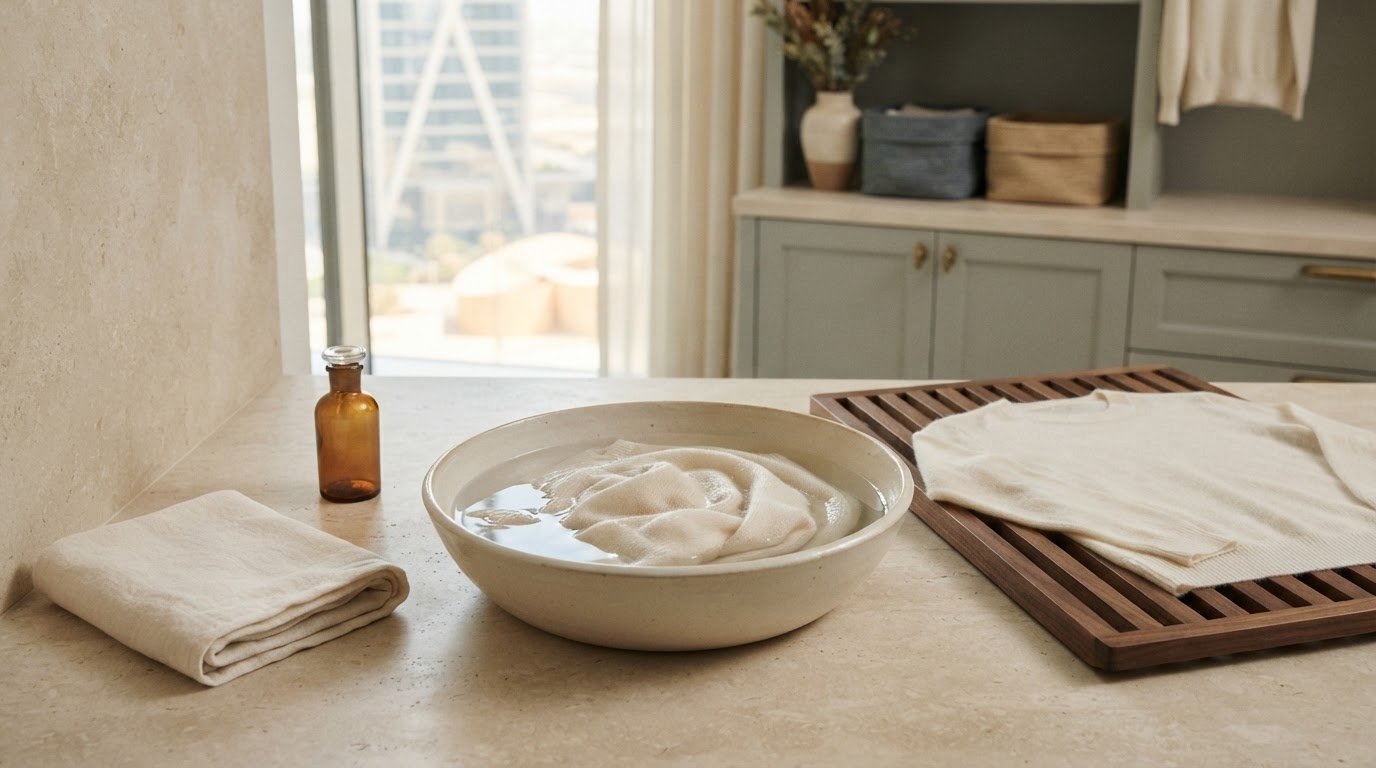
Could a careful hand wash be kinder to cashmere than sending it straight to the dry cleaner? If you’re searching for the best way to wash cashmere sweater without shrinking it, start with the garment’s care label, then focus on gentle handling. A mistake such as using warm water or twisting a wet knit can leave you worried about felting, lost shape, or rough texture.
That concern is understandable. Cashmere is delicate, and conflicting advice about washing at home versus professional cleaning can make every care decision feel risky. This guide will help you choose with confidence, whether your sweater needs a careful refresh or specialist attention.
You’ll learn how to hand wash, rinse, reshape, and dry cashmere while protecting its softness, what to know about natural pilling, and when Signature Dry Cleaning & Couture Care may suit a valuable or intricate knit. We’ll also cover folded storage for Dubai’s climate, so your cashmere stays ready to wear between seasons.
Key Takeaways
- Cashmere’s fine fibers need gentle handling. Fiber fineness can affect both softness and delicacy.
- The best way to wash cashmere sweater at home starts with checking the care label and using cool or lukewarm water with a gentle detergent.
- Protect the sweater’s shape by pressing out water without wringing, then reshaping it and drying it flat.
- Keep cashmere clean, folded, and in breathable storage. Learn practical ways to help protect knits from moths in the UAE.
- Home care may not suit every garment. Find out when Signature Dry Cleaning & Couture Care could be a better option for a delicate or designer knit.
Understanding Cashmere: Why These Fibers Demand Meticulous Care
Cashmere comes from the soft undercoat of the Capra hircus goat. Its fine fibers are prized for their soft feel and warmth without heavy bulk. For an overview of its origin and properties, see Cashmere wool.
Fiber fineness is measured in microns. Premium cashmere commonly averages 14–16 microns in diameter, according to the research cited for this guide. Finer fibers tend to feel softer against the skin, but softness doesn’t mean toughness. Delicate fibers can be more vulnerable to friction and rough handling. The finished knit’s construction and weight also matter.
Lanolin is a natural grease found on raw fleece, but much of it is removed during processing. Soaking a finished sweater in harsh detergent isn’t a reliable way to “strip” protective oils. It can instead leave fibers feeling harsh or coated with residue, especially if the product is too strong or poorly rinsed. Choose a gentle wool detergent and handle the knit carefully. Felting is the microscopic interlocking of fiber scales when heat and agitation cause fibers to bind together.
The Difference Between Standard Wool and Luxury Cashmere
Cashmere fibers are generally finer than many sheep-wool fibers, which helps create a light, insulating knit. The often-repeated claim that cashmere is three times more insulating shouldn’t be treated as a universal rule. Warmth depends on the fiber, knit structure, garment thickness, and how it’s worn. Cashmere can also stretch under the weight of water, so support the whole sweater while washing and never hang it to dry.
Pilling is a natural feature of wear. Shorter fibers can work their way to the surface and gather into small pills, particularly where a sleeve rubs against a bag or another garment. Pilling doesn’t automatically mean the cashmere is poor quality. Reduce friction and remove pills gently with a cashmere comb.
Why Dubai’s Climate Affects Your Knitwear
Humidity can let natural fibers take up moisture, affecting their feel and drape. A damp sweater is especially vulnerable to stretching, so reshape it and dry it flat rather than hanging it. Dust and fine sand can also settle into a knit, and trapped particles may add friction as the garment moves. Air out and gently brush a sweater between wears instead of washing it unnecessarily.
Water mineral content varies, so don’t assume every Dubai home has the same water hardness or that desalinated water has a single effect on cashmere. If a sweater feels stiff after washing, detergent residue or incomplete rinsing may be a factor. For the best way to wash cashmere sweater at home, follow the care label, use a small amount of gentle detergent, and rinse thoroughly without twisting the knit.
The Best Way to Wash Cashmere Sweater: A Safe Hand-Washing Guide
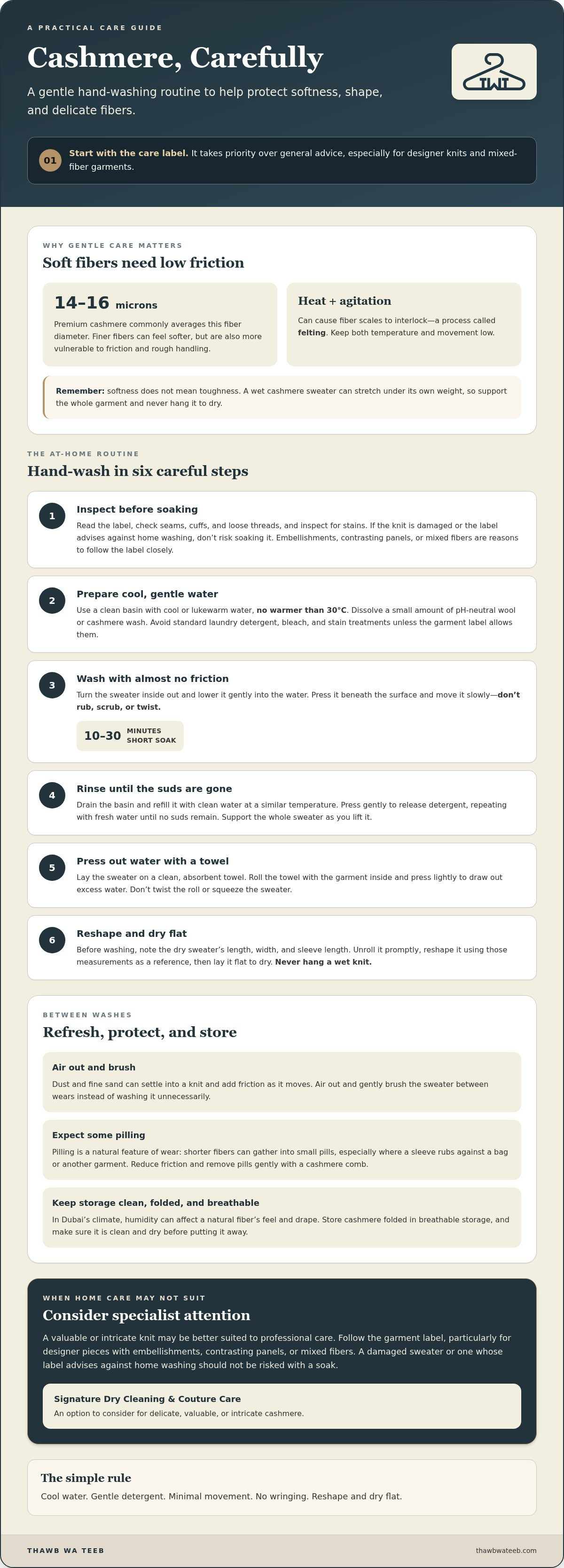
The best way to wash cashmere sweater at home is to keep the temperature and movement low. First, read the care label. It takes priority over general advice, especially for designer knits with embellishments, contrasting panels, or mixed fibers. Check seams, cuffs, and loose threads, then inspect for stains. If the knit is damaged or the label advises against washing at home, don’t risk soaking it.
Before washing, note the sweater’s length, width, and sleeve length while it’s dry. Use these measurements as a reference when reshaping it. Fill a clean basin with cool or lukewarm water, no warmer than 30°C, and dissolve a small amount of pH-neutral wool or cashmere wash. Standard laundry detergents may be too harsh for delicate fibers. Avoid bleach and stain treatments unless the garment label specifically allows them.
Turn the sweater inside out and lower it gently into the water. Press it beneath the surface, then move it slowly through the water without rubbing, scrubbing, or twisting. A short soak of 10 to 30 minutes is generally sufficient. The Canadian Conservation Institute’s guidance on conservation-grade washing techniques reinforces the value of controlled, gentle handling for delicate textiles.
Drain the basin and refill it with clean water at a similar temperature. Press the sweater gently to release detergent, then repeat with fresh water until no suds remain. Support the whole garment as you lift it, since a wet knit can stretch under its own weight. Never wring it, even to speed up rinsing.
Tools and Water Removal
Prepare a clean basin, gentle wool wash, and absorbent towels before you begin. Lay the sweater on a towel, roll the towel with the garment inside, and press lightly to draw out excess water. Don’t twist the roll or squeeze the sweater. Unroll it promptly, then lay the knit flat for reshaping and drying.
Stain Care Without Friction
For a fresh food or sweat mark, blot gently with a clean, damp cloth and cool water. Work from the edge toward the center without rubbing the pile. Avoid improvised remedies such as lemon juice or vinegar, which can affect color or fibers. If the stain persists, is oily, or has an unknown source, stop rather than escalating treatment at home.
For a valuable designer knit, a persistent stain, or a care label that calls for specialist treatment, consider Thawb Wa Teeb’s Signature Dry Cleaning & Couture Care. Specialist handling may be a more considered option when a home wash feels uncertain.
The Science of Drying and Reshaping Luxury Knits
After washing, cashmere is especially vulnerable: water adds weight, and the knit can stretch if left unsupported. Once you’ve gently pressed out excess water, place the sweater flat on a clean, dry towel or mesh rack, away from radiators, direct sunlight, and strong heat. Good airflow helps moisture escape, while prolonged sunlight can fade natural-fiber dyes.
As the sweater dries, its fibers settle into the shape they’re held in. Careful positioning can help the fabric retain a balanced silhouette, though the fibers aren’t literally knitting themselves together again.
Block It Back Into Shape
While the sweater is damp, smooth it gently and compare it with the measurements you recorded before washing. Adjust the body, sleeves, cuffs, and neckline toward their original proportions without pulling or stretching the fabric. Recheck its shape as it dries. Keep the knit flat and turn it over if the surface beneath feels damp.
For more on how cleaning chemistry affects wool fibers, the Royal Society of Chemistry explains The chemistry of cleaning wool. Careful rinsing matters: detergent residue can affect how fibers feel, while heat and friction can damage their structure.
Why the Tumble Dryer Is Too Risky
Heat and tumbling combine warmth with repeated agitation, conditions that can cause cashmere to shrink or felt. A machine’s “air dry” setting avoids heated air but still involves movement that may stretch, snag, or distort a fine knit. Choose flat air drying instead. If a sweater has shrunk slightly, gentle soaking and reshaping may help its dimensions, but results aren’t assured. Hair conditioner is no guaranteed fix and can leave residue. Felted fibers may not return to their original state.
Refresh Pilling and Restore Loft
Once the sweater is completely dry, assess any pills rather than removing them automatically. Use a cashmere comb with light, short strokes in one direction, keeping the garment flat. An electric fabric shaver can remove pills quickly, but it may cut too close if pressed down or used repeatedly, thinning the knit over time. Test any tool discreetly and stop if the surface catches.
To revive the knit’s loft, gently shake it out and smooth it with clean hands. Avoid brushing aggressively or stretching the fabric to make it look fuller. Patience preserves more of the original texture than force.
Long-Term Storage and Maintenance in the UAE
Cashmere lasts longer when it’s stored clean, dry, and able to breathe. Fold sweaters rather than hanging them, since a hanger can pull at the shoulders and gradually distort the shape. Choose a breathable cotton bag or a clean drawer instead of sealing the knit in plastic for long-term storage, where trapped moisture can become a concern.
Before putting a sweater away, check the care label and make sure it’s fully dry. Invisible traces of food, sweat, or body oils can attract pests, so clean the garment before seasonal storage. The best way to wash cashmere sweater may be a gentle hand wash at home, but a persistent mark or delicate designer knit may call for specialist care. For related guidance on caring for delicate garments, see traditional wear care in Dubai.
Seasonal Storage in Dubai
Before setting knits aside for the warmer months, ensure they’re clean and dry, then store them folded in a breathable cover in a cool, dry cupboard away from direct sunlight. If your home is particularly humid, consider a suitable climate-controlled storage environment and check the garment periodically. Water mineral content can vary by location and household, so don’t assume desalinated water has the same effect everywhere. If washing leaves a residue or changes the feel, review detergent use and rinsing.
Cedar and lavender are popular natural options for discouraging moths, but they shouldn’t replace clean storage and regular checks. Keep them near the storage area, not pressed against the cashmere. Chemical mothballs require careful handling and may leave a strong odor, so follow their product directions and keep them separate from garments.
Everyday Care Between Washes
Give a sweater time to air between wears instead of wearing it on consecutive days. A day’s rest can help the knit recover from normal use, though a strict 24-hour rule isn’t necessary for every garment. Air it in a shaded, ventilated spot, then fold it away once it’s dry.
Avoid pressing cashmere with a hot iron, which can flatten its texture or damage the fibers. If the care label permits steaming, use gentle steam without letting the steamer touch the fabric, and test an inconspicuous area first. Garment mists aren’t a replacement for cleaning. Check the label and test any product discreetly before use.
For a valuable knit you’d rather not clean or prepare for storage yourself, consider Signature Dry Cleaning & Couture Care from Thawb Wa Teeb, a specialist option for delicate and designer garments.
Signature Couture Care: When to Choose Professional Cleaning
“Never dry clean cashmere” is too broad a rule. The right method depends on the care label, knit construction, trims, and type of soil. Professional cleaning can involve different processes, and dry cleaning isn’t the same as wet cleaning. A specialist can assess the garment and select an appropriate approach. Don’t assume every cleaner uses the same solvents or technique. For a high-value sweater, a complex stain, or a label that advises specialist care, professional handling may be a more considered choice than experimenting at home.
Solvent-based cleaning can be useful for some oil-based stains, while water-based methods may suit other soils. Neither method suits every garment. A sweater from a designer such as Loro Piana, or a cashmere knit with silk panels or leather trim, needs care guided by its label and materials. Couture care means treating the garment as an individual piece, rather than applying one routine to every sweater.
What Specialist Couture Care Involves
Thawb Wa Teeb offers Signature Dry Cleaning & Couture Care for delicate fabrics and high-end designer garments. The appropriate method should be confirmed for each item rather than assumed. Ask how the cleaner will handle its fibers, construction, trims, and stains. Learn more about Signature Dry Cleaning & Couture Care and the options for specialist attention to a luxury wardrobe.
Professional finishing can help a knit look orderly after cleaning, but no method can promise to restore every garment to a like-new state. Share any stain history and point out delicate details before care begins.
Convenience Without Guesswork
For Dubai residents, door-to-door pickup and delivery can make specialist garment care easier to fit into a busy routine. Thawb Wa Teeb offers free door-to-door pickup and delivery across Dubai. You can arrange laundry pickup and delivery in Dubai online or via WhatsApp, then flag the garment’s care-label instructions or any areas of concern.
Choose professional advice if you’re unsure whether a mixed-media sweater can be washed at home, or if a stain hasn’t responded to gentle treatment. The best way to wash cashmere sweater isn’t always a home wash. For some pieces, the most reassuring next step is an informed assessment. Arrange specialist couture care for a delicate knit that needs considered attention.
Keep Your Cashmere Beautiful for Seasons to Come
The best way to wash cashmere sweater is to follow its care label, use cool water and a gentle detergent, and handle the knit without rubbing or wringing. After washing, press out excess water with a towel, reshape the sweater while damp, and dry it flat away from direct heat and sunlight.
Between wears, let cashmere air out, remove pills gently, and store it clean, folded, and in a breathable place. These habits help protect its softness and shape, especially when you’re putting knits away during Dubai’s warmer months.
For a valuable designer piece, a persistent stain, or a sweater with delicate details, specialist care can offer welcome peace of mind. Thawb Wa Teeb provides Signature Dry Cleaning & Couture Care for high-end garments, with free door-to-door pickup and delivery across Dubai.
Arrange Signature Couture Care online or via WhatsApp for a delicate knit that needs considered attention.
Frequently Asked Questions
Can I wash a cashmere sweater that says "Dry Clean Only"?
It’s safest to follow the care label and not hand wash a sweater marked “Dry Clean Only.” The garment may have delicate construction, dyes, trims, or blended fibers that react unpredictably to water. If you’re unsure, consult a specialist before cleaning it. In Dubai, Thawb Wa Teeb’s Signature Dry Cleaning & Couture Care is an option for designer cashmere and other delicate garments.
How often should I wash my cashmere sweaters?
Wash cashmere when it’s visibly soiled, has picked up an odor, or needs cleaning before storage, rather than after every wear. Between wears, air the sweater in a shaded, ventilated place and let it rest before wearing it again. Spot-treat marks gently instead of washing the whole garment. The right frequency depends on how often you wear it and whether it’s exposed to sweat, food, or dust.
Is baby shampoo really the best way to wash cashmere?
Baby shampoo isn’t automatically the best choice. Its ingredients are formulated for hair, not necessarily for delicate wool fibers, and some shampoos may leave residue or contain fragrances. For the best way to wash cashmere sweater at home, follow the care label and use a small amount of gentle wool or cashmere detergent. Rinse carefully until the water is free of suds, without rubbing or twisting the knit.
What happens if I accidentally put my cashmere sweater in the washing machine?
Take it out as soon as the cycle ends, and don’t put it in the dryer. Heat and agitation can shrink or felt the fibers, though the outcome depends on the cycle and garment. Support the wet sweater, press out water with a towel, and lay it flat to dry. Reshape it gently while damp. If it feels dense, distorted, or badly shrunken, seek professional advice before trying another treatment.
How do I fix a cashmere sweater that has shrunk?
A slightly shrunken sweater may respond to a gentle soak in cool or lukewarm water with wool wash, followed by careful reshaping while damp. Don’t pull hard or use heat to force it back into shape. Hair conditioner isn’t a reliable fix and may leave residue. If the knit has felted, its fibers may have permanently interlocked, making full restoration unlikely. For a valuable garment, ask a specialist before attempting further treatment.
Why is my cashmere sweater pilling so much after washing?
Pilling is a natural result of loose fibers working to the surface, often made more noticeable by friction during wear or washing. Rubbing, twisting, or washing alongside rough fabrics can increase abrasion and loosen fibers. Let the sweater dry fully, then remove pills gently with a cashmere comb, using light strokes in one direction. Avoid pressing an electric shaver into the knit, as repeated close shaving can thin the fabric.
Can I use a steamer on my cashmere sweater instead of washing it?
You can use gentle steam to freshen or relax wrinkles if the care label allows it, but steaming doesn’t remove soil or replace washing. Keep the steamer from touching the knit, avoid prolonged exposure in one spot, and test discreetly first. Support the sweater so it doesn’t stretch while dampened by steam. If it needs cleaning, use a suitable wash method or consult a specialist for a delicate or valuable piece.
Why does my cashmere feel scratchy after I washed it at home?
Scratchiness after washing can come from detergent residue, a detergent that’s too harsh, or friction that roughened the fibers. Incomplete rinsing is one possible cause. If the care label permits, rinse the sweater gently in clean water at a similar cool temperature, without twisting, then press out moisture in a towel and dry it flat. If the texture stays rough or the knit looks matted, avoid further home treatments and seek specialist advice.