
The very bleach you trust to keep your ghutra white is likely the primary culprit behind its premature yellowing. While chlorine seems like a shortcut to brilliance, it often reacts with sweat proteins to create those stubborn, aged stains around the edges. It's a frustrating cycle for any professional who values a sharp, immaculate appearance. You deserve a garment that reflects your standards without the constant fear of fraying tassels or losing that signature, stiff shape. Finding the best way to clean white ghutra fabrics isn't just about removing dirt. It's an act of meticulous preservation.
We understand that your ghutra is more than just a piece of clothing. It's a symbol of heritage that requires a concierge level of care. This masterclass shares the professional secrets to maintaining a brilliantly white, perfectly starched finish that stands the test of time. We'll walk you through the transition from harsh chemicals to gentle enzymatic cleaners, the precise temperature thresholds for fine Swiss cotton voile, and the artisanal techniques for achieving a razor-sharp marzam fold. You'll discover how to protect the delicate fibers of your wardrobe while ensuring it remains in a state of permanent, polished refinement.
Key Takeaways
- Learn why high-thread-count cotton voile requires specific handling to prevent fraying and maintain its signature, semi-translucent elegance.
- Discover why hand-washing in lukewarm water is the essential standard for preserving delicate edge stitching and preventing fabric shrinkage.
- Identify the best way to clean white ghutra fabrics by replacing harsh chlorine with oxygen-based brighteners to prevent permanent yellowing.
- Master the art of the perfect marzam fold by balancing light spray starches with professional-grade dip techniques for a structured drape.
- Understand how signature dry cleaning effectively removes deep-seated oils and sebum that standard home washing often leaves behind.
The Anatomy of a Pristine White Ghutra: Fabric and Care Basics
The traditional Arabian ghutra is far more than a simple head covering. It's a symbol of heritage and a testament to refined personal standards. Maintaining its purity requires a deep understanding of textile science. Most premium ghutras are crafted from high-grade cotton, specifically 100% combed Swiss cotton voile or fine-yarn Japanese blends. These fabrics are prized for their breathability in the desert heat, yet their delicate nature makes them exceptionally vulnerable to the elements. It's a legacy that demands a concierge level of attention.
The primary enemies of a pristine white finish are daily sweat, skin oils, and microscopic environmental dust. In the UAE, these factors are compounded by the local environment. Ultra-fine dust particles lodge deep within the weave, acting like sandpaper against the cotton strands. Without professional intervention, this grit eventually weakens the fabric integrity. Furthermore, the mineral-heavy water profile in Dubai can lead to a gradual loss of brightness, making a once-vivid white appear tired and dull over time.
Voile vs. Swiss Cotton: Why Fabric Choice Matters
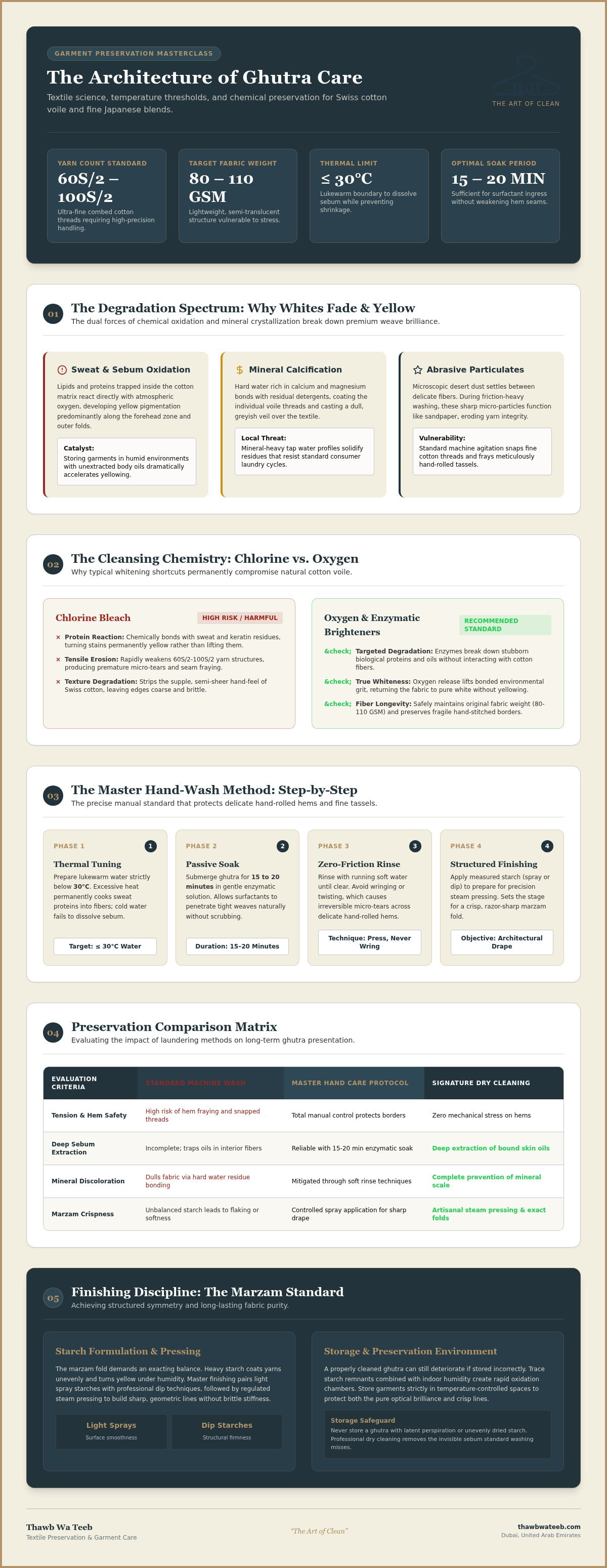
Premium voile cotton is celebrated for its lightweight, semi-translucent quality. With thread counts often reaching between 60S/2 and 100S/2, the weave is exceptionally tight yet fragile. This means that standard washing machine cycles are often too aggressive. High-speed agitation can cause the fine fibers to snap or the hand-rolled hems to fray. The weight of these fabrics, typically between 80 and 110 gsm, requires a careful balance of hydration and gentle handling. If the water is too hot, the fibers shrink; if it's too cold, the oils won't budge.
Selecting the right cleaning method based on these textile specifications is the best way to clean white ghutra fabrics. A gentle approach ensures the fabric maintains its natural drape and semi-sheer aesthetic. Mastering these basics is the foundational step in garment preservation Dubai professionals rely on to keep their traditional wear in peak condition. It's about protecting the artisanal quality of the weave while ensuring lasting comfort.
The 'Yellowing' Phenomenon: Why Whites Lose Their Lustre
Yellowing isn't just a stain. It's a chemical change. When sweat and sebum (skin oils) are trapped within the cotton fibers, they react with oxygen over time. This oxidation process creates those characteristic yellow pigments around the forehead and edges. If you store your garment in a humid environment while it still holds trace amounts of starch or oils, the discoloration accelerates rapidly. It's a complex battle against the elements that requires a proactive strategy.
Hard water minerals like calcium and magnesium also play a significant role in fabric degradation. These minerals can bond with detergent residues to create a stubborn buildup. Instead of a brilliant white, the fabric develops a subtle greyish tint that standard home washing can't easily reverse. Understanding these chemical interactions is vital for anyone seeking the best way to clean white ghutra items. Proper care prevents these minerals from dulling the fabric's natural radiance, ensuring your ghutra remains a crisp, brilliant white through every wear.
The Master Method: How to Wash Your Ghutra Step-by-Step
Hand-washing remains the undisputed gold standard for maintaining the structural integrity of a premium ghutra. While modern machines offer convenience, the mechanical agitation often proves too violent for delicate hand-rolled edges and fine tassels. By choosing a manual approach, you maintain absolute control over the fabric's tension and hydration. This is the best way to clean white ghutra textiles without risking the microscopic tears that lead to pilling or fraying over time. It's a ritual of preservation that ensures your garment remains as crisp as the day you purchased it.
Temperature control is the most critical variable in this process. You should always use lukewarm water, ideally no warmer than 30°C. Water that is too hot will cause the fine cotton voile to shrink and can permanently set protein-based stains from sweat. Conversely, cold water often fails to fully dissolve skin oils. A gentle soak for 15 to 20 minutes allows the detergent to penetrate the weave naturally, lifting contaminants without the need for aggressive scrubbing. Proper rinsing is equally vital. Any detergent residue left behind will attract dust and eventually lead to the very causes and solutions for fabric yellowing that professionals work so hard to avoid.
Hand Washing: The Artisanal Approach
- Step 1: Preparation. Fill a clean basin with lukewarm water. Add a small amount of pH-neutral liquid detergent, ensuring it's fully dissolved before the fabric touches the water to avoid spotting.
- Step 2: The Motion. Submerge the ghutra completely. Instead of rubbing the fabric against itself, move it gently in a rhythmic figure-eight motion to circulate the soapy water through the fibers.
- Step 3: Targeted Care. Pay specific attention to the 'Igal' line. This is the area where the black cord sits, and it's where scalp oils and perspiration accumulate most densely. Use your fingertips to gently massage this area rather than a brush.
If your schedule is demanding, our premium laundry in Dubai provides the expert handling these garments require. We treat every piece with the same manual precision you would apply at home, but with professional-grade results.
Machine Washing: Risks and Safe Settings
If you must use a machine, never place the ghutra directly into the drum. Always use a high-quality mesh laundry bag to act as a protective barrier for the delicate voile. Select the 'Delicates' or 'Hand Wash' cycle specifically, and ensure the spin speed is set to its lowest possible setting to prevent the fabric from stretching or distorting.
Never mix white ghutras with any coloured garments to prevent dye transfer.
Banishing Stains and Yellowing Without Damaging Fibres
Maintaining a brilliantly white ghutra requires more than just a standard wash; it involves intelligent stain management. Many people reach for chlorine bleach at the first sign of a yellow tint, but this is often a mistake. Chlorine is an aggressive oxidizer that strips natural resins from cotton voile. This leaves the fabric brittle and prone to tearing. The best way to clean white ghutra fabrics involves using oxygen-based brighteners. These release active oxygen to lift organic stains without compromising the thread's structural integrity or the delicate hand-rolled hems.
For those who prefer a traditional touch, sun-bleaching remains an effective, gentle alternative. Laying a damp ghutra flat on a clean, white surface under the midday sun utilizes natural UV rays to neutralize mild discoloration. It's an artisanal method that avoids chemical residue entirely. However, timing is key. Excessive exposure can eventually weaken the fibers, so it's best to monitor the process closely. This natural approach often achieves a level of brilliance that chemicals simply cannot replicate.
The Dangers of Chlorine Bleach on Cotton Voile
Chlorine bleach doesn't just clean; it attacks. On high-thread-count cotton voile, it causes the fibers to lose their natural elasticity. Over time, you'll notice premature fraying along the edges and a loss of that crisp, semi-translucent quality. Even more counterintuitive is the chemical yellowing phenomenon. Over-bleaching can react with trace minerals in Dubai's water, creating a permanent, synthetic yellow hue that no amount of washing can remove. Oxygen-based powders or enzymatic soaks are the superior choice for a consistent, safe result.
Spot Treatment for Traditional Stains
Traditional stains like coffee or oud oil require immediate, specialized attention. If you spill coffee, dab the area with a clean, white cloth immediately. Never rub. Rubbing pushes the pigments deeper into the tight weave of the voile, making them nearly impossible to extract. For oud and perfume oils, use a small amount of pH-neutral detergent directly on the mark and dab gently from the outside in to prevent a ring from forming. If the stain persists, it's safer to seek traditional wear dry cleaning in Dubai than to risk damaging the fabric with aggressive home remedies.
Once stains are treated, avoid the temptation to use a high-heat tumble dryer. Intense heat bakes any remaining oils or minerals directly into the fibers, setting the stain permanently. Air-drying in a shaded, well-ventilated area is the safest path to preservation. When you're ready to restore the garment's structure, following proper garment pressing techniques ensures a crisp look without the risk of heat-induced glaze or fiber damage.
Achieving the Perfect Crisp: Starching and Steam Pressing
The architectural silhouette of a white ghutra depends entirely on the quality of the finish. Starch acts as the invisible scaffolding that supports those sharp, geometric lines. Without it, the fine cotton voile lacks the body to hold its shape under the weight of the egal. Finding the best way to clean white ghutra fabrics is only half the battle; the true mastery lies in the starching. It's the difference between a garment that looks tired and one that reflects a lifestyle of refinement.
Spray starch offers a convenient, light hold for a natural drape. It's ideal for a relaxed, everyday look where comfort is the priority. In contrast, dip starching provides the firm, professional hold required for formal occasions. This traditional method involves submerging the fabric in a starch solution, ensuring every fiber is reinforced for maximum structural rigidity. For 100% cotton, you must maintain a plate temperature between 150°C and 200°C. This specific range is high enough to set the starch effectively without scorching the delicate weave.
Starching Techniques for the Professional Look
Achieving a flawless finish requires a meticulous application. To avoid unsightly white flakes or spotting, always spray from a distance of at least 20 centimeters. This ensures an even mist rather than concentrated droplets that can saturate the fibers unevenly. The secret to an authentic look is to focus the starch primarily on the front fold, known as the marzam. This creates a sharp peak that sits perfectly under the egal while allowing the rest of the fabric to fall with a natural softness. Always allow the ghutra to rest for several minutes after starching. This gives the fibers time to absorb the moisture before the final press.
Steam Pressing vs. Home Ironing
Professional steam pressing is vastly superior to traditional home ironing. Dry heat from a standard iron often creates a synthetic "glaze" or shiny marks on fine cotton voile. Steam penetrates the fibers deeply, relaxing them before the plate sets the crease. This prevents the fabric from becoming brittle or developing heat damage. To achieve the iconic triangular fold, you must align the corners with geometric precision before drawing the iron along the diagonal fold. This ensures the symmetry of the square is preserved throughout the wear.
The Dubai Crisp is the perfect balance of fabric softness and structural rigidity. It's a look that conveys both authority and elegance. If you want to achieve this level of perfection without the risk of scorching your delicate cotton, our professional Steam Pressing service ensures your traditional wear is curated with artisanal precision.
Professional Preservation: Why Expert Care Outlasts Home Washing
While home care rituals are essential for daily upkeep, professional intervention is the only way to ensure long-term fabric health. Home washing, even when done with precision, often fails to extract the deep-set skin oils and environmental pollutants that accumulate within tight cotton weaves. Over months of wear, these residues act as a catalyst for the oxidation that causes yellowing. Our Signature Dry Cleaning utilizes specialized, gentle solvents that dissolve these oils without the mechanical stress of water-based agitation. It's the best way to clean white ghutra collections that you intend to pass down through generations. This level of curation ensures the fabric remains breathable and translucent, just as the weaver intended.
Choosing a premium laundry in Dubai provides a level of fabric security that domestic machines cannot replicate. The mineral profile of local water can gradually dull white textiles, but professional systems use purified water and pH-balanced agents to neutralize these effects. It's a comprehensive approach to garment longevity. By trusting experts who value quality as much as you do, you protect your investment in high-end Swiss or Japanese cotton.
Meticulous Handling for Traditional Attire
Every garment that enters our care undergoes a rigorous inspection process. We identify hidden stains, such as microscopic oud oil marks or perspiration lines, before the cleaning process begins. This proactive approach prevents stains from becoming permanent during the pressing phase. We use eco-friendly, gentle solvents specifically formulated to preserve the brilliant whiteness of fine cotton voile. The final artisanal touch involves hand-finishing and specialized folding. Our experts understand the geometry of traditional wear, ensuring every piece is returned in a state of absolute perfection, ready for immediate use.
Effortless Maintenance with Thawb Wa Teeb
For the busy Dubai professional, time is the ultimate luxury. Maintaining a sharp, consistent look shouldn't be a source of stress or a manual chore. We've simplified the process through a seamless WhatsApp booking system, allowing you to schedule care with a single message from your office or home. Our free door-to-door pickup and delivery service across Dubai means you never have to compromise on your standards due to a demanding schedule. We act as a dedicated concierge for your wardrobe, a trusted guardian that ensures your traditional attire is always ready for the boardroom or a formal gathering. It's about providing effortless convenience without sacrificing the high-level craftsmanship your wardrobe deserves.
Experience the Gold Standard of Traditional Wear Care at Thawb Wa Teeb and redefine how you preserve your heritage.
Elevate Your Traditional Wardrobe with Expert Curation
Maintaining the brilliance of your traditional attire is an act of meticulous preservation. We've explored how transitioning from aggressive chlorine to gentle oxygen-based brighteners protects the delicate integrity of Swiss cotton voile. Achieving the iconic "Dubai Crisp" requires a precise balance of artisanal starching and professional steam pressing to avoid the heat damage common with home irons. Ultimately, finding the best way to clean white ghutra fabrics is about more than just hygiene; it's about honoring the heritage woven into every thread.
Thawb Wa Teeb acts as your dedicated wardrobe concierge, offering Expert Traditional Wear Care that simplifies your life through superior execution. Our process combines modern convenience with high-level craftsmanship, ensuring your garments return with a meticulous artisanal finishing that home washing cannot match. With Free Pickup & Delivery in Dubai, maintaining your sharp, professional appearance has never been more effortless.
Book Your Premium Ghutra Cleaning via WhatsApp
Step into every room with the confidence that your attire is immaculate, bright, and perfectly structured.
Frequently Asked Questions
How often should I clean my white ghutra?
You should clean your white ghutra every three to four wears if you spend most of your time in climate-controlled indoor environments. Airing the fabric out between uses prevents the buildup of odors and light dust. Washing after every single wear is often unnecessary and can degrade delicate cotton voile fibers significantly faster. This balanced approach is the best way to clean white ghutra collections while preserving their artisanal quality and structural integrity.
Can I use a tumble dryer for my ghutra?
No, you should never use a tumble dryer for a premium ghutra. The intense, concentrated heat of a dryer can cause fine cotton fibers to shrink and will permanently "bake" any residual oils or minerals into the weave. This leads to irreversible yellowing and a loss of the fabric's natural translucency. Instead, air dry your garment flat in a shaded, well-ventilated area to maintain its original dimensions and soft, breathable texture.
What is the best starch for a stiff ghutra finish?
The best starch depends on your desired level of rigidity. For a natural, daily look, aerosol micro-mist starches are preferred in Dubai because they don't flake or leave white streaks. If you require a formal, ultra-sharp finish, a traditional dip starching method is the superior choice. This professional technique ensures a consistent, structured drape that holds its shape under the weight of the egal throughout long events or high-level business meetings.
How do I remove yellow sweat stains from the edges?
You can remove yellowing by using oxygen-based brighteners or enzymatic soak treatments rather than harsh chlorine bleach. Chlorine often reacts with sweat proteins, creating a permanent yellow tint and making fibers brittle. A gentle, overnight soak in lukewarm water with a specialized traditional wear detergent helps dissolve stubborn sebum and mineral buildup. This method restores the brilliant whiteness of the fabric without compromising the delicate hand-rolled hems or the integrity of the weave.
Is dry cleaning better than washing for a ghutra?
Yes, professional dry cleaning is often superior for long-term preservation. While home washing removes surface dirt, our Signature Dry Cleaning uses specialized solvents to dissolve deep-seated skin oils that water-based methods often miss. This process avoids the mechanical stress of a washing machine drum, protecting the fragile tassels and fine voile. It's an essential service for high-end Japanese or Swiss cotton ghutras that require a concierge level of meticulous care and expertise.
Can I iron my ghutra if it has embroidery or patterns?
Yes, but you must use extreme caution to avoid damaging the decorative elements. Always iron on the reverse side and use a clean muslin press cloth to protect the embroidery from direct heat. This prevents the threads from melting or developing an unsightly synthetic shine. For the most consistent results, professional steam pressing is recommended. It relaxes the fibers around the patterns without the risk of snagging or flattening the intricate artisanal details.
How should I store my ghutra to prevent yellowing?
You should store your ghutra in a breathable cotton or muslin garment bag in a cool, dry place. Before long-term storage, ensure all starch and oils are completely washed out, as starch can attract moisture and pests. Avoid using plastic covers, which trap humidity and accelerate the oxidation process that leads to yellowing. Proper storage is the best way to clean white ghutra items and keep them in a state of permanent, polished refinement.
What should I do if my ghutra gets scorched by an iron?
If the scorch mark is light, you can try dabbing the area gently with a cloth dipped in white vinegar or a weak hydrogen peroxide solution. However, deep scorch marks on fine cotton voile are usually permanent because the fibers have been physically damaged by excessive heat. To avoid this risk entirely, always use a steam iron at the correct cotton setting or trust your garment to a professional service in Dubai that utilizes calibrated industrial pressing equipment.