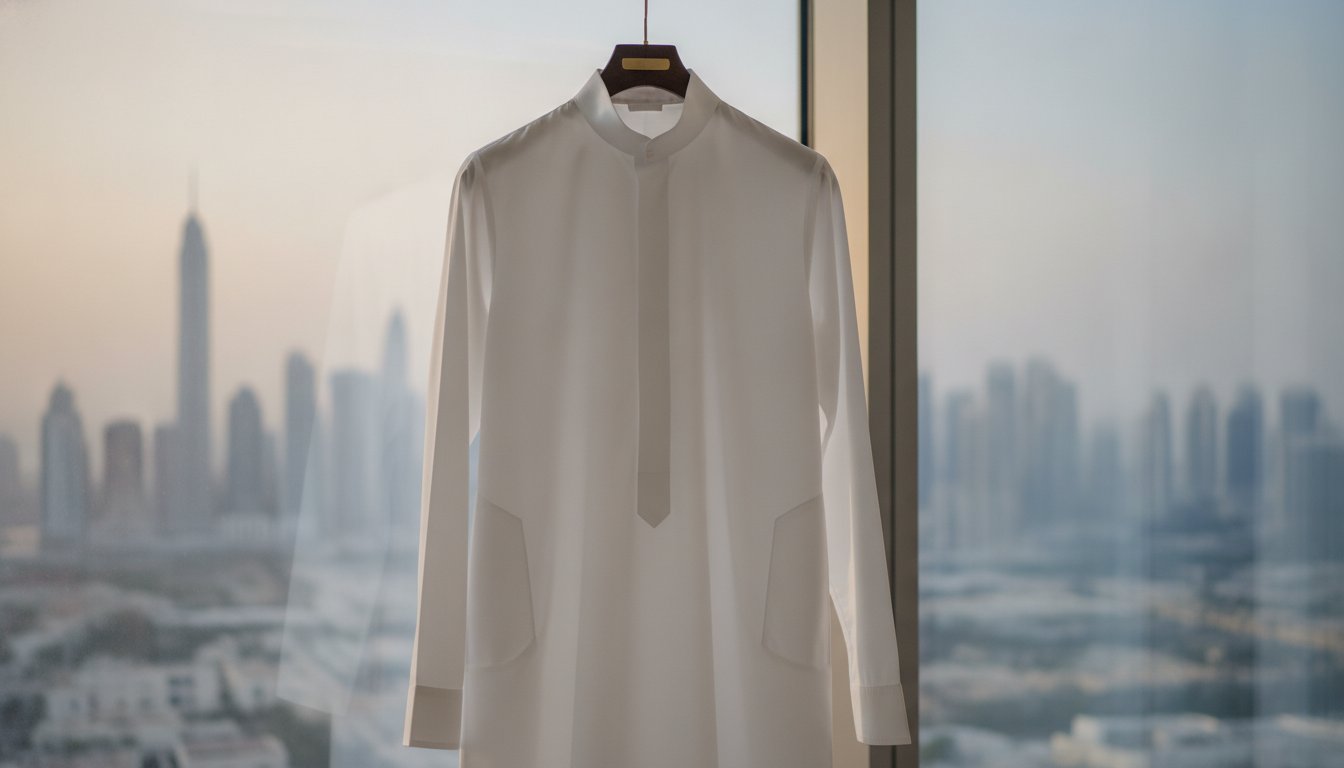
Your Kandura is far more than just a garment. It's a sharp reflection of your heritage and a daily statement of personal precision. You likely invest in the highest quality Japanese cottons to achieve that iconic, structured drape, but keeping them immaculate isn't always easy. Whether you're battling the subtle yellowing of white fibers or stubborn stains on your cuffs, understanding how to care for kandura fabric is essential for any modern professional in Dubai.
We agree that your traditional wear deserves the same level of meticulous attention that went into its tailoring. It's frustrating when improper heat or harsh chemicals ruin a premium piece. This guide promises to help you master the art of fabric preservation, giving you the tools to maintain that brilliant, "just-bought" look with total confidence. We'll walk you through the essential 2026 standards for washing temperatures, the truth about oxygen-based cleaners, and the professional techniques required to achieve a crisp silhouette every single morning.
Key Takeaways
- Identify the unique properties of your fabric, whether it's pure Japanese cotton or a high-performance blend, to tailor your maintenance routine perfectly.
- Adopt a simple post-wear checklist to prevent shoulder distortion and catch common stains before they set into the delicate fibers.
- Master the exact washing protocols and temperature limits required for how to care for kandura fabric without risking shrinkage or yellowing.
- Perfect your finishing technique with a specific ironing sequence that ensures your collar and cuffs remain sharp and structured all day.
- Learn when to leverage professional steam pressing and couture care to restore the brilliance of your most expensive traditional garments.
The Anatomy of Excellence: Understanding Your Kandura Fabric
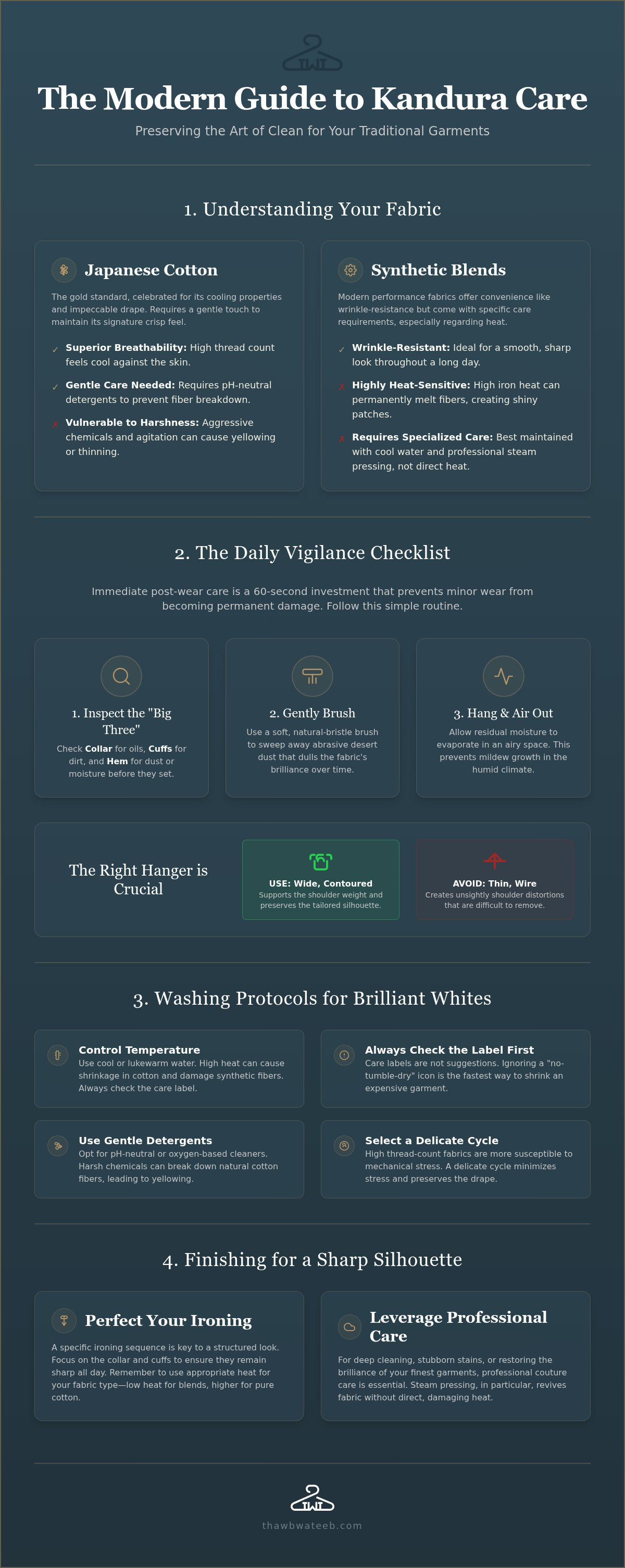
The foundation of a sharp silhouette starts with the textile itself. Most premium garments in the UAE are crafted from Japanese cotton, a material celebrated for its cooling properties and impeccable drape. To master how to care for kandura fabric, you must first identify the specific weave you're wearing. A 100% cotton piece behaves very differently than a modern performance blend under heat and moisture. Understanding these nuances is the difference between a garment that lasts a season and one that remains a wardrobe staple for years.
Japanese Cotton: The Gold Standard of Traditional Wear
Japanese textiles are the preferred choice for the Dubai climate because of their superior breathability. These fabrics are often woven with a high thread count, creating a smooth surface that feels cool against the skin even during the peak of summer. Protecting this weave requires a gentle touch. Aggressive chemicals and heavy agitation can disrupt the fibers, leading to a loss of that signature "crisp" feel. High-end cotton requires pH-neutral detergents to prevent the gradual breakdown of natural cellulose fibers. Using anything harsher will eventually lead to the yellowing or thinning that often ruins older garments.
Synthetic Blends and Modern Performance Fabrics
Modern life often demands the convenience of wrinkle-resistance. Synthetic-cotton blends offer this benefit, allowing a Thawb to stay smooth throughout a long day of meetings. However, these performance fabrics come with a hidden risk. While cotton is relatively heat-tolerant, polyester and silk-blends are highly sensitive to temperature. High heat from a home iron can permanently melt synthetic fibers, creating a permanent shiny patch that ruins the garment's matte finish. Maintaining the sheen of silk-blend traditional pieces requires cool water and specialized steam rather than direct metal contact.
The Role of Thread Count and Care Labels
Thread count isn't just a measure of luxury; it's a guide for durability. A higher thread count means finer yarns. These fine yarns provide a beautiful drape but are more susceptible to mechanical stress during cleaning. This is why luxury pieces require lower mechanical stress, such as delicate cycles or professional hand-finishing. Always check your care label before any treatment. The symbols for temperature and bleaching aren't mere suggestions. They are the manufacturer's specific instructions for preserving the integrity of the textile. Ignoring a "no-tumble-dry" icon is the fastest way to shrink an expensive custom-tailored piece. If the label is missing, always default to the most delicate setting possible to ensure your garment's longevity.
The Daily Vigilance Checklist: Immediate Post-Wear Care
Excellence is maintained in the moments after you step through your front door. While it's tempting to simply hang your garment and move on, the longevity of your wardrobe depends on immediate action. This routine is a fundamental pillar of how to care for kandura fabric. It ensures that minor wear doesn't become permanent damage. Think of it as a 60-second investment in your personal image.
Start with a focused inspection of the "Big Three." First, examine the collar for signs of skin oils or perfume residue. Second, check the cuffs for ink marks or contact dirt from desks or car interiors. Finally, look at the hem for dust or moisture picked up while walking. If the garment is clear, proceed to hanging. Use a wide, contoured hanger to support the weight of the shoulders. Thin wire hangers are the enemy of a sharp silhouette; they create unsightly distortions that are nearly impossible to steam out. Your garment also needs to breathe. Before placing it in a crowded closet, hang it in an airy, shaded space. This allows residual moisture to evaporate and prevents the growth of mildew, a common concern in the humid UAE climate.
Combatting the Dubai Elements: Dust and Humidity
Desert dust is deceptively abrasive. These microscopic particles settle into the weave and act like tiny sandpaper, dulling the brilliance of your cotton over time. Use a soft, natural-bristle fabric brush to gently sweep the garment from top to bottom. This simple habit prevents the "greying" effect that often plagues white garments in the region. Perspiration salts present another challenge. If you've spent time outdoors, salts can crystallize within the fibers. Airing the garment immediately helps, but significant marks require professional attention to prevent permanent yellowing.
Spot Cleaning Without Fabric Trauma
The first hour after a spill is the "Golden Hour." If you encounter a coffee or perfume stain, your first instinct might be to scrub. Don't. Rubbing causes fabric trauma, fraying the fibers and pushing the pigment deeper into the textile. Instead, follow established laundry best practices by blotting gently with a clean, white cloth. Use distilled water to lift what you can without adding mineral deposits from the tap. If the mark remains, it's best to stop. Trying too hard at home often leads to permanent damage. For flawless results without the stress, consider a premium laundry pickup to ensure your piece is treated with expert care.
Washing Protocols: Preserving the Brilliant White
Mastering how to care for kandura fabric during the wash cycle is a delicate balance of science and stewardship. It's not just about removing the day's dust; it's about maintaining the architectural integrity of the garment. While hand washing is the traditional gold standard for control, modern delicate machine cycles are an acceptable alternative if you take specific precautions. Always turn your garment inside out before it enters the water. This simple step creates a physical barrier that protects the outer finish from friction and potential pilling, ensuring the surface remains smooth and luminous.
Temperature control is your most critical variable. You should treat 30°C as the absolute safety ceiling for premium Japanese cottons. Research indicates that higher temperatures can cause the intricate weave to contract, leading to permanent shrinkage and a distorted silhouette. If you're using a machine, always place your piece inside a mesh laundry bag to prevent the fabric from snagging on the drum or other items. This level of meticulous care prevents the mechanical stress that leads to premature thinning of the fibers.
Detergent Selection for Traditional Textiles
The choice of cleaning agent can either preserve or perish your garment. You should always reach for liquid detergents over powders. Liquid formulas dissolve instantly and completely, whereas powders can leave microscopic chalky residues that clog the fabric pores and dull the white finish. Avoid chlorine bleach at all costs. While it seems like a shortcut to brightness, chlorine actually reacts with the cotton fibers to cause yellowing over time. Instead, use oxygen-based brighteners or traditional blueing agents. These provide that brilliant, "cool-toned" white without the corrosive side effects of harsh chemicals. For a softer feel, skip synthetic softeners and rely on a splash of white vinegar in the final rinse to naturally neutralize salts and oils.
The Drying Phase: Avoiding the Tumble Dryer
Heat is the primary enemy of Kandura longevity. Tumble dryers are far too aggressive for high-end traditional wear; the high-velocity heat can melt synthetic blends and brittle natural cotton fibers. The only professional-grade method for home care is drip-drying. Place the wet garment on a wide, padded hanger immediately after the wash. This allows gravity to naturally pull out most wrinkles, significantly reducing the amount of ironing required later. Be careful with the Dubai sun. While it’s a powerful natural disinfectant, direct sunlight is a potent source of UV damage that can yellow white fabric in a single afternoon. Always dry your Kandura in a shaded, airy space to ensure the fibers remain strong and the color stays pristine.
Finishing and Storage: The Secret to a Sharp Silhouette
Achieving a razor-sharp finish is the final, most rewarding step in how to care for kandura fabric. It requires more than just heat; it requires an understanding of fiber behavior. The most effective method for a crisp result is the "Damp Ironing" technique. By pressing the garment while it's still slightly moist from the wash, you allow the steam to penetrate the core of the cotton fibers. This makes them significantly more pliable and results in a smooth, architectural drape that lasts all day. If the fabric has already dried, use a fine mist of distilled water to rehydrate the weave before the iron makes contact.
Precision follows a specific sequence. Always begin with the collar, working from the outer points toward the center to prevent unsightly ripples. Move to the cuffs and shoulders next, as these structured areas define the garment's frame. Finally, iron the long panels of the body, finishing at the hem. For dark garments or modern synthetic blends, always use a clean, white pressing cloth. This thin barrier prevents "iron shine," those permanent glossy patches caused by the metal plate crushing the fibers under high heat. It's a simple precaution that separates a well-maintained piece from one that looks prematurely worn.
Mastering the Steam: Professional vs. Home Pressing
While home irons are convenient, they rely on weight and direct contact, which can eventually flatten the natural loft of premium Japanese cotton. Professional steam pressing is fundamentally different. It utilizes high-pressure vapor to relax the fibers from within, achieving a superior finish without the risk of fabric trauma. For delicate traditional wear, vertical steaming is often the safest choice to remove light wrinkles between deep cleans. If you want to maintain that boutique-level crispness without the effort, utilizing a professional ironing service Dubai ensures your wardrobe receives the expert handling it deserves.
Wardrobe Management and Seasonal Storage
Storage is where many owners inadvertently damage their collection. In Dubai's specific climate, humidity and dust are constant threats. Never leave your Kandura in the plastic film provided by a laundry service for more than 24 hours. Plastic traps residual moisture, which, when combined with the UAE heat, creates a breeding ground for mildew and yellowing. Switch to breathable cotton garment bags instead. These allow air to circulate while keeping desert dust at bay. Ensure your closet isn't overcrowded; "crush wrinkles" occur when garments are packed too tightly, forcing you to re-iron more frequently. For a flawless finish every time you get dressed, schedule a professional steam pressing to restore the bounce and brilliance of your finest pieces.
Professional Intervention: The Thawb Wa Teeb Advantage
Even the most diligent home routine eventually reaches its limit. Body oils, atmospheric salts, and microscopic dust can settle deep within the weave, moving beyond the reach of standard domestic machines. This is the moment when professional intervention becomes a necessity rather than a luxury. Understanding the nuances of dry cleaning for traditional wear Dubai is about more than just stain removal; it's about textile restoration. At Thawb Wa Teeb, we treat every garment as a unique piece of craftsmanship. Our signature process is designed to meet the rigorous Al Thawb Al Watani standard, ensuring your traditional wear retains its structural integrity and brilliant finish for years to come. This expert level of oversight is an essential part of knowing how to care for kandura fabric effectively.
Professional handling is the only way to manage the deep-seated impurities that cause fabric fatigue. We utilize specialized, pH-neutral solvents that gently lift oils without stripping the natural luster of Japanese cotton. This expert approach is a cornerstone of how to care for kandura fabric at the highest level. By entrusting your wardrobe to specialists, you bypass the risks of shrinkage or fiber thinning that often occur with repeated home laundering. Every piece is treated with individual importance, ensuring that the silhouette remains as sharp as the day it was tailored.
Specialist Care for Embroidered and Couture Pieces
High-end ceremonial Kanduras often feature intricate embroidery on the collar, placket, and cuffs. These delicate areas are highly susceptible to fraying if subjected to mechanical agitation or improper chemicals. Our artisans provide specialized handling for these couture elements, ensuring every thread remains perfectly in place. This same level of meticulous attention extends to our silk abaya cleaning Dubai services, where we protect the most delicate fibers through expert curation. For ceremonial pieces that carry significant personal or cultural value, manual finishing is non-negotiable. We act as the trusted guardian of your most prized garments, applying artisanal standards to every stitch.
The Seamless Experience: From WhatsApp to Wardrobe
Luxury is defined by ease. We've reimagined the dry-cleaning experience to fit the lifestyle of the busy Dubai professional. Scheduling your service is as simple as sending a message; our WhatsApp booking system connects you directly with our concierge team. We provide free door-to-door pickup across Dubai, ensuring your garments are handled with professional respect from the moment they leave your home. Once at our facility, your Kandura undergoes a meticulous journey of inspection, treatment, and steam pressing before being returned to you in pristine condition. Your time is valuable. Let us simplify your life through superior execution and reliable care. Schedule your premium Kandura care with Thawb Wa Teeb today to experience the pinnacle of garment preservation.
Elevate Your Wardrobe with Timeless Precision
Maintaining a sharp silhouette is a commitment to excellence that pays dividends in your personal and professional life. By mastering the nuances of Japanese cotton and adopting a disciplined post-wear routine, you ensure your traditional wear remains a symbol of refinement. We've explored how temperature control and proper storage are vital components of how to care for kandura fabric, but the ultimate preservation often requires a specialist's touch. Body oils and desert dust don't have to be permanent threats to your finest pieces.
Thawb Wa Teeb acts as the trusted guardian of your wardrobe, utilizing sophisticated cleaning technology to protect every fiber. As specialists in traditional Emirati attire and luxury textiles, we provide the artisanal care your garments deserve. Enjoy total convenience with our free door-to-door pickup and delivery across Dubai. Experience Meticulous Care—Book Your Kandura Collection Now and step out with the confidence of a perfectly maintained wardrobe every single day. Your heritage deserves nothing less than our meticulous attention to detail.
Frequently Asked Questions
Can I use bleach to keep my white Kandura bright?
You should avoid chlorine bleach entirely because it reacts with cotton fibers and causes permanent yellowing over time. Instead, use oxygen-based brighteners or traditional blueing agents to maintain that crisp, cool-toned white. These alternatives are much gentler on the delicate weave of your garment and help prevent premature thinning of the fabric.
How often should I professionally dry clean my Kandura?
Professional dry cleaning is recommended every three to four wears to remove deeply embedded salts and skin oils. Even if a garment looks clean, these impurities can weaken the fibers if they aren't neutralized. Regular professional intervention is a key part of how to care for kandura fabric to ensure it remains a staple in your wardrobe for years.
Is it better to wash my Kandura by hand or in a machine?
Hand washing remains the gold standard for total control and minimal mechanical stress on high-end textiles. If you choose a machine, always use a mesh laundry bag and a delicate cycle to prevent snags or friction damage. Ensuring the machine isn't overloaded allows the detergent to rinse away completely, preventing dull residues.
What is the best way to remove yellow sweat stains from the collar?
Apply a gentle solution of white vinegar and water to the area before washing to neutralize the salts and oils. For stubborn or set-in marks, professional deep cleaning is the most effective and safest solution. Experts use specialized, fabric-safe solvents that lift ingrained impurities without damaging the architectural structure of the collar or cuffs.
Why does my Kandura have a "shiny" look after ironing at home?
This "iron shine" occurs when direct, high heat crushes the natural loft of the fibers or melts synthetic components in the blend. You can prevent this by using a clean, white pressing cloth as a barrier between the iron and the fabric. Always use a medium steam setting rather than high dry heat to keep the finish matte and sophisticated.
Does Thawb Wa Teeb offer same-day delivery for traditional wear in Dubai?
We focus on a meticulous 24-hour return process to ensure every garment receives the artisan-level attention it requires for a premium finish. This timeframe allows our experts to perform thorough inspections and hand-finishing without rushing the delicate preservation steps. You can easily coordinate your door-to-door collection and return through our convenient WhatsApp booking service.
What is the ideal temperature for washing Japanese cotton Kanduras?
You should treat 30°C as the absolute maximum temperature for washing premium Japanese cotton to prevent shrinkage. Heat is the primary cause of fiber contraction in high-quality weaves. Cold water is equally effective when paired with the right pH-neutral liquid detergent, which is a vital step in how to care for kandura fabric correctly.
How should I store my Kandura to prevent it from wrinkling?
Store your garment on a wide, contoured hanger in a breathable cotton garment bag to maintain its structural shape. Avoid using plastic covers for long periods, as they trap moisture and can lead to fabric yellowing in the Dubai humidity. Ensure there is enough space in your wardrobe so that other garments don't crush the fabric and create deep, set-in wrinkles.