A washing machine is safe for designer clothes only when the care label permits it. For silk, cashmere, embellished pieces, tailored blazers, dresses and structured garments, avoid machine washing. A crossed-out washing symbol or “Dry Clean Only” label means professional cleaning is the safer choice. Knowing how to care for designer clothes starts with the label, not the machine’s gentlest setting.
It’s tempting to wash a favourite piece at home, especially when it looks ready for a refresh. But the right method depends on the fabric, construction, and care instructions, while repeated washing can wear down fibres and fade colour. This guide explains when home cleaning is appropriate, how to respond to delicate stains, and which care tools are useful, with practical budgeting considerations for Dubai in AED.
You’ll also find guidance on airing and storing garments, washing machine-safe pieces, and caring for leather clothing and trim. Leather needs particular attention: moisture, heat and unsuitable products can affect its finish. A few careful habits can help protect the character and structure of a designer wardrobe, while making it easier to recognise when a garment needs professional care.
Key Takeaways
- Let the care label guide your cleaning choice. “Dry Clean Only” and a crossed-out washing symbol signal that home washing isn’t suitable.
- Choose care tools around your garments’ fabrics and storage needs, rather than buying a full kit at once.
- Machine-wash only pieces whose labels permit it; use a gentle approach and avoid rubbing delicate fabrics when treating stains.
- Protect leather trim by wiping it with a soft, dry cloth and keeping it away from moisture and direct heat.
- For a delicate or structured garment that needs specialist attention, Signature Dry Cleaning & Couture Care offers a professional-care option.
1. When Is Home Cleaning Safe for Designer Clothes?
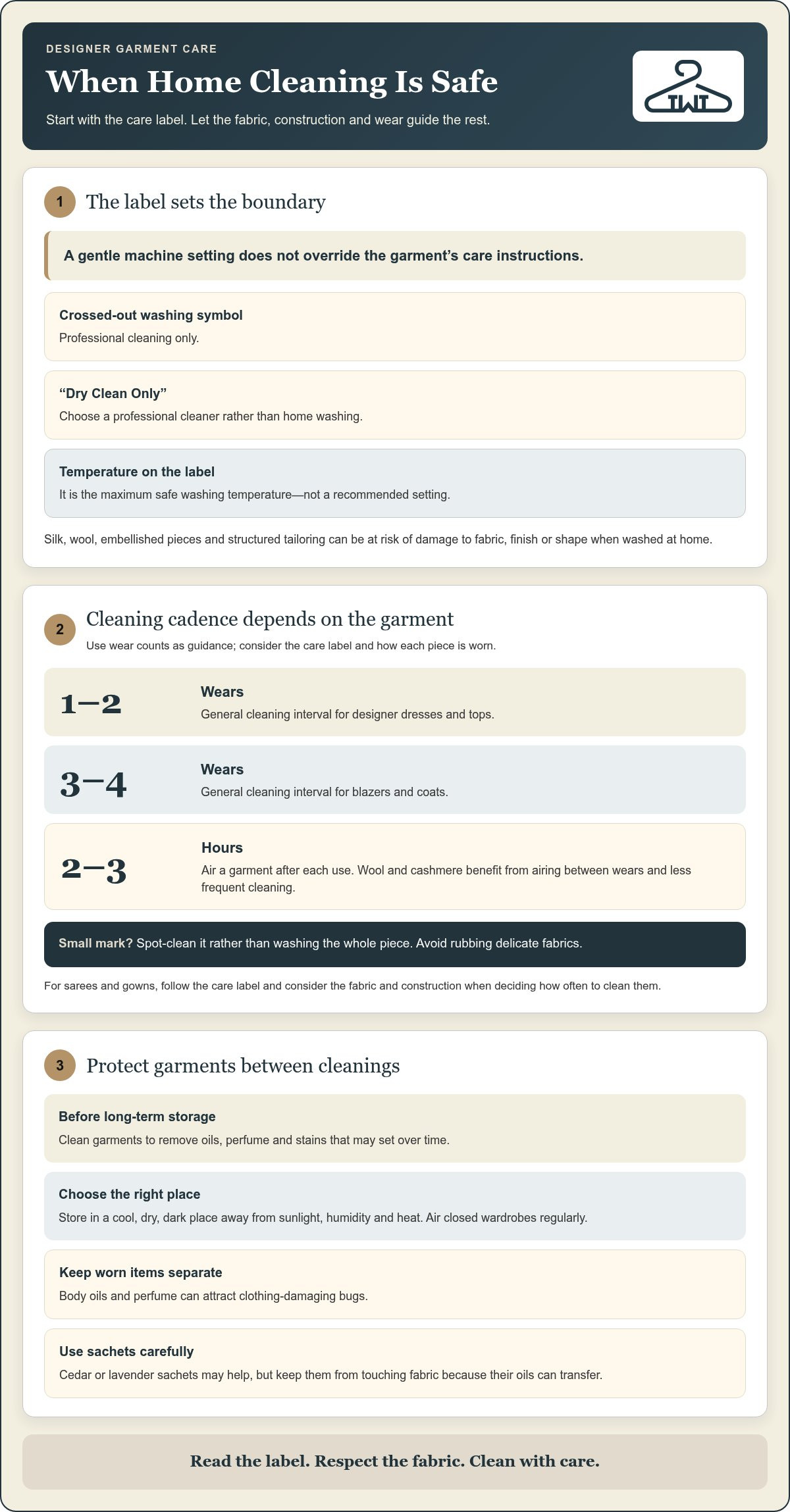
Check the garment’s care label before choosing home cleaning or professional dry cleaning. A crossed-out washing symbol means professional cleaning only, while “Dry Clean Only” means the garment should go to a professional cleaner. The temperature shown is the maximum safe washing temperature, not a recommended setting. For silk, wool, embellished pieces and structured tailoring, home washing can risk the fabric, finish or shape.
Cleaning frequency depends on the garment and how it’s worn. Designer dresses and tops are generally cleaned after 1–2 wears; blazers and coats after 3–4 wears. For sarees and gowns, follow the care label and consider the fabric and construction when deciding how often to clean them. Wool and cashmere benefit from gentle handling, less frequent cleaning, and airing between wears. After each use, air a garment for 2–3 hours; spot-clean a small mark rather than washing the whole piece. Over-cleaning can damage clothing, just as leaving stains and body oils untreated can.
Before long-term storage, clean designer garments to remove oils, perfume and stains that may set over time. Store them in a cool, dry, dark place, away from sunlight, humidity and heat. Keep worn garments separate from clean ones: body oils and perfume can attract clothing-damaging bugs. Cedar or lavender sachets may help, but keep them from touching fabric because their oils can transfer. Air closed wardrobes regularly.
When choosing dry cleaning in Dubai, look for a professional service that considers the care label, fabric, construction and embellishments before cleaning. Share the garment’s fabric details and point out stains or delicate trims so the cleaner can account for them. For a “Dry Clean Only” silk dress or beaded gown, choose professional care rather than experimenting at home. Item-specific handling matters more than assuming every garment can follow the same process.
For travel, place clean garments in a breathable garment cover and avoid compressing delicate pieces under heavy luggage. Fold fragile or embellished clothing with acid-free tissue between layers, and fasten buttons, zippers and hooks before packing. Keep shoes and accessories from pressing against fine fabric. On arrival, hang garments in an airy space so folds can relax, and follow the care label when steaming.
Fine jewelry needs its own routine. Wipe pearls with a delicate cloth and keep them away from harsh chemicals, detergents and liquids. Clean gold with gentle washing-up liquid and warm water, then leave it to dry on a paper towel. For silver jewelry without stones, a silver dip is suitable; use a specialist silver cloth for silver set with stones. Store pieces separately so they don’t rub together or tangle.
2. How Much Should You Spend on Designer Clothing Care Tools?
There’s no single useful budget for every wardrobe. Start with the garments you own and their care labels, then buy tools for specific needs rather than a complete kit. A cashmere collection calls for different storage choices than a wardrobe of structured jackets. Read each label for fabric-specific dry-cleaning or hand-washing instructions before buying detergents, steamers or other cleaning tools. Labels also guide safe heat settings and help prevent spending on equipment your garments can’t use.
Prioritize storage. Breathable cotton garment bags or muslin covers protect designer clothes while allowing air to circulate. Avoid plastic dry-cleaning bags, which can trap moisture and cause discoloration. For delicate garments, acid-free tissue helps separate folds and layers; replace it every year or two. These are practical purchases for clothes that need protection in storage, not accessories to buy automatically for every item.
Choose storage to match each garment’s shape. Fold knitwear and heavy sweaters flat, since hanging can stretch the shoulders and distort the fabric. Beaded, lace and bias-cut pieces also benefit from careful folding, with acid-free tissue between layers to reduce friction and pressure on delicate details. Structured jackets are different: folding can leave lasting creases, so store them on suitable shaped hangers. Let the garment’s weight and construction guide your storage choices.
Embellishments need their own protection. Before storing a beaded or lace garment, fasten its buttons, zippers and hooks, then wrap exposed decoration in acid-free tissue. This helps keep beads and trims from catching on other fabric. Use a breathable cover and leave enough wardrobe space to prevent compression. Buying tissue and a suitable cover is more purposeful than investing in several general-purpose products.
To limit fading, stretching and moth damage, store clothes in a cool, dry, dark place, away from direct sunlight, humidity and heat sources. Use padded hangers for garments that need hanging, fold knits and keep delicate pieces in breathable garment bags. Cedar or lavender sachets can be used instead of mothballs, but don’t let them touch fabric because their oils may transfer. Air closed storage spaces regularly.
Build your care-tool budget around specific needs: care-label instructions, fabric, garment weight, embellishments and storage conditions. If you own one lace dress, acid-free tissue and a breathable cover may be more useful than a full set of tools. For several heavy knits, prioritize flat storage. This selective approach ties each purchase to preserving a garment’s finish and shape.
3. Can You Wash Designer Clothes in a Washing Machine?
Machine-wash a designer garment only when its care label permits it. Keep silk or cashmere out of the machine unless the label specifically allows washing. Avoid machine washing embellished garments, tailored blazers and dresses, and structured pieces. A delicate cycle doesn’t eliminate the risks of friction, agitation or loss of shape. For these garments, professional dry cleaning is the safer route.
For a label that allows hand washing, use cold or lukewarm water and mild detergent. Turn the garment inside out, submerge it gently, and swirl it rather than scrubbing. A soak of 5–10 minutes is sufficient; don’t twist or wring the fabric afterward. Roll the garment in a clean towel to absorb excess water, then lay it flat in the shade. Follow the label if it gives more specific instructions.
Silk needs especially careful handling. If the label permits hand washing, turn the garment inside out and wash it in cool water with delicate detergent. Move it gently through the water, then press out excess moisture without wringing. Lay it flat to dry away from direct sunlight, which can fade colour. If the label says “Dry Clean Only,” choose professional dry cleaning rather than soaking the garment at home.
For cashmere, use cold water and wool-safe detergent when hand washing is permitted. Turn the sweater inside out, gently submerge and swirl it, then rinse without twisting or wringing. Lay it flat to air dry; hanging it while wet can stretch the knit and distort its shape. Pilling or shrinkage are signs that cashmere needs specialized care, not a stronger wash.
Dress shirts and denim may be machine-washable when their labels allow it. Turn shirts inside out to reduce friction on the surface fibres, and use cold water on a gentle cycle. Wash jeans inside out on delicate; hand-wash raw denim. Keep similar colours together, use minimal detergent for premium denim and don’t overcrowd the machine. Air-dry denim to help prevent shrinkage and preserve its colour.
For a small stain, blot gently with a clean cloth instead of rubbing. Test any cleaning product on a hidden area first, as treatment can affect colour or finish. If the garment is delicate, structured, embellished or marked “Dry Clean Only,” don’t risk a home wash to treat one spot. Gentle handling protects the surrounding fabric from unnecessary friction.
Before washing, read the full care label, including the drying instructions. Follow the garment’s care-label drying instructions to help protect its shape and fabric. Careful choices about water, detergent, agitation and drying help preserve the garment’s construction as well as its fabric.
4. Stain removal for delicate fabrics
Act quickly, but minimize friction. For a liquid spill on silk, cashmere or fine cotton, press a clean white cloth gently against the spot. Blot from the outside inward to help contain the stain. Don’t rub, scrub or use a coloured towel: friction can damage delicate fabrics, and dye may transfer to the garment. Lift away moisture with repeated gentle presses, using a clean section of cloth each time.
Identify the stain before choosing a treatment. Sweat and food leave protein stains, while wine and coffee leave tannin stains. Oil marks need a different approach. This distinction matters because a treatment suited to one stain may not work on another fabric or mark. Check the garment’s care label and fabric first, especially for silk, cashmere, lace or embellished clothing.
For an oil stain, sprinkle cornstarch over the mark and let it absorb the oil, then brush the powder away gently. Don’t press the powder into the fibres or scrub with a brush. For wine, dab with cold water and mild detergent, not hot water. Test any product on a hidden area first, and stop if the fabric’s colour or finish changes.
Enzyme-based products are used for protein stains from sweat or food; acidic solutions are used for tannin stains from coffee or wine. But these categories don’t make every treatment safe for every garment. Delicate fabric can react even to a product suited to the stain type. Follow the care label, and avoid applying strong or unfamiliar treatments directly to a luxury piece.
Avoid bleach on natural fibres. It can weaken cotton, silk or wool, leaving them more vulnerable to wear. Don’t combine several stain products either: layered treatments can leave residues that are harder to remove and complicate later cleaning. If a stain remains after gentle blotting, don’t escalate to scrubbing or hotter water. Heat and friction may set or spread marks.
Once the spot is treated, let the garment dry according to its care instructions. Don’t hang a wet, heavy knit, as its weight can stretch the shape. Lay it flat where appropriate, away from direct sunlight. Before storing the garment, make sure the treated area is dry and check that no residue remains; trapped moisture can affect the fabric during storage.
For a stain on beading, lace, lined silk or a structured garment, avoid experimenting at home. These details can snag, distort or lose their finish during spot treatment. Keep the garment separate from clean clothes while the mark is fresh, note what caused it and share that detail with a professional cleaner. Wine and oil stains need different handling, so identifying the stain helps guide the next step.
5. Leather clothing and trim care
Leather needs a different routine from woven fabrics. Start with the care label and avoid treating leather clothing and trim like cotton, silk or cashmere. Wipe leather trim with a soft, dry cloth, and keep it away from moisture and direct heat. If a leather jacket or bag gets damp, gently blot the surface and let it dry away from a radiator or direct sunlight.
Don’t use a steamer on leather. Steam and concentrated heat can affect the finish, so keep the steamer away from leather panels or trim when refreshing nearby fabric. On a mixed-material garment, steam only the textile portion. If leather needs more than a dry wipe, use a product intended for that material and test it on a hidden spot first.
Test leather conditioner or polish on an inconspicuous spot before applying it to leather sneakers. Use a small amount, then check for changes in colour or finish before treating the visible surface. Suede and nubuck have a different texture from smooth leather, so treat them gently. Don’t apply polish intended for smooth leather to suede.
Protect designer handbags from friction and light. Store each bag in a dust bag, away from direct sunlight on suede or leather panels. Keep it elevated rather than resting it on a potentially damp floor. Shoes can also be kept elevated and wrapped in acid-free paper. These simple storage choices help prevent avoidable contact with dust, moisture and nearby surfaces.
For leather clothing with fabric lining, inspect both materials before cleaning. A leather edge beside silk or wool may react differently to water or cleaning products than the textile. Don’t soak a leather-trimmed garment or rub its trim while spot-treating the fabric. If a stain reaches both materials, or the leather changes appearance, stop home treatment and choose professional dry cleaning suited to the garment’s construction.
Store leather accessories separately from delicate fabrics. A bag clasp or shoe edge can catch lace, beads or fine fibres, while pressure can mark soft leather. Don’t stack heavy items on a handbag or store shoes and bags in direct sunlight. When travelling, use separate dust bags so buckles and textured surfaces don’t rub against clothing.
For leather shoes that need specialist attention, arrange professional shoes and leather cleaning. Choose expert care when home wiping or a tested product won’t address the mark, or when leather trim needs more than routine dust removal.
Thawb Wa Teeb: Signature Dry Cleaning & Couture Care
Thawb Wa Teeb offers Signature Dry Cleaning & Couture Care for designer garments that need professional handling, including dry-clean-only, structured or embellished pieces. Choose care suited to the garment instead of risking damage with an unsuitable home wash. Shoes & Leather Cleaning offers dedicated care for leather shoes and accessories. Steam Pressing can refresh suitable garments in accordance with their care instructions.
Share the care label and point out delicate details or visible stains when arranging garment care. These details help direct attention to the fabric and finish that need consideration. For pieces that call for expert cleaning, choose Thawb Wa Teeb’s couture care.
Visit thawbwateeb.com to contact Thawb Wa Teeb about caring for your garments.
Make garment care part of your routine
Knowing how to care for designer clothes is less about adding products to your wardrobe and more about making thoughtful choices before a problem appears. Keep garment care labels accessible, note delicate finishes and set aside pieces that need professional attention instead of testing unfamiliar treatments at home. A simple routine helps protect the pieces you value and makes it easier to decide when expert care is the sensible next step.
For garments that need a considered clean or careful press, Thawb Wa Teeb offers Signature Dry Cleaning & Couture Care, Wash & Iron and Steam Pressing. Choose the service that suits the garment’s care needs, then share details about its fabric, finish or stains.
Contact Thawb Wa Teeb for care advice and take the next step toward a wardrobe you can enjoy for longer.
Frequently Asked Questions
Can You Wash Designer Clothes in a Washing Machine?
Yes, but only if the care label permits machine washing. Cotton and linen pieces may be washed inside out, in cold water on a gentle cycle, with similar colours. Use mild detergent and don’t overcrowd the drum, which can increase wrinkling and reduce cleaning effectiveness. Premium denim also benefits from a cold, gentle wash inside out. Choose hand washing or professional cleaning for garments whose labels don’t allow machine washing.
How Do I Prevent Fabric Fading and Discoloration?
Keep garments out of direct sunlight while drying and storing, as exposure can fade fabric. For cotton or linen whose label permits washing, turn the item inside out and use a cold, gentle cycle with similar colours. Store clothes in a cool, dry, dark place away from heat and humidity. Avoid leaving garments in plastic dry-cleaning bags, which can trap moisture and contribute to discoloration.
How Do I Remove Wrinkles From Delicate Fabrics Without an Iron?
Use a steamer only when the garment’s care instructions allow steaming. Turn the garment inside out and keep the steamer head 6–8 inches from silk to reduce direct heat exposure. For velvet, avoid direct ironing and steam from a safe distance. Let the fabric settle before wearing, and don’t press the steamer against delicate fibres. A care label should guide whether heat is appropriate for that specific garment.
How Should I Store Sweaters to Prevent Pilling and Stretching?
Fold sweaters flat instead of hanging them, since hanging can stretch the shoulders and distort the knit. Make sure each sweater is clean and fully dry before storage, then place it where heavier garments won’t press down on it. Cashmere needs specialized care to help prevent pilling and shrinkage. Keep knits away from direct sunlight and humidity, which can affect fibres during storage.
How Much Should You Spend on Designer Clothing Care Tools?
Set a budget by listing what your wardrobe actually needs, rather than buying a complete kit. Start with storage essentials, such as breathable garment covers and acid-free tissue for delicate pieces. Add fabric-specific detergents or a steamer only if your garments’ care labels call for them. The right priorities depend on the fabrics, embellishments and storage needs of the clothes you want to preserve.
What Is the Best Way to Pre-Treat Stains on Delicate Garments?
Blot a fresh liquid stain with a clean white cloth, working from the outside toward the centre. Don’t rub or scrub: friction can damage delicate fibres and spread the mark. For an oil stain, apply cornstarch, let it absorb the oil, then brush it away gently. Test any treatment on a hidden area first, and avoid bleach on natural fibres because it can weaken them.
When Is Home Cleaning Safe for Designer Clothes?
Home cleaning is suitable only when the garment’s care label allows it and the method matches its fabric. A hand-washable item can be gently swirled in cool water with mild detergent, without scrubbing or wringing. To learn how to care for designer clothes at home, start by matching the cleaning method to the fabric and label. Choose professional cleaning for garments marked “Dry Clean Only” or with a crossed-out washing symbol.
How Do I Read Designer Clothing Care Labels and Fabric Symbols?
Read the entire care label before cleaning, including the washing and drying instructions. A crossed-out washing symbol means professional cleaning only; “Hand Wash Cold” calls for cool water and mild detergent. “Do Not Tumble Dry” means the garment should be laid flat to dry. Knowing how to care for designer clothes also means treating the temperature shown as the maximum safe washing temperature, not a recommended setting.