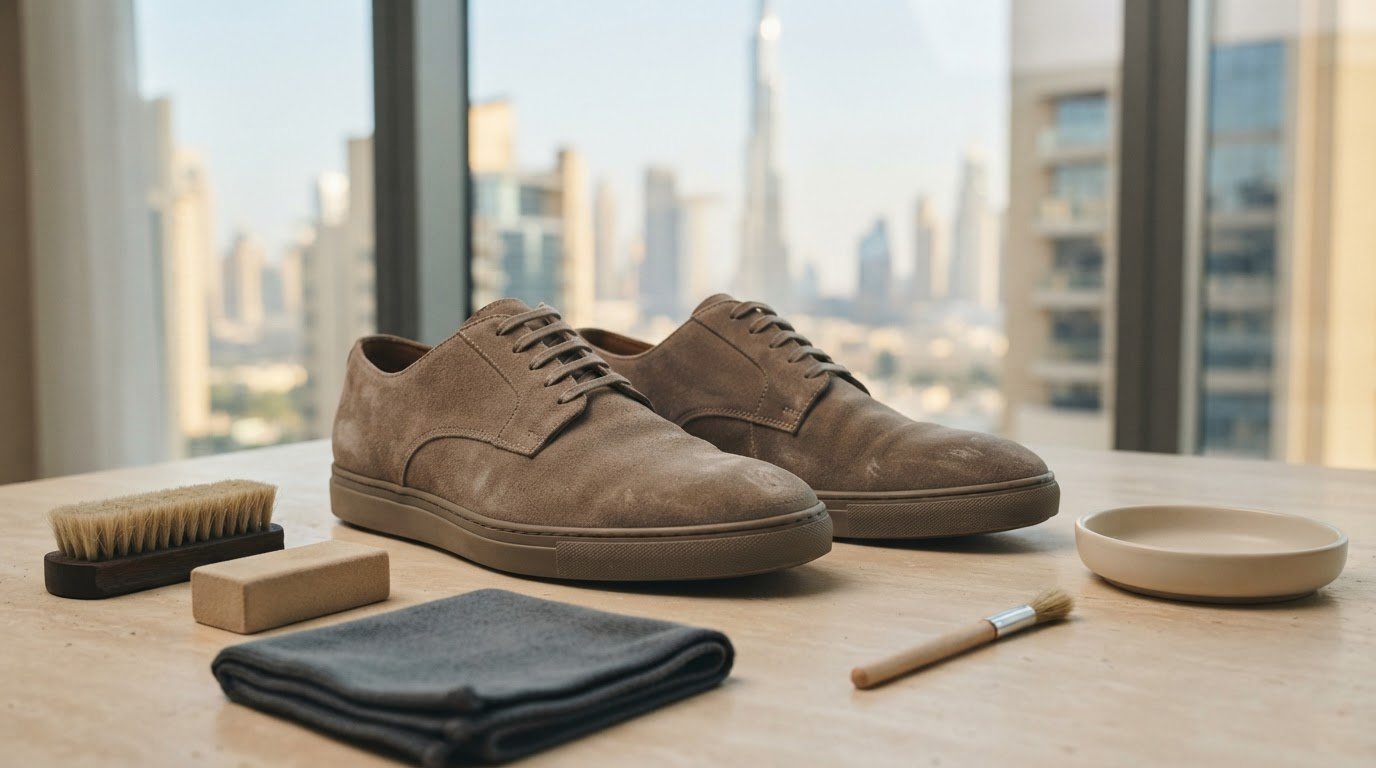
Could the quickest way to clean suede shoes be to put the water and scrubbing brush aside? If you’re wondering how to clean suede shoes at home, be cautious: too much moisture, forceful rubbing or direct heat can leave the delicate surface looking worse.
Start with a dry, gentle approach. Dust and light marks may respond to a suede brush or eraser, but the safest method depends on the mark and the shoe’s finish. This guide explains how to refresh dusty suede without flattening its nap, handle simple marks carefully, and recognise when to stop rather than risk further damage.
You’ll find practical tool suggestions, a step-by-step routine, and guidance for common marks, including how to let suede dry safely. For persistent stains or delicate finishes, professional care may be wiser. If you’re in Dubai, confirm that your specific suede shoes and stain are accepted before arranging professional shoe and leather cleaning.
Key Takeaways
- Use a measured routine that prioritises suede’s delicate nap.
- Choose tools suited to suede and prepare the shoes before treatment.
- Match your first step to the mark, then stop if it persists or the suede’s appearance changes.
- Consider professional assessment for valuable shoes, delicate finishes or uncertain stains.
- In Dubai, confirm that your specific suede shoes and stain are accepted before arranging professional cleaning.
How to Clean Suede Shoes at Home Without Damaging Them
Many light marks can be assessed at home. The key is to identify the mark before reaching for a cleaner. Suede is leather with a soft, raised nap, and moisture or friction can change how that surface looks and feels. Start dry, use light pressure, and avoid aggressive scrubbing, which can spread a mark or flatten the nap.
Safe home suede care means using the gentlest suitable method, following the shoe’s care guidance, and stopping as soon as the material or colour changes. That matters more than trying to remove every mark in one session. If a dry brush doesn’t help, harder or repeated rubbing isn’t automatically safer.
What makes suede different from smooth leather?
Suede’s raised fibres create a soft, matte texture. Brushing can lift or lay the nap in different directions, changing how light falls across the shoe. Smooth leather has a more even surface, so don’t assume products and methods intended for it are suitable for suede. For an overview of what is suede, see Wikipedia. Check the shoe’s care label or manufacturer instructions before treating it, and follow any material-specific advice.
When should you avoid cleaning suede at home?
Be cautious with large or set-in marks, stains of unknown origin, and oily spots. These can be difficult to treat without affecting the colour or texture, especially if you don’t know how the material will respond. Don’t apply a household cleaner or add moisture just to test an uncertain stain.
Stop if colour transfers to your cloth or brush, the surface changes noticeably, or the mark begins to spread. Valuable shoes, delicate finishes and unfamiliar materials are better candidates for professional assessment than experimentation at home. In Dubai, Thawb Wa Teeb offers shoe and leather cleaning. Confirm whether your particular suede shoes and stain can be accepted, and what treatment may be suitable, before arranging service.
Prepare Suede Shoes and Choose the Right Cleaning Tools
Preparation helps keep cleaning controlled. Before deciding how to clean suede shoes at home, check the shoe’s care label or manufacturer guidance. Suede finishes can differ, so don’t assume a product suitable for one pair is safe for another.
Which tools are suitable for basic suede care?
Keep the tool kit simple. A clean suede brush can lift surface dust with light strokes, while a suede eraser may help with a small, dry scuff. Use each only if the shoe’s care guidance allows it, and don’t press hard. For additional practical guidance, see these expert tips for cleaning suede.
Skip household cleaners, coloured cloths that could transfer dye, and unverified DIY mixtures. A clean, soft, colourfast cloth can be useful for careful blotting if the instructions for a suitable product call for it. Don’t use it as a reason to wet the suede unnecessarily.
How to prepare and test the shoes
If the shoes are damp, let them air-dry naturally before brushing or considering spot treatment. Keep them away from direct heat. Remove the laces and, if appropriate for the shoe, place clean, dry shoe trees or loosely tucked paper inside to support its shape. Work on one shoe at a time in a well-lit, ventilated space so you can spot changes.
Before using any product, test it on a discreet area and follow its label. Let the test spot dry fully, then check for colour transfer, a change in texture or a visible difference from the surrounding suede. If anything looks altered, stop rather than continuing across the shoe.
Preparation checklist
- Essential: Check care guidance, let damp shoes air-dry, remove laces, and work in good light.
- Optional: Use a clean suede brush or suede eraser only if appropriate for the shoe.
- Before any product: Test discreetly, let the area dry, and check for changes.
If a mark persists or you’re unsure about the finish, pause home treatment. In Dubai, you can explore professional shoe and leather cleaning, and confirm whether your specific suede shoes and stain are accepted before arranging service.
Match Your Suede Cleaning Method to the Mark
Let the mark guide your next move. Dry dust is different from a fresh splash, and neither should be treated like oil or ink. When deciding how to clean suede shoes at home, begin with the lowest-risk response and reassess before doing more. The shoe’s finish, the stain’s age and the manufacturer’s care instructions all affect what’s appropriate.
| Type of mark | Lowest-risk first step | When to stop |
|---|---|---|
| Dry dust | On dry suede, use a clean suede brush with light strokes in one direction. | Pause if the nap or colour looks different, or the dust doesn’t lift easily. |
| Small, dry scuff | Try a suede eraser sparingly, only if care guidance permits. | Stop if the mark spreads or the surface starts to look worn. |
| Fresh liquid mark | Blot gently with a clean, soft cloth, without rubbing, then let the shoe air-dry. | Stop if the mark remains, spreads or changes the suede’s appearance. |
How do you remove dust and light surface scuffs?
Brush only when the shoe is dry. Work in one direction with a light touch, then check the nap before deciding whether another pass is needed. For a small, dry scuff, a suede eraser may be suitable if the shoe’s care guidance allows it. Use it sparingly. Hard pressure, repeated rubbing or brushing damp suede can affect the finish rather than improve it.
What should you do about water, oil, or unknown stains?
For a fresh liquid mark, blot rather than rub. Let the shoe dry naturally and reassess before trying another method. Don’t add water to oil or grease, and don’t treat ink or an unknown stain as ordinary dust. These marks can respond unpredictably, so avoid unverified mixtures and repeated attempts to lift them.
A set-in stain may need a different approach from a fresh one, and the same treatment may not suit every suede finish. If the mark is extensive, persistent, spreading or unclear in origin, stop home treatment and seek a professional assessment. In Dubai, confirm whether the specific shoes and stain are accepted for professional shoe and leather cleaning before arranging service. No home method can guarantee removal.
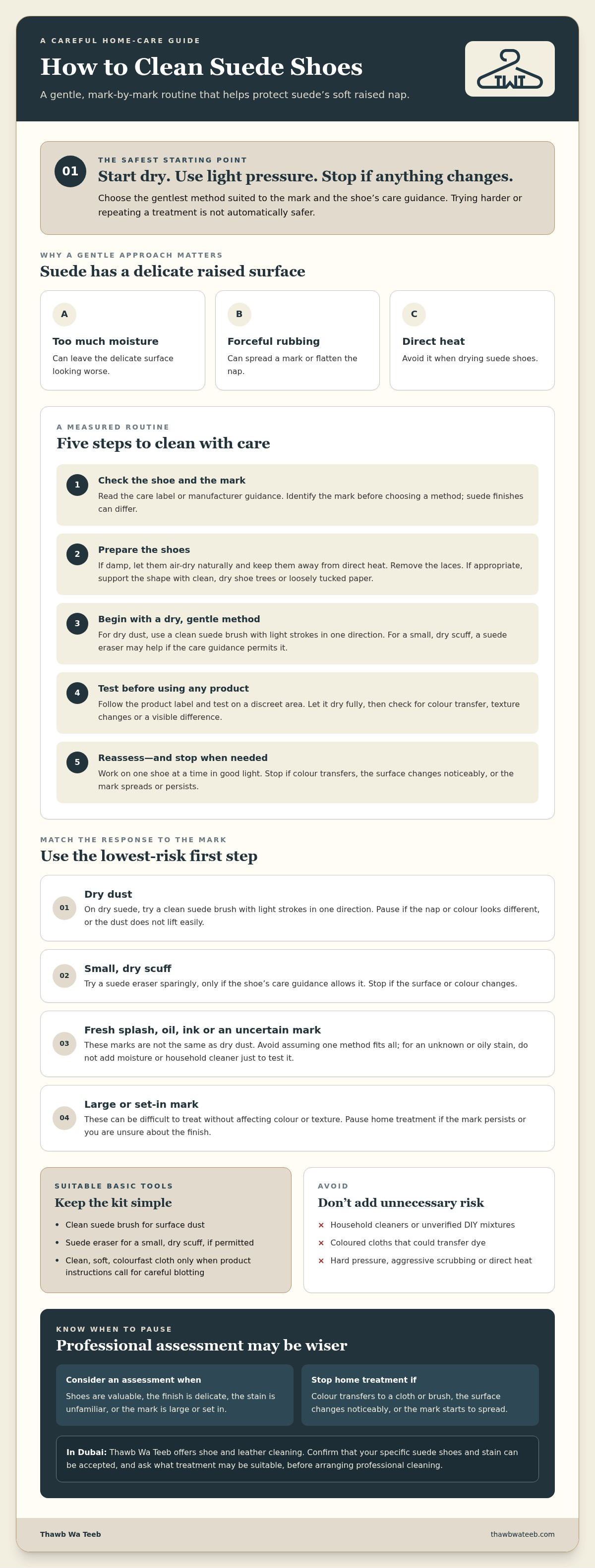
Follow These Steps to Clean Suede Shoes at Home
A careful routine keeps each decision small and visible. If you’re learning how to clean suede shoes at home, work patiently and treat only marks you can identify. Treat only what you can identify, and stop at signs of change.
A cautious step-by-step routine for everyday dirt
- Inspect both shoes. Check the care guidance and identify each mark as dry dust, a scuff, dampness, oil or something unknown. If you can’t identify a stain, don’t guess at a treatment.
- Let damp suede dry. Leave the shoes to air-dry naturally before brushing or spot treatment. Don’t brush a wet surface.
- Remove loose dirt. Once the shoes are fully dry, use a clean suede brush with short, light strokes in one direction. Avoid pressing down.
- Spot-treat only if appropriate. For a small, dry scuff, use a suede eraser sparingly if the manufacturer’s instructions permit it. Follow any product directions, and don’t apply an untested cleaner to the whole shoe.
- Pause and reassess. Compare the treated area with the surrounding suede and the other shoe. Continue only if the colour and texture appear unchanged and the mark is suitable for another gentle pass.
More effort doesn’t always mean better care. Repeated brushing or rubbing can flatten the nap or make a mark more noticeable. Stop if colour transfers, the surface changes or the stain spreads.
How to dry and restore the suede nap
After any suitable spot treatment, let the shoes dry at room temperature, away from direct heat and sunlight. Don’t use a radiator or hairdryer to speed things up. Heat can affect the material, and rushed drying makes it harder to judge the result.
Once the suede is fully dry, brush gently to lift the nap and even its appearance. Use a light touch, then check the surface before repeating. Don’t apply a protector or conditioner unless the shoe’s care label or manufacturer confirms it’s suitable for that pair.
If the stain remains or the finish looks delicate, professional assessment may be safer than further home treatment. In Dubai, you can arrange professional shoe and leather cleaning; confirm that your specific suede shoes and stain are accepted before booking.
When to Choose Professional Suede Shoe Cleaning in Dubai
Home care is best limited to identifiable surface marks that respond to a gentle approach. It can refresh dusty suede or help with a small, dry scuff, but it can’t guarantee stain removal. If a mark needs repeated treatment or you’re unsure what caused it, pausing is often safer than trying another product.
Signs your suede shoes need expert assessment
Consider professional advice before treating large, old, oily or unidentified stains. Layering home remedies can make a mark harder to assess and may affect the shoe’s colour or texture. Stop if colour transfers, the nap changes, the shoe’s shape looks affected or the stain spreads during cleaning.
Valuable shoes and pairs with delicate or unfamiliar finishes deserve particular care. Before booking, ask whether the provider can assess the exact suede type and its current condition, and discuss what treatment may be suitable. The right approach depends on the shoe and stain, so don’t assume every pair can be treated in the same way.
How to arrange convenient shoe care in Dubai
Thawb Wa Teeb offers shoe and leather cleaning, with door-to-door pickup and delivery available across Dubai. Its leather cleaning service in Dubai information describes the broader care offering, but doesn’t confirm a particular suede treatment or outcome.
Before scheduling, share the shoe type and a clear description of the mark. Confirm that your specific suede item is accepted, how its condition will be assessed, and what expectations are appropriate. Pickup can be scheduled online or via WhatsApp, subject to confirming suitability first.
If you’re weighing how to clean suede shoes at home and the stain is persistent or uncertain, an assessment may be a better next step than further experimentation. You can make a pickup enquiry and confirm your suede shoes can be accepted before scheduling.
Keep Your Suede Looking Its Best
The safest approach is patient: identify the mark, begin with a gentle dry method, and stop if the suede’s colour or texture changes. Dust and small, dry scuffs may be manageable at home, while persistent, oily or uncertain stains call for more caution. No home method can guarantee removal.
Now you know how to clean suede shoes at home without treating every mark the same way. Follow the shoe’s care guidance, let damp suede dry naturally, and don’t repeat a treatment just because the stain remains.
For shoes that need closer assessment, Thawb Wa Teeb offers professional shoe and leather cleaning in Dubai. Door-to-door pickup and delivery is available across Dubai, and pickup can be scheduled online or via WhatsApp. Confirm that your specific suede shoes and stain are accepted, and discuss suitable treatment before arranging care.
Ask Thawb Wa Teeb about professional shoe and leather cleaning in Dubai, and confirm your suede shoes can be accepted before scheduling.
Frequently Asked Questions
Can you clean suede shoes at home?
Yes, dry dust or a small, identifiable surface scuff can often be addressed at home with a gentle method. First check the shoe’s care guidance, then start dry and use a light touch. Avoid treating stains of unknown origin or using household cleaners. If the colour or texture changes, or the mark spreads, stop rather than repeating the treatment.
How do you clean suede shoes without a suede brush?
Without a suede brush, don’t substitute a rough household brush or scrubber. Check the shoe’s care instructions, and if they allow it, use a clean, dry, soft cloth to gently lift loose surface dust with minimal pressure. Don’t use a coloured cloth, which could transfer dye. For a visible scuff or ingrained dirt, it’s safer to pause than improvise with a tool that may flatten or damage the nap.
Can water damage suede shoes?
Yes, water can leave visible marks or alter suede’s texture, especially if the shoe becomes wet unevenly or is rubbed while damp. If a fresh splash occurs, gently blot it without rubbing, then let the shoes air-dry naturally away from direct heat and sunlight. Don’t soak suede or put it in a washing machine. If water leaves a persistent mark or changes the finish, stop home treatment and seek advice.
How do you remove an oil stain from suede shoes?
Oil stains are difficult to assess at home, so avoid adding water, rubbing the spot or layering household remedies. These actions may spread the oil or affect the nap and colour. Check the manufacturer’s care instructions. If the mark is noticeable, persistent or on a valuable pair, ask a professional to assess the shoes before trying a treatment. No method can guarantee removal, and suitability depends on the suede and stain.
Can you use soap or washing-up liquid to clean suede shoes?
Don’t use soap or washing-up liquid on suede unless the shoe’s manufacturer specifically recommends it. These products may not suit the material or finish, and applying them can leave changes that are difficult to correct. Avoid mixing household ingredients or testing a cleaner over the whole shoe. Follow the care label and, if it permits a product, test it discreetly. Wait until the area is dry before checking for changes.
How should suede shoes dry after cleaning?
Let suede shoes air-dry naturally at room temperature, away from direct sunlight and heat sources such as radiators or hairdryers. Don’t put them in a tumble dryer or use heat to speed up the process. If appropriate for the shoes, clean, dry paper inside can help support their shape as they dry. Once fully dry, brush gently if the care guidance allows, then check that the nap and colour look consistent.
When should I take suede shoes to a professional cleaner?
Ask a professional to assess suede shoes if the stain is large, set-in, oily or unidentified, or if home treatment changes the colour, nap, shape or finish. In Dubai, Thawb Wa Teeb offers professional shoe and leather cleaning, but confirm that your specific suede type and condition can be accepted before arranging care. Door-to-door pickup and delivery is available across Dubai, and pickup can be scheduled online or via WhatsApp.