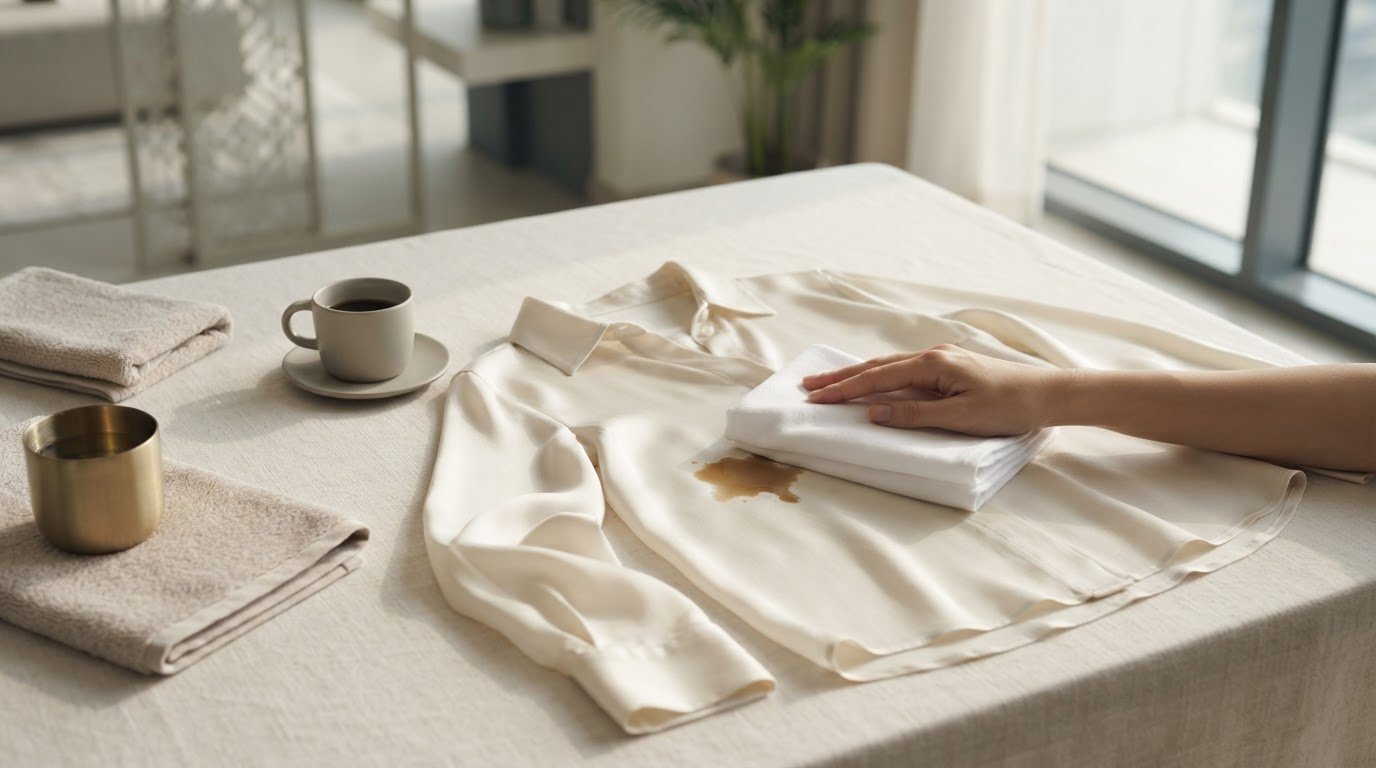
Rubbing a coffee mark may feel like the quickest fix, but on silk it can spread the stain and put delicate fibres at risk. If you need to remove coffee stain from silk blouse, start gently: blot the spill with a clean, absorbent cloth and keep heat away while you decide on the next step.
It’s understandable to hesitate before adding water or reaching for a household remedy. Silk can react differently depending on its colour and finish, and an unsuitable treatment may leave a water mark or change the fabric’s appearance. This guide explains what to do immediately, which home treatments to avoid, and how to decide whether professional care is the safer option.
You’ll also learn when to stop a DIY attempt, especially if the blouse is valuable, labelled dry-clean-only, or the stain remains after blotting. In Dubai, Thawb Wa Teeb provides Signature Dry Cleaning & Couture Care, with convenient door-to-door pickup and delivery.
Key Takeaways
- To remove coffee stain from silk blouse, begin with gentle blotting and let the garment’s care label guide what comes next.
- Silk’s colour, finish, and construction affect which cleaning approach is suitable, so don’t treat every blouse the same way.
- Rubbing and untested household remedies can leave the fabric looking worse, even when they seem gentle.
- A dry-clean-only label, a valuable blouse, or a persistent mark are good reasons to stop home treatment and arrange professional garment care.
- In Dubai, door-to-door pickup makes it convenient to arrange expert care for your blouse.
Coffee on a Silk Blouse: What to Do First
A fresh spill can be unsettling, especially on a blouse you value. Keep the first response simple. Lift the blouse away from the table or other surface so the coffee doesn’t transfer elsewhere. Support the stained area as you move it, and don’t bunch or twist the fabric.
Blot the coffee gently, check the care label, and avoid applying anything until you know what the blouse permits.
Rubbing may seem like a way to work the mark out, but friction can spread coffee and stress silk’s delicate surface. A light touch helps limit disturbance while you decide what to do next. General stain removal techniques depend on both the stain and the fabric, so a method suited to one garment shouldn’t automatically be used on another.
How to blot a fresh coffee spill
Use a clean, absorbent white cloth or tissue to reduce the risk of colour transferring to the blouse. If possible, place another clean cloth beneath the stained area to catch moisture. Press lightly instead of dragging the cloth across the silk. Start at the outer edge and work toward the centre to help contain the damp area. As coffee transfers, move to a clean part of the cloth. Don’t scrub.
Continue only while gentle pressing is lifting liquid. If the spot is already drying, or you’re unsure how much pressure the fabric can tolerate, stop rather than moving on to a stronger treatment. The immediate goal is to absorb what you can without spreading the mark or disturbing the blouse’s finish.
Check the care label before using water
After blotting, read the care instructions before applying any liquid or cleaning product. A dry-clean-only label is a clear reason to stop at gentle blotting and arrange professional garment care. Don’t dab or rinse with water just because it seems mild: a treatment that suits one silk blouse may not suit another.
If the label is missing, difficult to interpret, or doesn’t clearly guide you, don’t guess. Avoid testing a remedy on a visible section, where a change in appearance could be difficult to conceal. Set the blouse aside carefully and leave further treatment to professional assessment, particularly if the garment is valuable.
For a fresh spill, use this short sequence to preserve your options:
- Lift the blouse away from the surface and support the stained area.
- Blot with a clean white cloth, working from the edge toward the centre.
- Use a dry section of cloth as the coffee transfers; don’t rub or scrub.
- Read the care label before deciding whether any further home care is appropriate.
Knowing how to remove coffee stain from silk blouse starts with restraint, not a cupboard full of cleaners. If the label directs dry cleaning or leaves room for doubt, professional care is a considered next step. In Dubai, Thawb Wa Teeb provides Signature Dry Cleaning & Couture Care, with free door-to-door pickup that you can schedule online or via WhatsApp.
Why Coffee and Silk Need a Careful Approach
Coffee’s coloured compounds can leave a visible mark, and the stain may look different as it dries. Silk adds another concern: its delicate surface can be affected by friction or products that aren’t suited to the garment. The aim isn’t to force the mark out at any cost. It’s to avoid making the stain or fabric more difficult to treat.
Silk needs gentle stain handling because friction, heat, and unsuitable products can change the appearance of its delicate surface. There’s no single treatment that suits every blouse. The right next step depends on details such as:
- The care label’s instructions and any restrictions on water or cleaning.
- The silk’s colour, finish, construction, and condition.
- Whether the coffee has just spilled, dried, or already been treated.
These differences matter. A pale mark on one blouse doesn’t tell you how another silk garment will respond. Make the decision based on the garment itself, not just on the fact that both marks came from coffee.
Why rubbing and heat can complicate stain removal
Pressing a clean cloth lightly against a mark is different from rubbing it back and forth. Blotting absorbs liquid with minimal movement; scrubbing can push coffee outward, enlarge the damp area, or disturb the fabric’s surface. If the cloth isn’t lifting the spill, pressing harder isn’t a safer next step. Stop rather than adding friction.
Keep the blouse away from an iron, hairdryer, and heated drying. Heat may make a stain harder to address, so don’t try to speed up drying before checking what care the label allows. For garment-specific guidance, Silk coffee stain removal methods offers relevant advice, including when professional help may be appropriate.
Fresh coffee, dried coffee, and previous treatments
A fresh spill and an older, dried mark aren’t the same starting point. Fresh liquid may still be absorbed with careful blotting, while a dried stain may have settled into the fabric and need a more considered assessment. Neither age nor appearance alone predicts the result, so don’t escalate to a stronger remedy simply because the mark remains visible.
Previous attempts matter, too. Water or a cleaning product can change how a mark looks or how the fabric responds to further care. If you arrange professional garment care, explain what was applied and where, even if it was only water. That context helps the garment-care team assess the blouse’s current condition before choosing an approach.
If the blouse is valuable, the label is restrictive, or the stain persists, professional handling can help you avoid further experimentation. In Dubai, Signature Dry Cleaning & Couture Care offers professional garment care with free door-to-door pickup that you can schedule online or via WhatsApp.
Home Remedies for Coffee on Silk: What Is Safe to Try?
There isn’t one home treatment that suits every silk blouse. Gentle blotting is a cautious first step for fresh liquid, but what follows depends on the care label and the garment’s colour, finish, construction, and condition. A method that seems mild on one piece may leave another with a ring, colour change, or altered surface.
Think of your options as a decision, not a universal recipe:
- Gentle blotting: useful for absorbing fresh coffee without scrubbing, but it may not remove the visible mark.
- Label-approved care: consider only the care the garment instructions explicitly permit, and stop if the fabric’s appearance changes.
- Professional assessment: a prudent option for valuable silk, restrictive or unclear instructions, or a mark that remains.
If your goal is to remove coffee stain from silk blouse, resist the urge to try several remedies in succession. Silk varies, and no home approach can promise to clear the mark or preserve every finish. When the label or fabric response leaves doubt, pausing is often kinder to the garment than experimenting.
When water may be the wrong choice
Don’t rely on general advice to rinse coffee stains before checking the blouse’s care label. Water can leave a visible ring on some silk and may affect certain finishes. If the label says dry-clean-only, don’t apply water. If water-based care is explicitly permitted, follow the label rather than soaking the blouse or wetting a broad area. Stop if you notice a change in colour, texture, or sheen.
Treatments to avoid on delicate silk
Avoid bleach and strong stain removers unless the garment’s instructions explicitly allow them. Skip stain pens, vigorous scrubbing, and improvised mixtures such as vinegar with baking soda on visible silk. These approaches can introduce additional moisture, friction, or products that may not suit the fabric. Don’t layer treatments or repeat one if the silk begins to look different.
Household remedies can sound appealing because they’re familiar, but familiarity isn’t the same as fabric suitability. Even a small amount of a product can have an unpredictable effect on a particular dye or finish. A hidden-area test may reduce uncertainty, but it can’t guarantee that the visible stained area will respond in the same way. If you’re unsure, leave further treatment to a professional.
For a blouse labelled dry-clean-only, one with delicate detailing, or a stain that hasn’t lifted with careful blotting, professional garment care offers a considered next step. A garment-care professional can assess the label, fabric, and stain before choosing an approach suited to the blouse’s condition. This is preferable to committing to a home treatment simply because it is commonly recommended for other fabrics.
A Step-by-Step Plan for a Coffee-Stained Silk Blouse
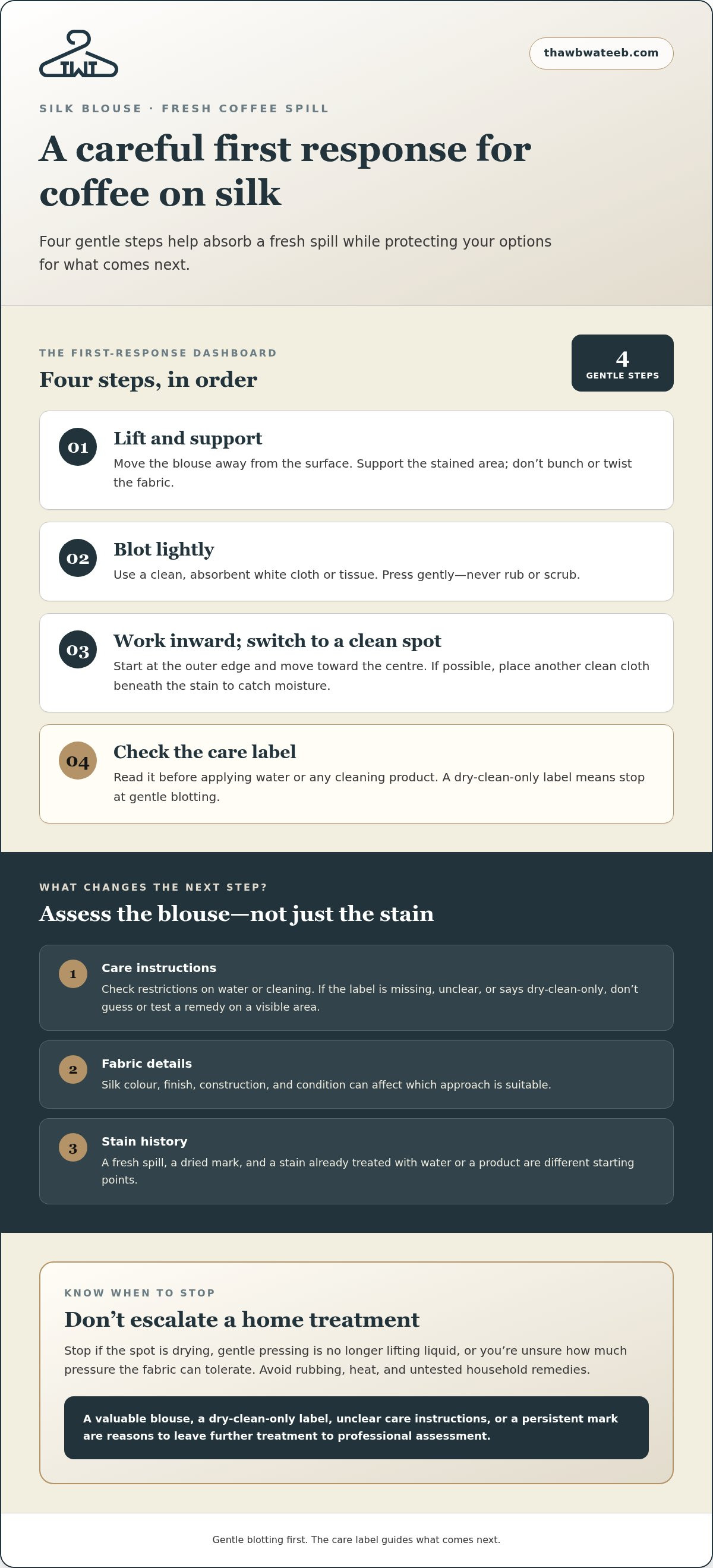
Use this decision path to keep your response measured. The care label comes before general stain advice, and any change in the fabric is a reason to stop. Home treatment is an option only when the garment’s instructions allow it and the silk appears unchanged.
- Blot the spill. Use a clean, absorbent white cloth to press gently on the coffee. Avoid rubbing or dragging the cloth across the fabric.
- Check the care label. Look for instructions about water and cleaning products before applying anything else.
- Choose the right path. If the blouse is marked dry-clean-only, or the label is missing or unclear, stop at blotting and arrange professional garment care.
- Follow permitted care cautiously. If the label allows home care, use only the least aggressive method it permits. Test any permitted product on a hidden area first.
- Watch the fabric closely. Stop if colour transfers, the texture or sheen changes, or a water mark appears.
- Don’t escalate if the mark remains. Avoid adding another product or repeating a treatment. Keep the blouse away from direct heat while arranging professional assessment.
If the care label permits cautious home care
Let the garment’s own instructions guide each action. Don’t assume that a method suitable for another silk item is appropriate for this blouse. If a product is explicitly permitted, test it discreetly on a hidden area and observe the fabric before treating the stain. A test can reveal a reaction, but it can’t guarantee the visible area will respond identically.
Keep the application limited to what the label directs. If the test area changes colour, texture, or sheen, don’t proceed. The same applies if a ring appears or the stain spreads. Stop at the first sign of an unexpected response rather than trying to correct it with another product.
If the label says dry-clean-only or the stain remains
Don’t rinse, soak, scrub, or apply more stain products. Set the blouse aside without pressing the damp area against another surface, and keep it away from an iron, hairdryer, or heated drying. When arranging professional garment care, describe the spill and mention anything already tried, including water or a cleaning product.
That information helps the garment-care team assess the blouse’s present condition and select care suited to its fabric and finish. For more context on specialized garment handling, the delicate fabric care guide explains the role of couture care.
If you’re in Dubai and the label or stain makes home treatment uncertain, arrange professional dry cleaning and couture care with Thawb Wa Teeb. Free door-to-door pickup can be scheduled online or via WhatsApp.
When Professional Silk Garment Care Is the Better Next Step
Professional assessment is a sensible choice if the blouse is labelled dry-clean-only, has significant value, or the coffee mark remains after careful first aid. Stop as well if the silk’s colour, texture, or sheen seems to change. With a delicate garment, avoiding further experimentation can matter as much as deciding what to do about the stain.
A garment-care professional can assess the blouse’s fabric, finish, condition, care label, and stain before choosing an appropriate approach. That doesn’t guarantee the mark will disappear. Results depend on the garment and the spill, including how long it has been there and what has already been applied. The benefit is a considered process rather than another uncertain home treatment.
Thawb Wa Teeb provides Signature Dry Cleaning & Couture Care in Dubai, with free door-to-door pickup. If you’re deciding how to remove coffee stain from silk blouse without risking further damage, professional handling is a practical next step.
What to share when arranging garment care
A little context helps the garment-care team understand what they’re assessing. Share what you know, even if some details are uncertain:
- When the coffee spilled, and whether it included milk or other additions.
- Whether the mark is fresh, dried, or has been treated previously.
- Any water, detergent, or stain product already applied, and where it was used.
- The stain’s location and the care-label instructions.
Point out the mark rather than trying to improve its appearance before handing over the blouse. Mentioning an earlier attempt is useful, not a cause for embarrassment. It gives the professional a clearer picture of the garment’s current condition and helps inform the next step.
Keep the blouse protected while it awaits care
While arranging care, keep the blouse away from direct sunlight and heat. Don’t iron it or use a hairdryer to speed up drying. If the stained area is damp, avoid sealing the blouse in plastic. Don’t place other items or weight over the mark, either. Handle and store it so the stain isn’t pressed against another part of the garment.
For a practical overview of arranging garment collection in Dubai, the laundry pickup and delivery guide explains the service process. You can arrange convenient garment pickup online or via WhatsApp, giving your silk blouse a clear next step without further home experimentation.
Give Your Silk Blouse a Careful Next Step
Protecting a silk blouse doesn’t mean trying every possible treatment. Sometimes the most considered choice is to pause, preserve the garment’s condition, and leave the next move to professional care. That’s especially true when the label is restrictive, the fabric has reacted unexpectedly, or the coffee mark remains.
If you’re deciding how to remove coffee stain from silk blouse, choose care that respects the garment rather than risking its finish for a quick fix. Thawb Wa Teeb’s Signature Dry Cleaning & Couture Care provides professional care for delicate garments in Dubai, with pickup arranged for convenience.
Arrange free door-to-door pickup for professional garment care online or via WhatsApp. A careful next step can help you feel more confident about caring for the blouse.
Frequently Asked Questions
Can you remove a coffee stain from a silk blouse at home?
Sometimes, but the care label and silk finish determine whether home care is appropriate. To remove coffee stain from silk blouse at home, begin with blotting, then follow only care the label allows. Don’t assume a product made for clothing is suitable for silk. If the blouse is valuable, marked dry-clean-only, or changes after a cautious treatment, stop. A professional assessment can guide the next step, though no method guarantees every mark will disappear without affecting the fabric.
Is water safe to use on a coffee stain on silk?
Not always. Check the care label before using water, because some silk finishes can show a ring after wet treatment. If the instructions specify dry cleaning, or don’t clearly permit washing, avoid rinsing or soaking. Instead, absorb surface coffee without spreading moisture across a larger area. If you’ve already dampened the spot, mention that when arranging care so the blouse’s condition can be assessed accurately.
Should I rub a coffee stain out of silk?
No. Back-and-forth rubbing can spread the coffee and create unnecessary friction on delicate fibres. Press a clean, absorbent cloth against the mark instead, using light pressure and moving from the outer edge inward. Shift to a dry section as it absorbs liquid. If you notice colour on the cloth or a change in the blouse’s texture, stop rather than pressing harder or brushing at the stain.
Can I use vinegar or baking soda on a silk coffee stain?
It’s best to avoid vinegar, baking soda, and other improvised mixtures on visible silk. Their effects can vary with the blouse’s dye and finish, and a remedy may leave a new mark or alter the fabric’s appearance. Don’t combine household ingredients or apply one product over another. If the care label doesn’t clearly permit a treatment, limit home care to gentle blotting and seek professional care.
What should I do if the coffee stain has dried on silk?
Don’t scrape or scrub the dried mark, and keep the blouse away from heat. Check the care label and make a note of anything already applied, even if it was only water. An older stain may need a different assessment from a fresh spill, and repeated attempts can complicate care. For a dry-clean-only blouse or a persistent mark, arrange professional garment care rather than escalating home treatment.
Will ironing remove a coffee stain from a silk blouse?
No. Ironing isn’t a stain-removal method, and heat may make the mark harder to treat. Don’t use an iron or hairdryer to dry or press the stained area. Follow the blouse’s care label for pressing only after the stain has been appropriately addressed. If its instructions call for professional care, leave both stain treatment and finishing to a garment-care professional.
When should I take a coffee-stained silk blouse to a professional cleaner?
Choose professional care if the label says dry-clean-only, the blouse is valuable, the mark persists, or the fabric reacts unexpectedly. Share when the spill happened and what you’ve tried, including any water or product used. In Dubai, Thawb Wa Teeb provides professional garment care, including Signature Dry Cleaning & Couture Care. Free door-to-door pickup can be scheduled online or via WhatsApp.