
Water isn’t automatically the enemy of delicate clothing, and “dry” cleaning doesn’t mean a garment never encounters liquid. If you’re wondering what is wet cleaning vs dry cleaning, the key difference is the cleaning medium: professional wet cleaning uses carefully controlled water, while dry cleaning uses a solvent instead of water as its primary medium.
It’s understandable to hesitate when a care label mentions dry cleaning. Shrinkage, colour changes and damage to delicate details are real concerns, but neither method is universally gentler or better. The right choice depends on the fabric, the garment’s construction, its trims and stains, and the care instructions.
This guide explains how each process works, what each is suited to and how to use care labels when deciding what comes next. For garments that need considered professional handling, Thawb Wa Teeb offers Signature Dry Cleaning & Couture Care in Dubai, with free door-to-door pickup schedulable online or via WhatsApp.
Key Takeaways
- What is wet cleaning vs dry cleaning? The main difference is the cleaning medium, but controlled treatment and finishing also matter.
- Neither method is automatically gentler. The right fit depends on the garment’s fabric, construction and care instructions.
- Use the care label as your starting point, then consider trims, stains and previous care before deciding what a garment needs.
- A professional assessment can help guide care for delicate or structured pieces when the label alone doesn’t settle the question.
- In Dubai, Thawb Wa Teeb offers professional garment care and free door-to-door pickup, schedulable online or via WhatsApp.
What Is Wet Cleaning vs. Dry Cleaning?
The simplest answer to what is wet cleaning vs dry cleaning is that the methods use different cleaning mediums and controlled processes. Professional wet cleaning uses water with carefully selected cleaning agents. Dry cleaning uses a liquid solvent instead of water, so “dry” describes the method, not the absence of liquid.
Wet cleaning is a professional, water-based process that adjusts treatment to the garment; dry cleaning is a professional process that uses solvent rather than water. Neither method suits every item. Fabric, construction, trims and the way a garment may respond to treatment all matter.
What happens during professional wet cleaning?
Wet cleaning is not simply a delicate item placed in a household washing machine. The garment is assessed first, then trained operators select cleaning agents and manage conditions such as water temperature, agitation and moisture. Professional equipment allows these factors to be controlled for the item being treated.
A home cycle typically follows settings chosen for the load, with less scope to tailor treatment to a garment’s construction and details. Professional wet cleaning takes a more considered approach, but it cannot guarantee that every fabric will avoid shrinkage, colour change or damage. The garment’s characteristics still guide whether water-based treatment is appropriate.
Items that look similarly delicate can have different care needs. A lightweight garment with a structured lining, for instance, may need a different assessment from an unlined piece in a similar fabric. The cleaning medium is only one part of the decision.
What happens during dry cleaning?
Dry cleaning uses a suitable liquid solvent to loosen and remove soils, rather than relying on water as the primary cleaning medium. The garment is assessed, treated with the chosen cleaning method and then finished to restore a neat appearance. The Dry cleaning overview explains the method’s history and the solvents associated with it.
Solvents and equipment can vary, so the process shouldn’t be reduced to one chemical or machine setup. The central idea is that cleaning happens with solvent, not a conventional water wash. A solvent-based process may suit some garments, while others call for a different approach based on their material, structure or detailing.
Finishing is part of professional care, too. How a garment is pressed or shaped after cleaning can affect its final appearance, especially for tailored pieces. That’s why choosing between wet and dry cleaning means considering the whole garment and its care instructions, not just the method’s name.
How Wet Cleaning and Dry Cleaning Work
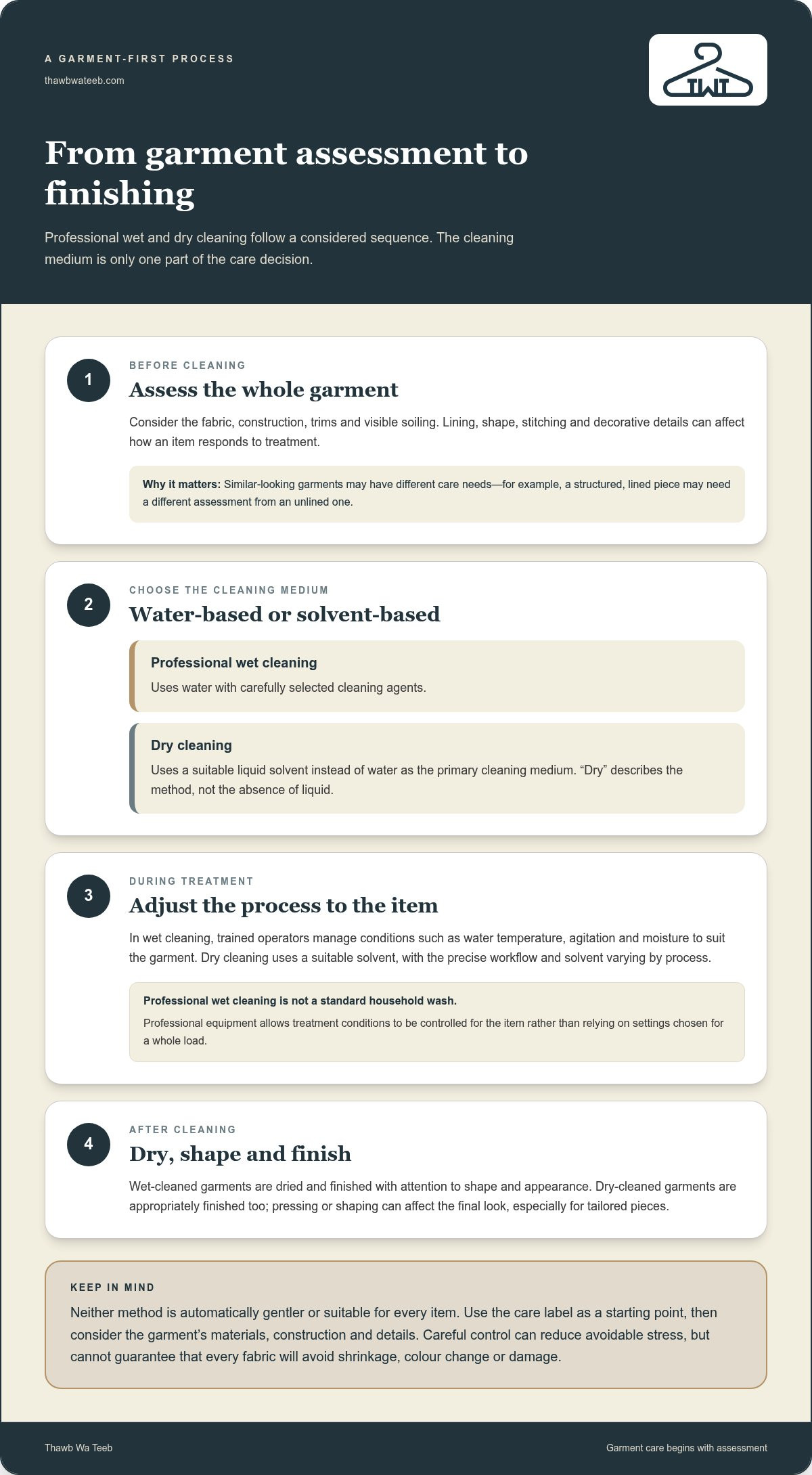
Both methods involve more than placing a garment in a machine. Professional care begins with an assessment, then matches the cleaning medium and treatment to the item before finishing it for wear. That sequence matters because the same fabric can behave differently depending on its lining, shape, stitching and decorative details.
Professional wet cleaning is a garment-specific water-based process, not an ordinary washing-machine cycle. Conditions are selected and controlled for the item rather than left to a standard household setting. That distinction helps explain why “water-based” doesn’t mean every garment can simply be washed.
The controlled steps in wet cleaning
First, the garment is assessed for its fabric, construction, trim and visible soiling. Next, water and suitable cleaning agents are selected. Treatment conditions, including temperature, agitation and moisture, are controlled to suit the item. After cleaning, the garment is dried and finished with attention to its shape and appearance. Careful control can reduce avoidable stress, but it can’t make every fabric suitable for water.
A “dry clean” instruction should never be treated as automatic permission to wet-clean the garment. The label, materials and construction all inform the decision. Consider a lined jacket with internal structure: its outer fabric may appear washable, but the layers can respond differently to moisture. Assessment helps identify those sensitivities before a method is chosen.
The solvent-based steps in dry cleaning
Dry cleaning also starts with garment assessment. The cleaner then uses a suitable liquid solvent as the primary cleaning medium, followed by appropriate finishing. The precise workflow and solvent can vary, so it’s more accurate to describe the principle than to assume every business uses the same equipment or chemical. The item’s construction and care instructions remain central throughout.
Professional dry cleaning isn’t the same as dabbing a stain with a household product. Spot treatment addresses a limited area and may affect colour or texture if the product isn’t suited to the fabric. Professional care considers the garment as a whole, including how cleaning and finishing may affect its appearance and shape.
To picture the shared sequence, consider a silk blouse with a stain and a tailored jacket that has lost its crisp finish. Each should be assessed first. The cleaning method is selected based on the garment’s needs, then treatment and finishing follow. The cleaning medium is one decision in a broader process, not a complete care plan on its own.
That’s the practical answer to what is wet cleaning vs dry cleaning: water-based treatment and solvent-based treatment each involve deliberate choices before and after cleaning. For considered professional handling in Dubai, Thawb Wa Teeb’s dry-cleaning and couture care offers a convenient next step, with free door-to-door pickup schedulable online or via WhatsApp.
Wet Cleaning vs. Dry Cleaning: Which Differences Matter?
The practical answer to what is wet cleaning vs dry cleaning starts with the cleaning medium, but that alone won’t tell you which method suits an item. Garment construction, detailing, soil and care instructions all shape the decision. Neither method is universally gentler; suitability depends on the complete garment and how it may respond to treatment.
| Consideration | Wet cleaning | Dry cleaning |
|---|---|---|
| Cleaning medium | Water with suitable cleaning agents | Liquid solvent rather than water |
| Process | Professional treatment controls conditions such as moisture and agitation | Solvent-based treatment followed by appropriate finishing |
| Garment considerations | Water response, dye stability, structure and trim are relevant | Fabric, construction, detailing and the item’s overall condition matter |
| Care-label role | Use the label as guidance, then assess whether water-based care is suitable | A dry-clean instruction signals care is needed, but doesn’t specify one universal solvent process |
Fabric, construction, and trims can change the decision
A fabric name is only a starting point. A silk blouse, for example, may have dyes or embellishments that need individual consideration; wool pieces can differ in weave, lining and shape. Beaded details, contrast trims, adhesives or a structured shoulder may respond differently from the main fabric. These are factors to assess, not blanket rules that every silk or wool garment must receive one particular method.
Construction can be decisive. A jacket’s outer cloth, lining and internal structure may react differently to moisture or solvent treatment, while a simple unlined piece presents a different set of considerations. Signature dry cleaning and couture care offers further context on the careful handling of refined garments.
What the care label can, and cannot, tell you
Care symbols are useful instructions, not a complete assessment. They help identify the manufacturer’s recommended care approach, but they can’t describe every detail of a garment’s current condition, trim, previous treatment or stain. A dry-cleaning instruction is a signal to proceed cautiously. It doesn’t mean every solvent process is identical or that the garment’s full construction has been assessed.
Read the label alongside the item itself. Note loose or decorative elements, visible colour variation, altered shape and any stain you’ve already treated. For traditional garments, including abayas and kanduras, fabric, embellishment and finishing all contribute to care decisions. Traditional wear dry cleaning in Dubai explores those considerations in more detail.
Environmental impact also deserves nuance. Water-based cleaning avoids solvent use, while the wider footprint of either method can depend on cleaning agents, equipment, energy, solvent handling and waste management. It’s more useful to consider the actual process and its controls than to declare one method categorically greener based on its name alone.
How to Choose Between Wet Cleaning and Dry Cleaning
A calm choice starts with the garment, not a blanket rule about which method is gentler. If the label and the item’s condition point in different directions, don’t guess or test a cleaning method at home. Use the details below to organize what you know, then rely on professional assessment when the care needs aren’t clear.
A simple garment-care decision sequence
- Read the care label and inspect the garment. Note the symbols and any written instructions. Check the item’s current condition, including loose details, fading, a changed shape or an old stain.
- Consider the complete construction. Look beyond the fabric name to linings, seams, structure, colour, embellishments and trims. Identify the stain type if you can, and note any previous care or spot treatment that may affect how the garment responds.
- Leave the method choice to a professional assessment if needed. The care instructions, materials and condition together help determine whether a water-based or solvent-based process is appropriate. If instructions conflict or the garment has uncertain details, don’t treat “delicate” as a sufficient answer.
For example, a stained jacket may have a wool outer layer, a lining and structured elements that need to be considered together. A simple fabric label won’t describe how each part may respond. Sharing what caused the stain and whether it has already been treated can also help guide a more considered assessment.
Common assumptions that can mislead
“Water-based means an ordinary wash.” Not necessarily. Professional wet cleaning uses water under managed treatment conditions; it isn’t automatically equivalent to a standard household cycle. But that distinction doesn’t mean every garment bearing a dry-cleaning instruction is suitable for wet cleaning.
“Dry cleaning uses no liquid.” The name can be confusing. Dry cleaning uses liquid solvent rather than water as its cleaning medium. The solvent and process can vary, so the label doesn’t identify one identical treatment for every garment.
“Delicate is one fabric category.” It isn’t. A beaded top, a lined blouse and a soft knit may all feel delicate, but their fabrics, finishes and construction create different care considerations. The right question isn’t simply whether an item is delicate; it’s what the complete garment can tolerate.
The phrase what is wet cleaning vs dry cleaning describes a difference in process, not a universal rule for choosing one. Consider the label, garment condition, fabric, construction, trims, stain and previous care as a whole. For professional garment care in Dubai, explore care options with Thawb Wa Teeb, including free door-to-door pickup schedulable online or via WhatsApp.
Professional Garment Care in Dubai: A Convenient Next Step
The useful takeaway from comparing wet cleaning and dry cleaning is not that one method always wins. Care should reflect the garment, its instructions and its condition, with professional assessment guiding the method when the answer isn’t obvious. For treasured, structured or occasion pieces, that considered approach can be a reassuring next step.
Care for valuable and occasion garments
Delicate construction can call for attention beyond the main fabric. Linings, embellishments, seams and special finishes may respond differently to cleaning, so a garment’s appearance and structure are part of the assessment. Before arranging care, note any visible stains, previous spot treatment or changes in shape. These details provide useful context without requiring you to decide on a cleaning process yourself.
Thawb Wa Teeb provides premium laundry and dry-cleaning services in Dubai, including Signature Dry Cleaning & Couture Care for garments that call for professional handling. Learn more about preserving delicate fabrics and why careful consideration matters for refined pieces. No cleaning method can promise the same result for every fabric or finish, which is why garment-specific care is important.
Arrange garment care around your day
Professional care can fit into your routine without adding a trip to a drop-off point. In Dubai, Thawb Wa Teeb offers free door-to-door pickup, which you can schedule online or via WhatsApp. The service includes professional handling of garments and textiles, with premium laundry and dry-cleaning options for different care needs.
Before pickup, gather the care labels and make a brief note of any stains, delicate details or prior treatment you want brought to the team’s attention. This preparation keeps useful information about the garment alongside the item and gives its care a more informed starting point. For a closer look at arranging collection, explore this guide to laundry pickup and delivery in Dubai.
Understanding what is wet cleaning vs dry cleaning helps you ask the right questions about garment care, but the best choice still depends on the whole item. Read the label, consider the construction and share any concerns during professional assessment. When you’re ready to arrange care in Dubai, schedule your free door-to-door pickup with Thawb Wa Teeb.
Make Garment Care a More Confident Choice
Good garment care begins before cleaning. Keep care labels intact, note any stains or previous spot treatments, and pay attention to changes in a piece’s shape or finish. These small habits make it easier to share useful details when an item needs professional attention.
Knowing what is wet cleaning vs dry cleaning gives you a clearer starting point, but the goal isn’t to choose a method by name alone. Treat each garment as an individual piece, guided by its instructions, construction and condition. For treasured clothing, that thoughtful approach can bring greater confidence to the care decision.
When a garment needs professional handling, Thawb Wa Teeb offers premium laundry and dry-cleaning care in Dubai, with free door-to-door pickup scheduled online or via WhatsApp. Take the next step at a time that suits you: Arrange your complimentary garment pickup.
With attentive care, you can make each choice with greater ease and keep your wardrobe ready for the moments that matter.
Frequently Asked Questions
What is the main difference between wet cleaning and dry cleaning?
Wet cleaning uses water as its main cleaning medium, while dry cleaning uses liquid solvent instead. If you’re asking what is wet cleaning vs dry cleaning, the distinction is the medium and how the garment is treated, not simply whether a method sounds gentler. For a piece with a contrast collar or delicate buttons, for example, those details may influence the care decision as much as the main fabric.
Is wet cleaning the same as washing clothes in a washing machine?
No, professional wet cleaning isn’t simply a regular household wash. The garment is assessed and its treatment is managed, whereas home washing generally relies on the cycle and settings selected for a load. A structured item, such as a lined jacket, may have components that respond differently to water. Don’t assume that a delicate cycle is a substitute for professional care when the label calls for special handling.
Can wet cleaning shrink or damage clothes?
Yes, wet cleaning can be unsuitable for some garments, and professional controls don’t remove every risk. A lining, unstable dye, adhesive detail or fabric finish may respond differently to moisture than the main material. Check the care label and avoid experimenting with home spot treatments, which can leave a visible mark or change the texture. If you’re unsure, professional assessment is a more considered step than testing the garment yourself.
Does dry cleaning use water?
Dry cleaning doesn’t use water as its primary cleaning medium, but it does use liquid solvent. The word “dry” refers to the method, not to an absence of liquid. If a garment has a stain, tell the cleaner what caused it, if known, and mention any home treatment already attempted. That context can help guide care, since different soils and previous treatments may affect how a garment is assessed.
Which method is better for delicate clothes?
Neither method is automatically best for every delicate garment. “Delicate” can describe very different items, from a loosely knitted top to a structured, embellished dress. Their dyes, linings and finishes may call for different considerations. Rather than choosing by fabric name alone, read the care instructions and note any fragile details or previous damage. A professional assessment can help determine a suitable approach for the complete item.
Is wet cleaning more environmentally friendly than dry cleaning?
Not necessarily in every case. Wet cleaning uses water rather than an organic solvent as its primary medium, but that fact alone doesn’t establish the total environmental impact of a particular process. Cleaning agents, energy use, equipment and waste handling can also matter. Broad claims that one method is always greener need reliable, current evidence covering more than the cleaning medium, so it’s sensible to avoid treating the method’s name as proof.
Can a garment marked “dry clean only” be wet-cleaned?
Don’t treat a “dry clean only” label as permission to try a different method at home. The instruction deserves careful attention, while the garment’s lining, trims, dye and current condition can add relevant context. A professional can assess the complete item before cleaning. If the label is damaged or the instructions seem inconsistent, describe what you know about the garment rather than relying on a guess based on its fabric.
How do I decide between wet cleaning and dry cleaning?
Start with the care label, then inspect the garment for colour changes, loose embellishments, visible stains or altered shape. Note what the stain may be and whether you’ve already tried to treat it. For an occasion piece or an item with unclear instructions, avoid testing a method yourself. A professional assessment can take these details into account and help guide care for the garment as a whole.