
What if the secret to keeping a favourite shirt crisp isn’t a stronger wash, but a gentler routine? Learning how to keep clothes looking new starts with small choices that protect colour, shape, and finish. A crowded machine, excessive heat, or a missed care label can leave everyday pieces looking tired sooner.
It’s frustrating when a garment fades, stretches, or loses its polish, especially when laundry instructions are easy to overlook. The good news is that thoughtful care doesn’t need to be complicated. This guide covers practical steps for washing, drying, treating stains, pressing, and storing clothes with greater care.
You’ll learn which habits help reduce avoidable wear, when air-drying or lower heat may be a better choice, and why checking the fabric label matters. For pieces that need more considered handling, professional cleaning and steam pressing can help. With a few practical adjustments, you can keep your wardrobe fresh and presentable for longer.
Key Takeaways
- Build a repeatable laundry routine around garment labels, fabric colours, and the care each piece needs.
- Learn how to keep clothes looking new by choosing washing and drying methods that suit the garment, rather than relying on one setting for everything.
- Respond to stains gently and check the garment before applying heat, which can make a remaining mark harder to remove.
- Use professional care selectively: Signature Dry Cleaning & Couture Care, Wash & Iron, and Steam Pressing suit different garment-care needs.
- Use everyday habits that help preserve a garment’s shape and polished appearance between wears.
Why clothes stop looking new, and which everyday habits make the difference
A favourite top can lose its colour, a sweater can stretch out of shape, and a once-smooth finish can become rough with wear. Not every sign of age is avoidable. Fibres naturally change over time, but the right routine can help limit damage from rushed washing, excess heat, friction, or an untreated stain.
Check the care label, wash with compatible items, and use only the movement and heat the garment can handle. These small decisions work together. They’re more reliable than trying to rescue a piece after its colour has faded or its fibres have been stressed.
Clothing care also depends on how garments are cleaned and handled. A broad overview of laundry practices offers useful context, but an individual item’s care instructions should guide your choices.
What makes clothes fade, stretch, or lose their finish?
Repeated rubbing can roughen fibres and create surface wear, especially where garments brush against one another or against zips and fasteners. A crowded washing machine leaves less room for clothes to move freely, which can increase rubbing and creasing. Turning garments inside out and securing fasteners can reduce some contact, though neither step prevents all wear.
Unsuitable wash or dry settings can also affect a garment’s appearance. Excessive heat may stress some fibres, while a cycle that’s too vigorous for a delicate item can distort its shape. In Dubai, take care where garments dry: prolonged direct sunlight may affect colour over time. Follow the label rather than assuming every fabric responds the same way.
Some fading and softening are ordinary signs of use. Thoughtful care can help avoid preventable wear, but it can’t stop every fibre from ageing. Deal with fresh marks promptly and gently. Waiting can allow them to settle, while aggressive scrubbing can damage the fabric surface.
Start with the care label, not a one-setting-fits-all rule
Look for the care label inside the garment, often along a side seam or near the neckline. Read both the wording and symbols before washing, drying, or pressing. Treat those instructions as your first guide. General recommendations, such as using cooler water, may not suit every item or override its specific care directions.
Before loading the machine, group clothes by compatible care needs. Separate items that require different temperatures, cycles, or handling, and keep delicate pieces apart from garments with rough textures or exposed fasteners. This helps you choose a suitable wash without forcing unlike fabrics into one setting. If instructions call for specialist handling, don’t improvise with a routine intended for everyday basics.
How to wash clothes gently while protecting colour and shape
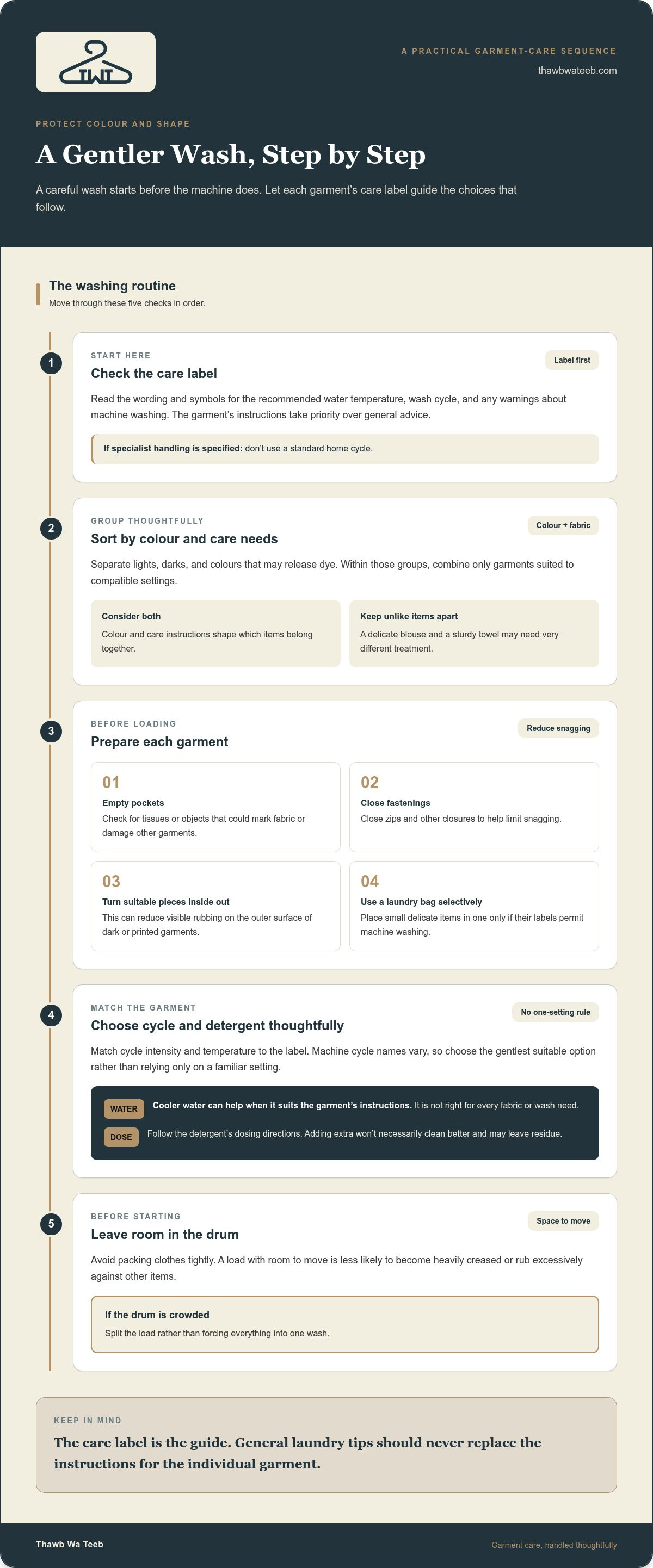
A careful wash begins before the machine starts. This sequence helps protect colour and shape without treating every garment as though it were made from the same fabric. Let the care label guide your settings because its instructions are specific to that item and take priority over general advice.
- Check each care label. Look for the recommended water temperature, wash cycle, and any warnings about machine washing. If the instructions call for specialist handling, don’t use a standard home cycle.
- Sort by colour and care needs. Separate lights, darks, and colours that may release dye, then group garments that can be washed on compatible settings. Colour alone isn’t enough: a delicate blouse and a sturdy towel may need very different treatment.
- Prepare garments. Empty pockets, close zips and fastenings, and turn suitable dark or printed pieces inside out to reduce visible rubbing on the outer surface. Place small delicate items in a laundry bag only if their labels permit machine washing.
- Select the cycle and detergent thoughtfully. Match the cycle intensity and temperature to the label. Cooler water can be useful when it suits the garment’s instructions, but it isn’t right for every fabric or wash need. Follow the detergent’s dosing directions. Adding extra won’t necessarily clean better and may leave residue.
- Leave room in the drum. Avoid packing clothes tightly. A load with space to move is less likely to become heavily creased or rub excessively against other items. If the drum is crowded, split the load rather than forcing everything into one wash.
Sort and prepare garments before they go into the machine
Use the label to decide which garments belong together, then consider colour within those care groups. For example, wash a delicate dark blouse with similarly coloured items that suit its gentle setting, not with heavy denim that needs a more robust cycle. Fasten closures to limit snagging, and check pockets for tissues or objects that could mark fabric or damage other garments.
Choose a wash cycle and detergent thoughtfully
Cycle names vary between machines, so match the label’s guidance to the gentlest suitable option rather than relying on a familiar setting. Some pieces may tolerate a regular cycle; others need reduced agitation or a different method altogether. Earth Day’s guidance on sustainable garment care also encourages thoughtful habits that can help extend clothing life.
For everyday items suited to professional laundering, Thawb Wa Teeb’s Wash & Iron service provides professional garment care with convenient door-to-door pickup and delivery in Dubai. Keep the label’s instructions in mind when deciding which garments need more specialised care.
Air-drying, pressing, and storage: compare the choices that protect appearance
Drying and finishing can affect how a garment looks just as much as washing does. The care label should guide whether a piece can go in a tumble dryer or be pressed. If you’re learning how to keep clothes looking new, choose the gentlest label-compatible option, then store each item clean and fully dry.
When to air-dry, tumble-dry, or use steam pressing
Each method has a different balance of convenience and heat exposure. Use the comparison below as a starting point, then follow the garment’s own instructions.
| Method | Best guided by | Practical consideration |
|---|---|---|
| Air-drying | The label’s drying instructions | Avoids tumble-dryer heat. Reshape the garment and hang or lay it flat as appropriate, where the label allows. |
| Tumble-drying | Explicit label compatibility and suitable heat guidance | Convenient, but uses machine heat. Don’t assume a low-heat setting is suitable for every fabric. |
| Professional steam pressing | The garment’s pressing instructions | An option for suitable pieces that need a refined finish. Thawb Wa Teeb offers Steam Pressing. |
Air-drying still needs a little care. Hang garments that can retain their shape on a hanger, and lay pieces flat if their instructions call for it. Keep clothes away from prolonged direct sunlight, which can affect colour, and choose a clean place where dust is less likely to settle as garments dry. In Dubai, warm, humid conditions can make drying take longer in some indoor spaces, so allow garments to dry fully before putting them away.
For suitable items that need a neat finish, professional steam pressing is an alternative to pressing at home. Always let the label determine whether heat and pressing are appropriate. Don’t apply steam simply because a garment looks creased.
Store clean clothes so they are ready to wear
Store garments only once they’re clean and fully dry. Put them away in a tidy, dry space, leaving enough room for pieces to hang or fold without being crushed. Packed storage can deepen creases and make clothes harder to retrieve without disturbing other items.
Avoid leaving clothing in damp areas or prolonged direct sun. Both conditions can make it harder to keep fabric fresh and colour consistent. Dubai’s dust is another practical consideration: closed storage can help limit settled dust between wears, while occasional tidying keeps shelves and hanging spaces clean. If humidity lingers in a wardrobe, give garments more room to breathe and make sure they’re dry before storing them.
Small finishing choices matter. Match drying and pressing to the label, then store garments with care. Together, these habits can help everyday clothes stay presentable without expecting any method to prevent all signs of wear.
How to Treat Stains and Everyday Wear Early
A fresh mark can make a favourite garment feel less polished, but a rushed fix may leave a bigger problem. A calm response protects the fabric from unnecessary friction and unsuitable products. Start by identifying what you can about the mark, then check the garment’s care label before deciding what to do next.
Respond to a fresh stain without adding damage
Work through the first steps in order:
- Identify the mark. Notice its location and appearance, and consider what may have caused it. If you’re unsure, don’t guess at a strong treatment.
- Check the label. Review the garment’s cleaning instructions and any restrictions before applying water, detergent, or a stain product.
- Act gently. Follow the directions for any treatment you use, and test it on a discreet area first if the garment’s care instructions allow. Avoid aggressive rubbing, which can spread a mark or stress the fabric.
- Reassess before drying. Check whether the mark has lifted before using heat or putting the garment away.
Don’t expose an unresolved stain to dryer heat. Heat may make a remaining mark harder to address, so pause and reassess rather than placing the garment straight into a tumble dryer.
Prompt attention doesn’t mean forceful treatment. If a mark doesn’t respond to a gentle, label-compatible approach, stop rather than repeating the same action with greater pressure or adding another product. Layering treatments can complicate care, especially when you’re uncertain how the fabric will react.
Recognize when home care is no longer the right next step
Persistent stains, uncertain care instructions, or visible fabric damage are good reasons to pause. The same is true if you’re unsure whether a treatment could affect the garment’s colour. A stain on a simple washable item may call for a different approach than one on a piece with delicate construction, several fabric layers, or carefully finished details. Garments aren’t all built to withstand the same handling.
For items that need more considered attention, Thawb Wa Teeb’s Signature Dry Cleaning & Couture Care provides professional garment handling. The method should suit the item’s care instructions and condition. No approach can promise that every mark or sign of wear will disappear. For a fresh stain, make a note of what caused it, if known, and what you’ve already tried. That information can help guide careful handling.
If a garment needs specialist attention, arrange Signature Dry Cleaning & Couture Care with Thawb Wa Teeb. Taking a considered next step can be part of how to keep clothes looking new, particularly when home treatment feels uncertain.
When professional garment care helps clothes stay polished
Professional care isn’t necessary for every garment. Everyday pieces with straightforward care instructions may suit home washing, while an item’s label, construction, or condition can signal that a more considered approach is preferable. The aim is to match the care method to the garment, not to send every piece for specialist treatment.
Look at the whole item when deciding. Does the label direct you away from routine washing? Is the fabric structured, layered, or finished with details that could be affected by rough handling? Is a mark persistent after a gentle, compatible attempt? If you’re uncertain, pause before trying a stronger treatment or setting. Care that respects the garment’s instructions can help you avoid turning a small concern into additional wear.
Choose care according to the garment’s needs
Thawb Wa Teeb’s Signature Dry Cleaning & Couture Care is for garments that need specialist handling. Wash & Iron is a distinct choice for everyday clothing suited to that type of care, while Steam Pressing focuses on a garment’s finish. These services aren’t interchangeable, and none is a universal solution. Let the garment’s label and condition guide your choice.
For a structured piece, an item with delicate construction, or a garment whose instructions call for more considered handling, professional care may be preferable to experimenting at home. For routine clothing, follow the label and use a suitable home-care method. Choose between dry cleaning, Wash & Iron, and Steam Pressing according to the garment’s cleaning and finishing needs.
Make professional garment care convenient in Dubai
Thawb Wa Teeb offers free door-to-door pickup and delivery across Dubai, with scheduling available online or through WhatsApp. This makes professional garment care easier to fit into a regular routine, whether you’re arranging care for one piece that needs specialist attention or choosing Wash & Iron for suitable everyday items. Choose the method that fits the garment’s care needs.
Thoughtful garment care is a series of small decisions: read the label, wash and dry appropriately, handle marks gently, and store clothes clean and dry. Professional care can be part of that routine when a garment’s instructions or condition call for it. To arrange care, Arrange convenient garment care with Thawb Wa Teeb. These habits offer a practical foundation for how to keep clothes looking new while accepting that normal use can still leave signs of age.
Make thoughtful care part of your wardrobe routine
A well-kept wardrobe isn’t built through one perfect laundry day. It comes from treating clothing as something worth caring for over time and making deliberate choices before a small issue becomes frustrating. Let the needs of each piece shape your routine rather than relying on one default for everything.
That mindset is at the heart of how to keep clothes looking new. Not every garment needs specialist attention, and normal wear is part of enjoying the clothes you own. The aim is to give each piece appropriate care and feel confident about when home methods are enough and when professional handling is a more considered next step.
For garments that would benefit from professional attention, Thawb Wa Teeb provides premium garment care with convenient scheduling in Dubai. Arrange garment care with Thawb Wa Teeb and choose a considered next step for the pieces you value. A thoughtful routine can make caring for your wardrobe feel simpler and help you enjoy wearing it with confidence.
Frequently Asked Questions
Should I wash new clothes before wearing them?
Not necessarily. Check the care label before washing a new garment. Washing before first wear can be a personal preference, particularly if the item has been tried on or handled during shopping. If you choose to wash it, follow the label’s instructions and select a suitable cycle. Separate colours where appropriate, especially if a new item might release dye. There’s no universal first-wear washing rule for every garment.
Can washing clothes inside out help keep them looking new?
Yes, turning suitable dark, printed, or embellished garments inside out can reduce direct rubbing on their visible surfaces during washing. For example, a printed T-shirt may experience less contact across its graphic. This step doesn’t make an unsuitable cycle safe, though. Sort items as needed, follow the label, and consider whether closures or decorative details need extra protection before loading the machine.
Is fabric softener necessary to keep clothes soft?
No, fabric softener isn’t essential for every wash. Check the garment label and the product directions before using it, particularly for items with special finishes or care requirements. Start with the basics: measure detergent as directed, avoid overloading the machine, and dry the garment as its label allows. If you’re unsure whether softener suits a particular item, leave it out rather than treating it as a universal step.
What should I do if a stain remains after washing?
If a stain remains, keep the garment out of the dryer and inspect it under good light. Recheck the care label before trying another treatment, and use only a product compatible with the fabric. Don’t scrub hard in an effort to speed things up. If the mark persists or the item’s cleaning instructions are unclear, pause home attempts and consider professional garment care in Dubai.
Does ironing make clothes wear out faster?
Ironing doesn’t automatically make clothes wear out faster. The effect depends on the material, heat, pressure, and care instructions. Check the label and use an appropriate setting, avoiding repeated passes over an area that already looks smooth. A pressing cloth may be suitable for some items if the label permits it. For garments that suit this method and need a refined finish, professional steam pressing is another option.
How can I keep clothes fresh in Dubai’s warm and humid weather?
Keep clothes clean and fully dry before storing them, with enough space around them for air to circulate. In Dubai’s warm, humid conditions, avoid damp or tightly packed storage, and make sure a recently washed garment has dried completely. Dust can settle on clothing, so check pieces before wearing or returning them to storage. These simple habits support how to keep clothes looking new without promising they’ll prevent every sign of wear.