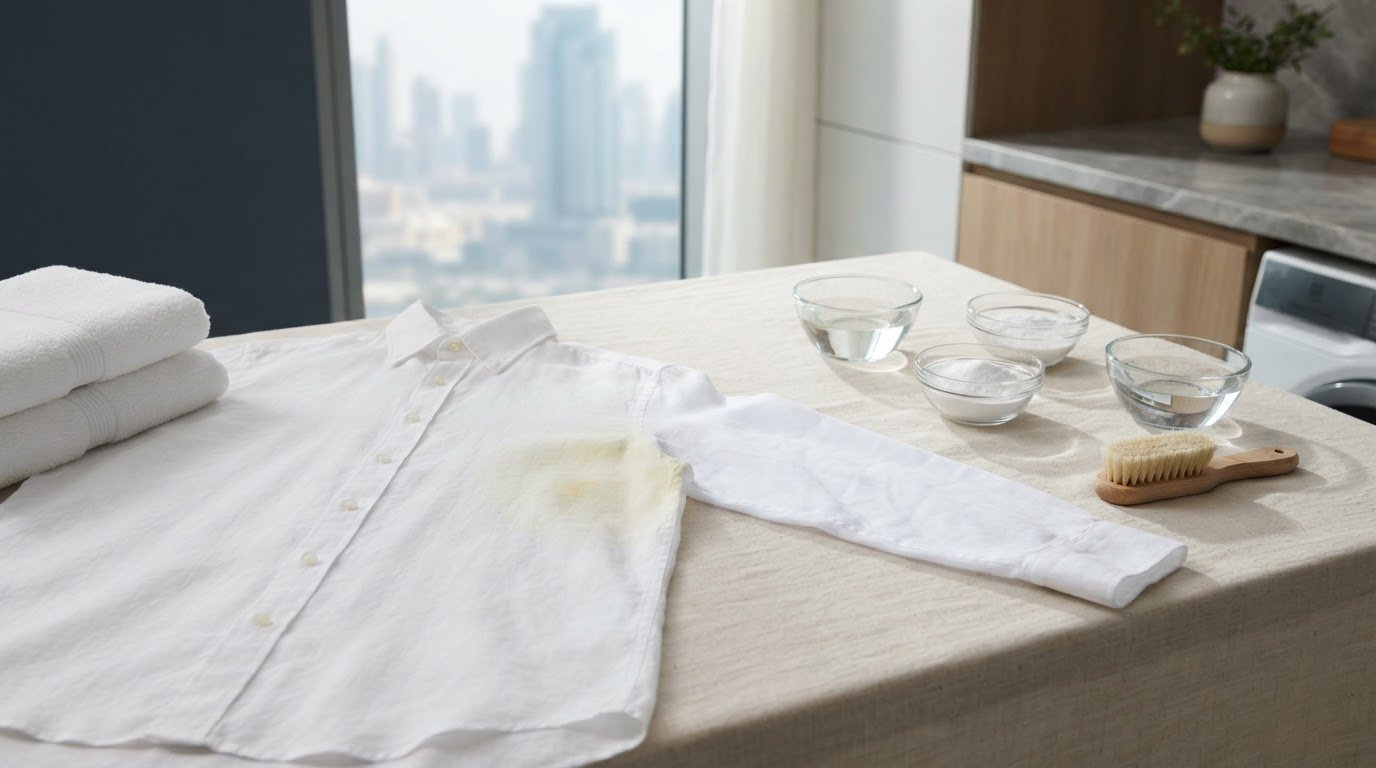
Yellowing doesn’t always come from sweat alone. Sweat proteins, fats and urea can react with aluminium compounds in antiperspirants and natural body oils, leaving yellow marks on white fabric. Effective yellow stain removal from white clothes starts with gentle treatment, followed by washing according to the garment’s care label.
It’s frustrating when a crisp white shirt comes out of the wash with discoloured underarms. More bleach isn’t necessarily the answer: chlorine bleach can deepen yellowing and weaken cotton over time. A wash stain remover, used according to its instructions, can be a practical first step, especially for a fresh stain.
This guide explains why white clothes turn yellow and how to treat marks with distilled white vinegar, a bicarbonate of soda, hydrogen peroxide and water paste, or a stain remover added to the wash. You’ll learn how long to leave each treatment, what to do before laundering, and why stained fabric should stay away from heat until the mark has disappeared.
Key Takeaways
- Check the garment care label before treating a yellow mark, and choose a stain remover suited to the fabric.
- Underarm discolouration can develop when sweat, body oils and antiperspirant compounds build up together.
- Compare a distilled white vinegar soak with a bicarbonate of soda and hydrogen peroxide paste to find a suitable pre-treatment.
- Use wash stain remover according to its instructions, and keep stained fabric away from heat until the mark has lifted.
- For garments that need considered handling, Signature Dry Cleaning & Couture Care offers a professional care option.
Why do white clothes turn yellow?
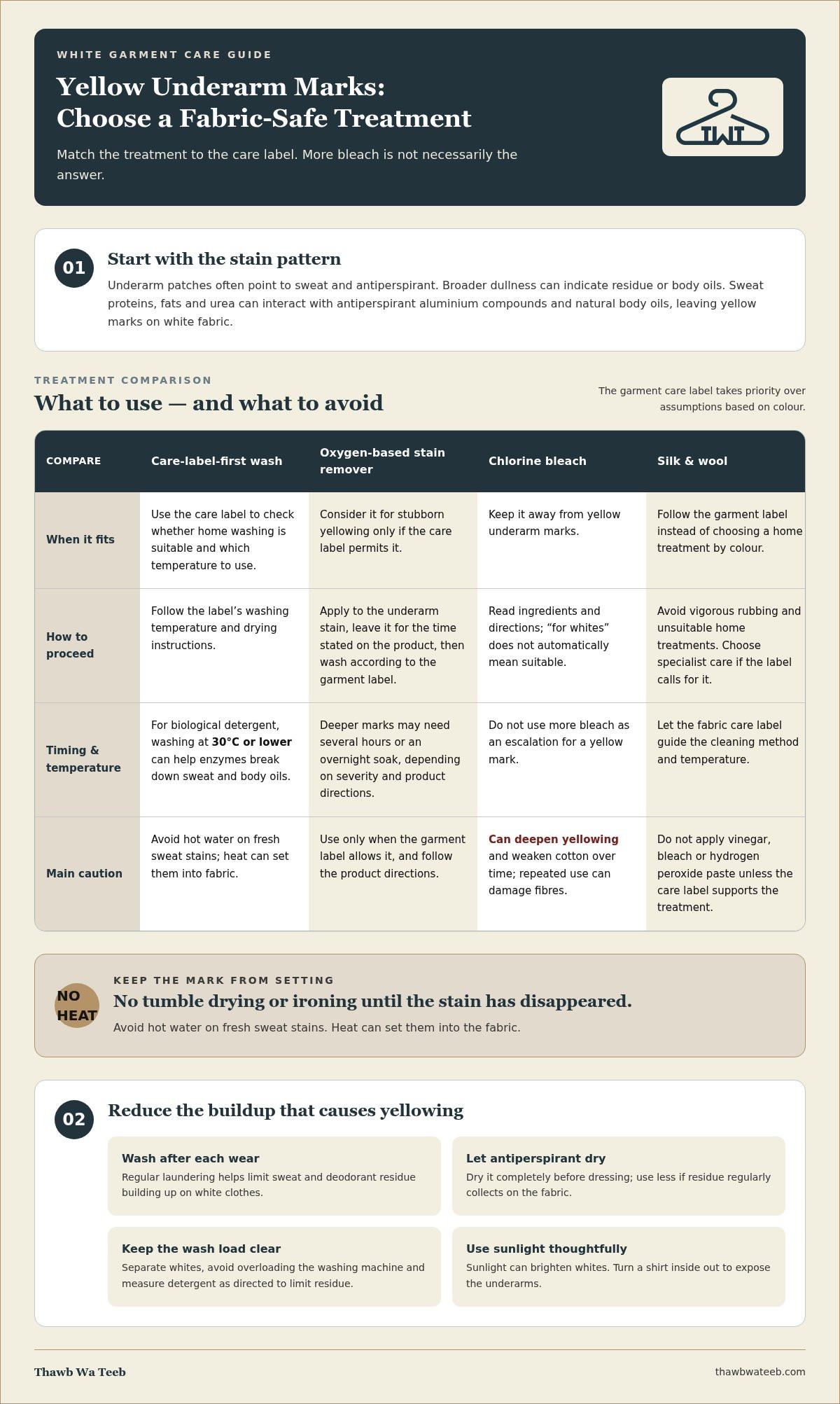
- Read the care label before choosing a treatment. It indicates whether the fabric can be washed at home and whether bleaching is allowed. Follow its temperature and drying instructions, especially for cotton shirts, which may need different care from delicate blends. If the label excludes bleach, avoid both chlorine and oxygen-based products unless its instructions say otherwise.
- For stubborn yellowing, choose an oxygen-based stain remover only if the care label permits it. Apply it to the underarm stain and leave it for the time stated on the product instructions. Then wash the garment according to its label. Deeper marks may need several hours or an overnight soak, depending on their severity and the product directions.
- Keep chlorine bleach away from yellow underarm marks. It can react with the stain, deepen discolouration and weaken cotton over time. Repeated use can damage fabric fibres, making a white shirt less durable. Don’t assume a product labelled “for whites” is suitable: read its ingredients and directions before treating any garment.
- Protect silk and wool by following their care labels instead of applying vinegar, bleach or peroxide paste. Unsuitable home treatments or vigorous rubbing can harm these delicate fabrics. If the label calls for specialist care, or the stain remains after gentle, label-approved cleaning, choose professional garment care before trying another chemical treatment.
- Wash yellow-stained white clothes at the temperature on the care label. For biological detergent, washing at 30°C or lower can help enzymes break down sweat and body oils. Avoid hot water on fresh sweat stains because heat can set them into the fabric. Don’t tumble dry or iron a marked garment until the stain has disappeared.
- Help prevent yellowing by washing white clothes after each wear, before sweat and deodorant residue build up. Let antiperspirant dry completely before dressing, and use less if residue collects under the arms. Separate whites, avoid overloading the washing machine and measure detergent as directed to limit residue. Sunlight can brighten whites; turn a shirt inside out to expose its underarms.
Underarm yellowing can develop when sweat and deodorant residue build up before washing. Body oils also contribute to soil that biological detergent can break down, so regular laundering helps stop marks becoming harder to remove. Let antiperspirant dry before dressing, and use less if residue collects on the fabric. These habits address the buildup that contributes to discolouration, rather than relying only on stain treatment after a mark appears.
For an existing mark, choose a treatment according to the garment’s care label instead of treating every white item alike. The label indicates appropriate cleaning methods, and its directions take priority over assumptions based on colour. Avoid overusing harsh products such as bleach and vinegar. Bleach can weaken fibres and cause further yellowing, so if the label rules out a treatment, don’t escalate to more chemicals.
What Causes Yellow Stains on White Shirts?
Note the stain’s position and pattern before choosing a treatment. Underarm patches often point to sweat and antiperspirant, while broader dullness can indicate residue or body oils.
-
Identify Common Causes of Yellowing
Inspect the shirt’s collar, cuffs, underarms and storage folds. Yellowing concentrated under the arms often has a different cause from a grey-yellow cast across the fabric. Sweat and body oils can build up on white clothes, while detergent residue may collect if the washing machine is overloaded or too much detergent is used. Note the pattern before treating the garment.
-
Understand Sweat and Antiperspirant Stains
Check whether yellow marks appear where the shirt touches the underarms. Sweat is generally clear and consists largely of water and salt, but its proteins, fats and urea can interact with aluminium compounds in antiperspirant and natural body oils. Together, these can leave visible yellowing on white fabric. An underarm mark may therefore reflect several sources of residue, not sweat alone.
- Compare affected shirts with clean ones from the same wash. If several white garments have a similar dull film, review your washing routine instead of treating each mark as an isolated sweat stain. Separate whites before loading the machine, avoid packing it too tightly, and use the detergent amount stated on its packaging. These steps help reduce residue settling back onto fabric.
- Consider how often a shirt is worn before washing. Body oils and deodorant can accumulate when a white T-shirt is worn repeatedly without laundering. Yellowing that gradually appears around the collar and underarms, for example, may point to accumulated wear rather than a single spill. Washing white clothes after each wear helps limit this buildup, particularly on shirts worn close to the skin.
- Check whether antiperspirant transfers onto the fabric while dressing. A visible product streak can combine with body oils and later contribute to discolouration, especially around the underarms. Let antiperspirant dry completely before putting on a white shirt, and consider using less if residue regularly appears. This reduces fresh product transfer before it can mix with sweat or collect in the fabric.
- Review the machine load if whites emerge less bright than expected. An overloaded drum leaves less room for clothes to move through the wash, while excess detergent can leave residue on shirts. Separate white garments from coloured items, allow the load to move freely, and measure detergent carefully. If only one garment has a defined underarm mark, focus on that area instead.
Using distilled white vinegar for yellow stains
For a washable white garment, distilled white vinegar offers a simple pre-wash soak. Check the care label first, and don’t use vinegar repeatedly or on fabric the label excludes from home washing.
-
Soak Stains in White Vinegar
Measure 1 cup of distilled white vinegar and add it to a basin of water. Submerge the stained area, then soak the garment for at least one hour. For severe yellowing, extend the soak up to overnight. After soaking, wash according to the care label and your usual detergent instructions. Avoid using vinegar on delicate fabric unless its care guidance allows it.
-
Combine Vinegar with Lemon Juice
Choose one treatment at a time instead of combining household acids without a tested method. Lemon juice is another household option, but let the garment’s colour, fabric and care label guide your choice. If you try it on a washable white shirt, apply it cautiously to the mark, avoid prolonged exposure and rinse before washing. Don’t leave treated fabric in strong sunlight without first checking its effect.
-
Treat Underarm Stains at Home
Apply the vinegar soak to the yellow underarm area, then launder the shirt according to its care label. Baking soda and vinegar are separate household methods; combining them causes fizzing and reduces the strength of each. For a more targeted paste, use bicarbonate of soda, hydrogen peroxide and water instead, following that method’s instructions.
- Inspect the mark after washing, while the shirt is still damp. If yellow remains, don’t tumble dry or iron it, as heat can make the stain harder to remove. Repeat a suitable pre-treatment only if the care label permits it, and don’t layer vinegar with bleach or other cleaners. A gentle, measured approach protects fabric better than adding more chemicals.
- Use vinegar as a pre-wash step, not as a substitute for laundering. After soaking, wash with detergent at a temperature allowed by the garment label. For a white cotton shirt with a fresh underarm mark, early treatment can help loosen residue before it builds up. Keep the amount of product and soaking time controlled, especially with delicate weaves.
Bicarbonate of soda and hydrogen peroxide paste
- Check the garment’s care label before applying a treatment. Use this paste only on fabric suitable for home washing, and avoid it on silk or wool. For a stubborn yellow mark on washable white cotton, work over a basin and apply the paste only to the stained area. Don’t combine this treatment with chlorine bleach or another cleaner.
- For a targeted paste, mix equal parts bicarbonate of soda, hydrogen peroxide and water. Stir the ingredients for 30 seconds, until they form a spreadable mixture. Apply it gently over the yellow area, including deodorant marks beneath the arms. Avoid forceful scrubbing, which can disturb the fabric’s surface or spread residue beyond the original stain.
- Leave the three-ingredient paste on the stain for 15 to 30 minutes, then wash according to the care label. For an older yellow stain, leave it for up to an hour before washing. Keep the paste damp during treatment, and don’t allow it to dry onto the garment. Rinse it away if the fabric reacts or changes appearance.
- If you prefer a bicarbonate-only option, combine 4 tablespoons of baking soda with ¼ cup of warm water. Stir the mixture for 30 seconds, then apply it to the affected fabric. Let this pre-treatment sit on the stain for 10 minutes. This brief treatment differs from a longer baking-soda paste soak, so follow one method at a time.
- For the baking-soda-and-water paste method, leave the paste on the stained area for 30 to 60 minutes before washing. Choose this approach for a washable white garment when you want to avoid peroxide. Don’t layer it over vinegar: combining the ingredients causes fizzing and changes the mixture, rather than creating a more controlled stain treatment.
- After washing, inspect the area before applying heat. If yellow remains, don’t tumble dry or iron the garment, as heat can make the stain harder to remove. Repeat a treatment compatible with the care label only if the fabric remains unchanged. For an underarm patch, check both the outside and inside of the shirt before deciding whether another treatment is needed.
Another option is to soak white garments in a baking soda and water solution before washing. Treat this as a soak, not as a concentrated paste: prepare the solution, submerge the garment, and leave it for an hour, then wash according to the care label. Use it only on white garments suitable for home washing, not on silk or wool. After washing, check the affected area while the garment is still damp. If yellowing remains, keep it away from the dryer and iron, and repeat a compatible treatment only if the fabric has not changed. This soaking method differs from applying paste directly to a mark, so choose one treatment at a time and assess the result before moving on.
Adding stain remover to the wash
An oxygen-based stain remover can help treat yellow marks on white laundry. Follow its instructions and the garment’s care label, which guide the treatment and wash cycle. A careful process is central to yellow stain removal from white clothes, especially when the mark sits beneath the arms.
- Sort the laundry before loading the washing machine. Separate whites from coloured items, then check each garment’s care label for washing and bleaching guidance. Set aside items that need a different treatment. Use an oxygen-based product only when its directions and the fabric label allow it. Don’t assume every white garment can tolerate the same product or wash setting.
- For stubborn yellow marks, choose an oxygen-based stain remover if the care label permits it. Apply it to the underarm stain or add it to the wash as its instructions direct. Use the stated amount and contact time. More stain remover won’t necessarily work faster, and excess product may leave residue on fabric.
- Read the product directions before soaking or starting the machine. For pre-treatment, leave the remover on the affected area for the stated time, then wash according to the garment label. If the product calls for soaking, follow its method. Stubborn stains may need several hours or an overnight soak with oxygen-based bleach, depending on their severity.
- Set the wash temperature according to the garment’s care label. With biological detergent, washing at 30°C or lower can help enzymes break down sweat and body oils. Don’t wash fresh sweat marks in hot water, because heat can set them into fabric. Leave enough room in the machine for clothes to move freely during the cycle.
- Measure detergent and stain remover as their packaging directs. An overloaded machine or excess detergent can leave residue on white shirts. Don’t mix oxygen-based stain remover with chlorine bleach or vinegar unless the product directions explicitly allow it. Chlorine bleach can deepen yellow underarm discolouration and weaken cotton over time, so it isn’t a shortcut for this treatment.
- Inspect each garment after washing and before using a tumble dryer or iron. If a mark remains, keep the fabric away from heat, which can make the stain harder to remove. Yellow stain removal from white clothes calls for a measured repeat treatment, not several products layered together. For delicate or treasured garments, professional garment care may be a better next step than further home treatments.
Thawb Wa Teeb: Signature Dry Cleaning & Couture Care
Thawb Wa Teeb offers Signature Dry Cleaning & Couture Care for white garments that need considered handling. Choose professional care for delicate fabrics such as silk or wool, or if a yellow mark remains after a home treatment approved by the care label. Avoid repeatedly applying household products, which may put extra stress on the fabric.
For washable garments, Wash & Iron is another option, while Steam Pressing can finish a garment after cleaning. The right choice depends on the garment’s care needs and the service required. For a treasured white shirt or couture piece, professional handling can be a more suitable next step than trying another stain treatment at home.
Visit Thawb Wa Teeb to get in touch.
Give Your White Garments a Fresh Start
Let the care label guide your next step, and treat each garment according to its fabric and the stain’s condition. A measured approach to yellow stain removal from white clothes helps protect the fabric while addressing the mark. If a delicate or treasured piece still needs attention after home treatment, professional garment care is a considered next step.
Thawb Wa Teeb offers Signature Dry Cleaning & Couture Care, Wash & Iron, and Steam Pressing. Choose the service that suits the garment’s care needs instead of continuing household treatments that may put the fabric under unnecessary stress. Thoughtful care can help you feel more confident about wearing and maintaining your whites.
For help with your garments, contact Thawb Wa Teeb today. A fresh, well-cared-for wardrobe starts with the right next step.
Frequently Asked Questions
What causes yellow stains on white clothes?
Yellowing commonly forms when sweat, body oils and antiperspirant residue collect in fabric. Sweat is mostly clear, but its proteins, fats and urea can combine with aluminium compounds in antiperspirants. This helps explain why a white shirt may develop yellow patches beneath the arms even when the sweat itself looked colourless. A yellowing collar may instead indicate accumulated skin oils and everyday wear.
How to remove old or set-in yellow stains from white fabric?
For a washable white garment, treat an older mark with a paste of equal parts bicarbonate of soda, hydrogen peroxide and water. Leave it on the stain for up to an hour, then wash according to the care label. An oxygen-based stain remover is another option; follow its directions, which may call for soaking for several hours or overnight. Inspect the fabric before drying, and keep it away from heat while the mark remains.
Is bleach safe for removing yellow stains from white clothes?
Chlorine bleach isn’t a suitable fix for yellow underarm stains. It can react with the discolouration, deepen it and weaken cotton over time. Oxygen-based bleach is a different treatment, but use it only if the garment’s care label permits it and follow the product instructions. For example, don’t assume a white cotton shirt can tolerate chlorine bleach simply because its fabric appears colourfast.