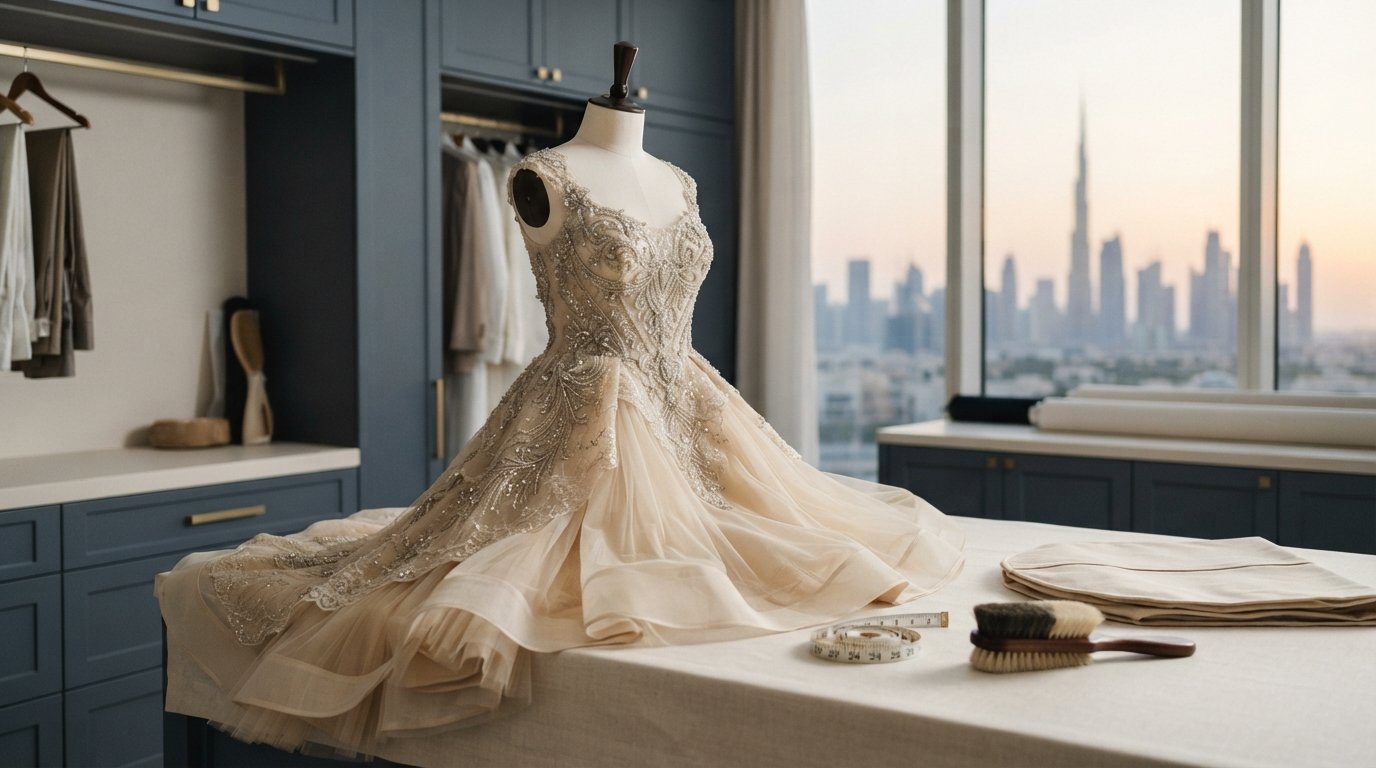
Yes, wedding dresses and evening gowns can be professionally dry cleaned in Dubai. For evening gown dry cleaning in Dubai, start with the care label: “Dry Clean Only” means the garment should be dry cleaned. A professional cleaner also assesses the fabric, construction and embellishments before choosing how to handle the gown.
It’s understandable to be cautious with a gown that has delicate embellishments, a structured lining or special memories attached. Water and a standard wash cycle can damage or distort some details, so choosing a cleaning method suited to the whole garment matters as much as the finish.
This guide explains how dry cleaning works, what fabric and embellishment care involves, and how to prepare a gown before handing it over. It also outlines what shapes the cost: the fabric, embellishments, stubborn stains and any deodorising needs. An exact price depends on the gown and is provided after a quote request.
Key Takeaways
- Read the care label first. “Dry Clean Only” means the gown should be dry cleaned, and its construction helps guide the cleaning approach.
- Before handing over a wedding dress, air it out, remove plastic, and use a cotton sheet or breathable garment bag.
- Dry cleaning uses specialist solvents instead of water, while the garment’s fabric, embellishments, lining and stains influence how it should be treated.
- For an exact quote, provide details about the gown and any stubborn stains or deodorising needs; these factors can affect the cost.
- Plan gown care around its condition and intended storage, not just the next occasion you’ll wear it.
Do you dry clean wedding dresses and evening gowns in Dubai?
Yes. Wedding dresses and evening gowns can be professionally dry cleaned in Dubai. The care label and the gown’s construction guide the process, while an inspection helps identify delicate fabrics, embellishments and structured details that need careful handling.
Delicate Fabric and Embellishment Cleaning
Beading, sequins and embroidery need attention beyond the main fabric. An inspection can identify embellishments, padding and structured linings that may be damaged or distorted by water and a standard wash cycle. Point out loose details and visible stains when arranging care so they can be considered during assessment.
For beaded or embroidered designs, choose a Dubai cleaner that evaluates the complete garment before cleaning, rather than relying on a routine wash. Ask about gown inspection, stain treatment and damage responsibility as part of the service terms; don’t assume a damage guarantee is included.
Cleaner Specialization and Gown Inspection
Choose a cleaner experienced with wedding dresses or couture garments, where each gown is assessed before the cleaning process is selected. This matters for layered skirts, delicate trims and structured bodices, since the outer fabric and lining may need different handling. Thawb Wa Teeb provides Dry Cleaning & Couture Care for wedding dresses and evening wear.
How long does evening gown dry cleaning take in Dubai? Professional wedding-dress cleaning can take anywhere from days to weeks, depending partly on the cleaner’s workload and the gown’s requirements. Same-day dry cleaning may be available in Dubai for urgent garments, but it isn’t a suitable planning assumption for every intricate gown.
Do Dubai dry cleaners offer gown inspection, stain treatment and damage guarantees? Professional cleaners inspect gowns and assess the cleaning process; mention stains during the handover, and review the service terms for damage responsibility. Which cleaners specialize in evening gown cleaning? Choose a Dubai service focused on gown or couture care, with garment inspection before cleaning.
Silk, Satin, Chiffon, and Velvet Care
Can silk, satin, chiffon or velvet evening gowns be dry cleaned? Start with the care label: “Dry Clean Only” means the garment should be dry cleaned. A professional assessment also considers the gown’s design, lining and embellishments before deciding how to handle it.
These fabrics may appear alongside contrasting trims or layered construction. Share the care label and identify delicate sections, such as a chiffon overlay or velvet panels, so the gown is assessed as a whole rather than by its main fabric alone.
Before handover, air out the wedding dress, remove plastic, and wrap it in a cotton sheet or breathable garment bag. This keeps it covered without enclosing it in plastic.
Do Dubai dry cleaners offer pickup and delivery for evening gowns? Some services provide door-to-door collection and return; keep the gown protected in breathable packaging for transport. Which Dubai areas have gown cleaning services? Coverage depends on the service and its delivery area, so select a collection and return option that serves your neighborhood.
Cleaning methods and eco-friendly products
Dry cleaning uses specialist chemical solvents instead of water. For a luxury gown, the method should suit its fabric, construction and care label. Dry cleaning is not the same as an ordinary laundry cycle, where water and agitation are central.
The process begins with an assessment. The care label provides cleaning instructions, while the gown’s construction helps identify details that need careful handling. A silk dress with a lined bodice, for example, raises different care considerations from a simple, unlined garment. Stains matter too: their location and appearance help inform the assessment.
“Eco-friendly” can mean different things, so the phrase alone doesn’t explain which solvent or product is used, or whether the method suits a particular gown. Keep the decision specific: read the label, note visible stains, and distinguish dry cleaning from water-based laundry. Broad environmental language is no substitute for garment-care details.
What to consider before cleaning
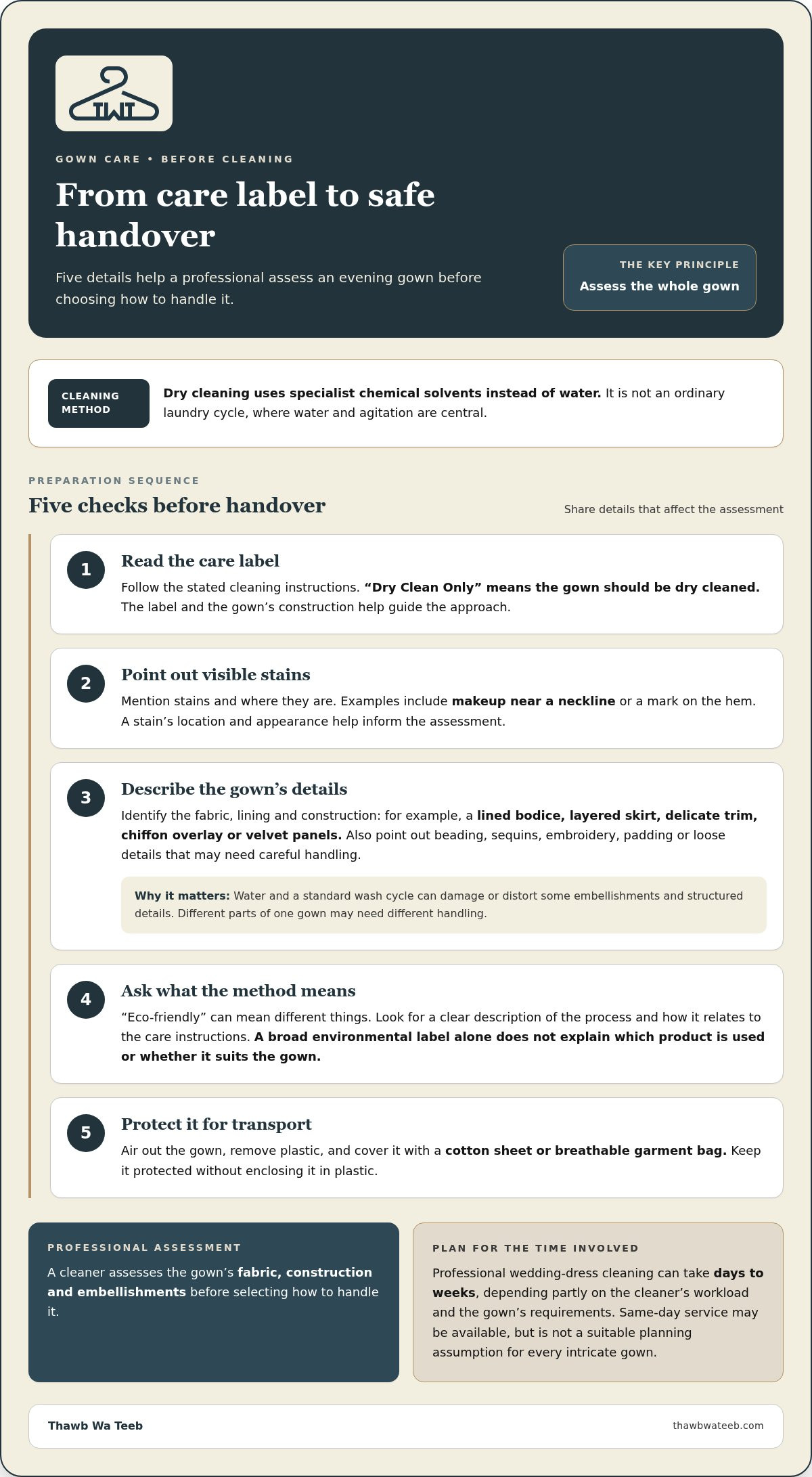
Use these steps to prepare useful information about the gown:
- Read the care label and follow its stated cleaning instructions.
- Point out visible stains, such as makeup near a neckline or a mark on the hem.
- Identify design details, including a lined bodice, layered skirt or attached trim.
- Separate the question of cleaning method from claims about environmental impact.
Each detail gives context for assessing the garment. A stain on a hem may call for different consideration from makeup on a delicate bodice. A layered skirt may also need a different handling approach from a single-layer design. That’s why “dry cleaned” alone doesn’t describe every aspect of gown care.
For an eco-conscious decision, look for a clear description of the process rather than relying on a label or slogan. Relevant details include the method, how it relates to the care instructions, and whether visible stains and construction are considered. No single phrase means every gown suits the same process.
After cleaning, follow the garment’s care instructions for storage and handling. Avoid treating a delicate gown like everyday laundry; preserve its shape and keep it separate from items that could snag or transfer colour. For a garment needing considered dry-cleaning care, explore couture garment care as a relevant next step.
Evening gown dry cleaning prices
The cost of cleaning an evening gown in Dubai depends on the garment and the care it requires. A simple design and an elaborate wedding dress can involve different work. Fabric, embellishments, stubborn stains requiring extra care, and deodorising all inform the assessment. Thawb Wa Teeb provides a quote based on the gown.
Describe the gown clearly when requesting a quote. Include its main fabric, lining, length, and any beading, sequins or embroidery. Identify visible marks by location, such as makeup near the neckline or a stain on the hem. These details help explain why gowns with similar silhouettes may need different care.
Construction adds useful context. A lined bodice, layered skirt or structured waist can make a gown more complex to assess than a plain, unlined dress. Delicate embellishments may need extra attention during handling. Include these features in your quote request instead of describing the garment only as a formal dress.
Before requesting a quote, gather the information that best describes the gown:
- The care label’s cleaning instructions.
- The fabric and any lining or layered sections.
- Beading, sequins, embroidery and other attached details.
- Stubborn stains, their location and any deodorising needs.
For example, a chiffon gown with embroidered panels and a visible mark needs a more detailed description than a plain dress without visible stains. This helps connect the gown’s condition and design to the work being assessed. Fabric alone does not determine the price; embellishments and stain treatment can also affect the cleaning process.
A useful quote request is specific, not lengthy. Share the garment details together and describe any stain or odour concern directly. Include the care-label instructions, if available. Mention several layers or delicate attached pieces so the assessment accounts for the complete garment.
Compare quotes by checking what each covers, not just the final amount. Clarify whether the quote accounts for the gown’s embellishments, stubborn stains and deodorising needs. Describing these factors clearly makes the estimate more relevant to the actual dress. Keep the care label and garment details handy when discussing the quote.
Treat this as a broad reference when considering an estimate, rather than assuming every gown will fall at the same point in the range. The gown’s fabric, construction, embellishments, visible stains and deodorising needs remain relevant to the price assessment. When asking for a quote, provide those details and check that the response accounts for the work required. A specific estimate is more useful than relying on the listed range alone.
Getting an exact quote for a gown
For an exact gown-cleaning quote, describe the garment and its condition clearly. Thawb Wa Teeb provides a quote based on the gown, taking into account its fabric and embellishments, stubborn stains requiring extra care, and deodorising needs. Include these details together so the estimate reflects more than the gown’s name or silhouette.
Start with the care label. Share its cleaning instructions, then describe the fabric and construction. For example, identify a silk outer layer, a lined bodice or a skirt with several layers. These specifics help distinguish a simple design from a garment that needs more detailed handling.
Next, describe the embellishments. Note whether the gown has beading, sequins, embroidery, lace or attached trim, and where they are located, such as sequins across the bodice or embroidery near the hem. A clear description helps the cleaner understand which parts of the design need consideration.
Describe stains just as precisely. Identify the area and appearance, such as makeup at the neckline, a mark on the train or a food stain on the skirt. If you know when the stain occurred, include that detail. Avoid rubbing it or applying a household product before assessment, as this may alter the mark or surrounding fabric.
Use this checklist before submitting your request:
- Care-label instructions and the gown’s main fabric.
- Construction details, including lining, layers, and structured sections.
- Embellishments and where they appear on the garment.
- Stain locations, stain type when known, and any deodorising needs.
A photograph can help communicate visible details. Take a full-length image, then close-ups of embellishments or stains. Use clear lighting and make sure the affected area is visible. Pair the images with written details, since a photo may not show the care label or hidden lining.
When you receive a quote, compare its scope with the information you provided. Check whether it accounts for the gown’s fabric, embellishments, stains and deodorising. If you left out a detail, share it before accepting the estimate. This keeps the discussion focused on the actual garment and clarifies what the quoted cleaning covers.
Gown fabric and embellishment care
A gown’s material, lining and decoration all affect how it should be handled. Assess the full dress, not just its outer fabric. A satin skirt may sit beside a beaded bodice, while a chiffon overlay can cover a different base material. Each component deserves attention during garment assessment.
Begin with the care label. Share its instructions alongside the gown’s construction details. Identify delicate areas, such as embroidered sleeves, sequins at the waist or lace panels across the back. These specifics help the cleaning assessment account for the entire design.
Embellishments need careful handling because they can catch, loosen or press against nearby fabric. Point out loose threads, raised beads and sequins before handover. For example, mention beads near a zip or decorative trim along the hem. This makes the gown’s condition clear before cleaning begins.
Stain care also depends on the location and surrounding material. A mark on a satin bodice differs from one on a layered skirt. Tell the cleaner what caused the stain, if known, and where it is. Don’t scrub it or apply a household product first, as that may spread the mark or affect nearby decoration.
For transport, remove plastic and keep the dress covered with a cotton sheet or breathable garment bag. Arrange the train gently inside the covering so it doesn’t drag or snag. Keep accessories separate, especially sharp pins or jewellery that could catch delicate fabric.
After cleaning, preserve the gown’s shape in storage. Use a clean, dry space and avoid forcing a full skirt into a tight container. Keep embellishments from pressing against other garments. Arrange layered sections without pulling at seams or decorative details.
Before collection, review the gown’s condition against the details noted at handover. Look closely at the hem, neckline and decorated panels. Make sure the dress is arranged securely for its journey home, with no loose accessories trapped against the fabric. These practical checks help protect delicate details.
For detailed care of a gown’s fabric and embellishments, request couture garment care.
Check the care label before deciding how to clean a garment. If it says “Dry Clean Only,” the garment should be dry cleaned. Follow that instruction rather than guessing from the fabric’s appearance or amount of decoration. Read the label carefully and share its wording alongside the gown’s construction and condition details. This gives the person assessing it useful information about the materials and embellishments.
Keep the label information available at handover so it can be considered alongside delicate panels, beads or trim. Don’t make assumptions about the whole gown based on how one section was handled. When discussing the dress, distinguish the label’s instructions from observations about stains, loose embellishments or layered construction. The label is one part of the assessment, and its wording should remain clear.
Thawb Wa Teeb: Signature Dry Cleaning & Couture Care
Thawb Wa Teeb offers Dry Cleaning & Couture Care for gowns that need considered garment care. Choose this service when a wedding dress or evening gown needs professional cleaning rather than a standard laundry cycle. Share the care-label instructions and note delicate fabrics, embellishments or visible stains when arranging collection.
For a polished finish on other suitable garments, Thawb Wa Teeb also offers Steam Pressing. Schedule free door-to-door pickup online or via WhatsApp, making it easier to arrange garment care around your routine.
To arrange care for your gown, contact Thawb Wa Teeb or visit thawbwateeb.com.
Give Your Gown a Thoughtful Next Step
Gown care continues beyond cleaning. Before storing or wearing it again, keep the care label and garment details together so future handling starts with useful information. For evening gown dry cleaning in Dubai, this habit helps you communicate the garment’s needs clearly at each stage of care.
Thawb Wa Teeb offers Signature Dry Cleaning & Couture Care for gowns, alongside Wash & Iron and Steam Pressing for other suitable garments. Choose the service that fits the piece you’re caring for, and share relevant fabric or design details when arranging its care.
When you’re ready to discuss a gown, contact Thawb Wa Teeb about gown cleaning. A considered next step can help you care for a treasured dress with confidence.
Frequently Asked Questions
How much does evening gown dry cleaning cost in Dubai?
The price depends on the gown and is provided after a quote request. Fabric, embellishments, stubborn stains requiring extra care, and deodorising can all affect the assessment. For a more useful quote, describe the dress’s construction and decorations, identify stain locations, and share the care-label instructions. A photo of a detailed area can help illustrate what the written description means.
What cleaning methods do Dubai cleaners use for delicate evening gowns?
Dry cleaning uses specialist chemical solvents instead of water. The care label and garment construction guide the assessment. A professional considers details such as lining, padding and attached decorations when determining the process. For example, a gown with a structured bodice and delicate trim should be assessed as a complete garment, not treated like everyday laundry.
How should you prepare and store an evening gown before and after cleaning?
Before handover, air out the gown, remove plastic, and wrap it in a cotton sheet or breathable garment bag. Keep detachable accessories separate to avoid snags. After cleaning, follow the garment’s care instructions and store it in a clean, dry space without crushing its shape. Start preserving the dress when you decide to put it away in your wardrobe.
What risks can dry cleaning pose to embellishments, colors, or delicate fabrics?
Cleaning can affect delicate details if the process doesn’t suit the gown’s construction. Beading, sequins, padding and structured linings need careful assessment; water and a standard wash cycle can damage or distort some garments. Share concerns about colour changes or loose decorations before cleaning, and point out vulnerable areas. The care label and garment inspection help guide the method selected.