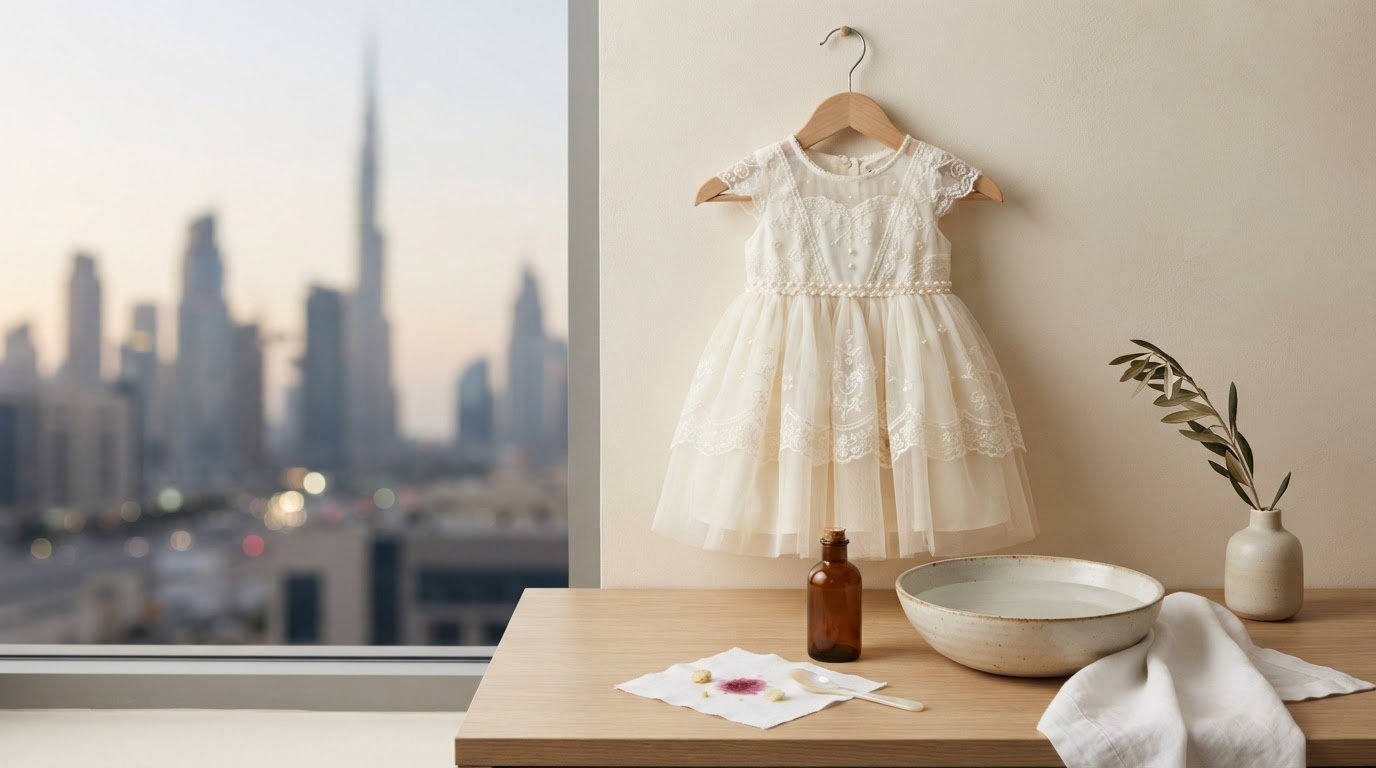
A party dress does not have to be worn just once. It can often be worn again if you follow its care label, treat stains gently and avoid heat that could damage delicate fabric. Careful children's party dress cleaning starts with checking the label before choosing a washing method.
It is understandable to hesitate before cleaning a dress decorated with tulle, lace, satin, beads or embroidery. The wrong method can affect its shape and finish, while careful handling can help keep it ready for another birthday, family celebration or special photo.
This guide explains how to read care instructions, hand-wash delicate fabrics and treat common stains such as cake, juice, grease and chocolate. You will also learn how to dry and store a white dress to help prevent yellowing, and when professional garment care may be more suitable.
Key Takeaways
- Start with the care label, then choose a cleaning method that suits the dress’s fabric and embellishments.
- Handle tulle, lace and organza gently: cold water, delicate detergent and no rubbing or wringing help protect their finish.
- Treat party stains according to their type, and avoid hot water on chocolate or other stains that may set with heat.
- Make sure a white dress is clean and fully dry before storing it in a breathable garment bag to help prevent yellowing.
- For a dry-clean-only dress or a delicate design that needs specialist attention, professional garment care can be a practical next step.
Cleaning tulle, lace and organza
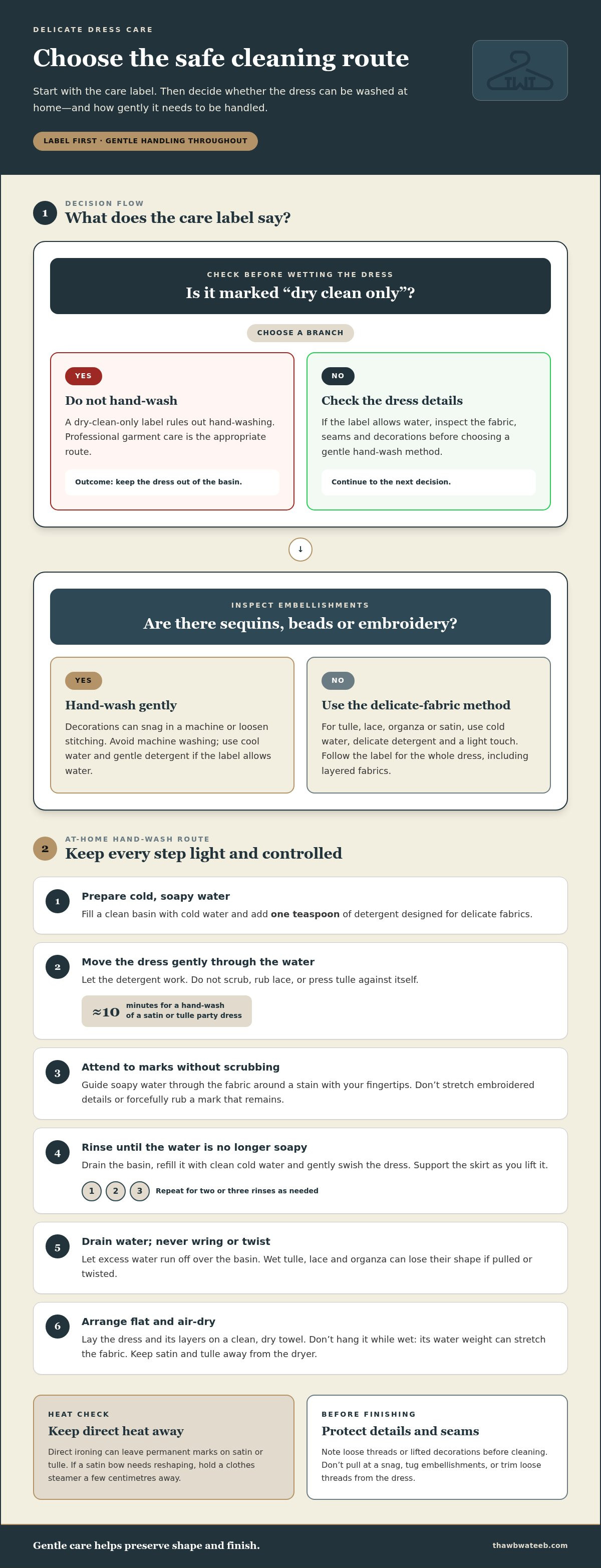
At home, hand-wash a children’s party dress in cold water with detergent designed for delicates. Handle tulle, lace and organza gently, then rinse and dry the dress without wringing it or using a dryer.
- Read the care label first. Check the dress’s instructions before wetting its tulle, lace or organza. If the label says dry clean only, don’t hand-wash it. Be especially careful with layered birthday dresses, where the skirt and lining may require different care.
- Inspect the decoration and seams. Look for loose threads, delicate lace edges, stitched-on flowers and layered panels. Note any stains before washing, so you can treat them carefully later. Don’t pull at a snag or trim a loose thread from the dress.
- Prepare a clean basin. Fill it with cold water and add a teaspoon of gentle detergent. Choose detergent intended for delicate fabrics. Cold water is recommended for satin or tulle dresses because hot water can damage satin, fade colours and shrink fabric.
- Wash with a light touch. Lower the dress into the basin and move it gently through the water. Let the detergent work without scrubbing, rubbing lace or pressing tulle against itself. A hand wash for a satin or tulle party dress takes about ten minutes.
- Give stained areas gentle attention. Use your fingertips to guide the soapy water through the fabric around a mark. Don’t scrub the mesh or stretch embroidered details. If the stain remains, avoid forceful rubbing, which can distort delicate layers or damage the surface.
- Rinse until detergent is removed. Drain the basin, refill it with clean cold water and gently swish the dress. Repeat for two or three rinses, until the water no longer looks soapy. Support the skirt as you lift it, rather than pulling on one edge.
- Remove water without twisting. Hold the dress over the basin and let excess water drain. Don’t wring, twist or tightly squeeze tulle, lace or organza. These fabrics need gentle handling while wet, when pulling can alter their shape.
- Dry the dress flat. Place it on a clean, dry towel, arrange the skirt and layers, and leave it to air-dry. Don’t hang a wet dress, since its water weight can stretch fabric. Keep satin and tulle away from the dryer.
- Skip direct ironing on delicate fabric. Direct heat on satin or tulle can leave permanent marks. If a satin bow needs reshaping, hold a clothes steamer a few centimetres away. For a stored frock, steaming can help release wrinkles; don’t press an iron directly onto delicate fabric.
- Use fabric protector cautiously. For non-satin fabric, test protector spray on an inconspicuous area before applying it more broadly. Let the test area dry and inspect it for changes. Skip the spray on satin, and don’t treat it as a substitute for careful stain removal.
Party dress materials and embellishments
Sequins, beads and embroidery can snag during washing. For embellished designs, hand-washing is the gentler choice. Avoid machine washing, which may catch decorations or loosen stitching.
After cleaning, air-dry the dress away from direct heat. Lay a wet, delicate or heavily embellished frock flat, then store it flat to help protect its shape and decoration.
- Identify the main fabric. Check whether the dress is satin, tulle, lace, organza, cotton or a blend. A satin skirt with a mesh overlay combines different textures, so follow the care label rather than assuming one layer represents the whole garment.
- Inspect every embellishment. Look closely at sequins, beads, embroidery, ribbons and stitched appliqués. Note loose threads or lifted decorations before cleaning. Don’t tug, pull or trim them, since handling can worsen damage around the stitching.
- Choose hand-washing for decorated dresses. Sequins, beads and embroidered details can catch against a machine drum or other garments. Hand-wash gently instead, provided the care label allows water. Use cool water and gentle detergent, and avoid rubbing decorations against the fabric.
- Protect the dress during rinsing. Support its weight with both hands, especially if the skirt has several layers. Move the garment through clean water gently. Don’t lift it by a beadwork panel, strap or lace edge, because wet fabric can pull at those points.
- Remove water without twisting. Let excess water drain, then place the dress on a clean towel. Press the towel lightly around the fabric without wringing or twisting. This helps limit stress on sequins, embroidered motifs and delicate seams.
- Dry delicate pieces flat. Arrange the skirt and any tulle or organza layers on a clean, dry surface. A wet dress can stretch under its own water weight when hung. Keep satin and tulle out of the dryer, and let the dress air-dry.
- Store heavy decoration flat. Lay a dress with dense beadwork or sequins in a clean storage space, rather than folding it tightly. Pressure from a fold can distort embellishments or crease fabric. Keep decorations from pressing against rough surfaces.
- Choose storage for the garment’s structure. A lightweight dress may sit on a padded hanger beneath a breathable garment bag or clean cotton pillowcase. For delicate or heavily embellished frocks, flat storage avoids strain on straps and seams. Keep white dresses clean and dry before storing.
- Refresh wrinkles cautiously. Use a steamer to release creases when suitable, keeping it away from direct contact with embellishments. For satin or tulle, don’t iron directly, since heat can leave marks. A pressing cloth and low temperature are safer for other suitable fabrics.
Removing cake, juice, grease and chocolate stains
Match the treatment to the stain, and use cool water on delicate partywear. Follow the dress’s care label before applying any solution.
-
Remove Cake and Juice Stains
Scrape cake or icing from the fabric first, lifting away excess without spreading it. Pretreat the mark with dishwashing liquid and water. For juice or fruit punch, rinse immediately with cold water, then hand-wash the dress. A diluted mixture of one part white vinegar to two parts water can help treat these stains. Keep it away from untested areas and avoid rubbing delicate fabric.
-
Remove Grease and Chocolate Stains
Sprinkle cornstarch over a greasy mark and let it absorb the oil before washing. For chocolate, briefly refrigerate the stained area to harden residue, then carefully scrape away the excess. Pretreat with an enzyme-based stain remover. Wash the mark with cool water and gentle detergent; hot water can set the stain and make it harder to remove.
- Separate the stain from the fabric decision. Before treating any mark, read the care label and consider the dress’s material and decoration. A solution that suits a plain fabric may be unsuitable for satin, tulle, lace or beadwork. Avoid soaking or scrubbing embellished areas, which can catch or strain delicate details.
- Lift residue instead of spreading it. Use a careful scraping motion for cake and chocolate, removing only what sits on the surface. Work gently around seams, pleats and layered skirts. Pressing residue deeper into fabric can enlarge the visible mark, while pulling at decorations risks disturbing their stitching.
- Apply pretreatment with control. Use dishwashing liquid and water on cake or icing, and an enzyme-based remover on chocolate. Keep treatment focused on the stain rather than saturating the whole dress. On a layered birthday frock, check whether the mark has reached the lining before rinsing.
- Rinse according to the stain. Use cold water immediately on juice or fruit punch, then proceed with hand-washing. For chocolate, stay with cool water and gentle detergent. Don’t switch to hot water because a stain remains; heat can set chocolate and complicate further cleaning.
- Reassess before drying. Look closely at the treated area while the fabric is still damp. If a mark remains, don’t apply heat or iron over it. Drying can make a remaining stain harder to address, so keep the dress’s care instructions in view.
- Handle delicate dresses lightly throughout. Use fingertips and gentle movement, not forceful rubbing, on tulle, lace or organza. For a dress with sequins or beads, work around the decoration and avoid catching it with a fingernail or cloth. The gentler approach helps preserve both fabric and finish.
Match treatment to the stain: lift away cake or icing before using dishwashing liquid and water, and use cornstarch to absorb grease before washing. For juice or punch, apply a mixture of one part white vinegar to two parts water. For chocolate, briefly harden the residue in the refrigerator, scrape off the excess, pretreat with an enzyme-based stain remover, then wash with cool water and gentle detergent, not hot water.
Checking the care label
Take a children’s party dress to a dry cleaner if its label says “dry clean only.” For other instructions, follow the label when choosing a washing method. The care label is the starting point for children's party dress cleaning because it indicates which methods the garment can tolerate.
- Find and read the label first. Look inside the dress, including near a side seam or the back opening. Read every line before adding water or stain treatment. The label’s instructions guide whether home washing is suitable for that particular garment.
- Follow the stated washing method. If the label permits hand-washing, use that method rather than assuming machine washing is safe. If it specifies dry cleaning only, don’t soak the dress, even briefly. A birthday frock’s outer fabric, lining and decoration all need consideration.
- Check the full garment, not just its skirt. A dress may combine satin, tulle, lace or organza with a separate lining. Look over each layer and its attached details before washing. If the care label gives instructions for the complete garment, use those instructions for the whole dress.
- Match the method to the clearest restriction. If the label says dry clean only, that instruction rules out hand-washing at home. Don’t treat a small stain as a reason to wet-clean the entire dress. A decorated bodice or delicate overlay can be affected even when the skirt looks sturdy.
- Plan stain treatment around the label. Before applying dishwashing liquid, vinegar solution or another treatment, check whether the label allows washing. Keep any treatment compatible with the stated method. For example, a dry-clean-only dress shouldn’t receive a water-based pretreatment.
- Pay attention to attached embellishments. Check for beads, sequins and embroidery beside the care instructions. These details can snag or loosen during rough handling. If the label allows hand-washing, keep movement gentle and avoid scrubbing decorated areas.
- Don’t guess when wording is unclear. Re-read the entire label and identify the garment’s material before proceeding. A satin bow, lace sleeve or layered tulle skirt may need more delicate handling than plain fabric. Don’t choose a stronger wash simply because the dress looks durable.
- Keep the label with your care notes. Photograph or write down its instructions before cleaning, especially for a dress saved for another birthday. Record the fabric and any restrictions together. This makes the label easy to refer to during future children's party dress cleaning.
- Use the label to decide when professional cleaning is needed. A “dry clean only” instruction means the dress should go to a dry cleaner. This is the clearest point at which home washing isn’t appropriate, particularly for a layered or embellished garment.
Preventing and treating yellowing
Invisible sugar from cake or juice can yellow a white frock over time. Rinse it after wearing, and store it only when it is completely clean and dry.
-
Prevent Yellowing
Gently rinse a white birthday dress in cold water after wearing it. This helps remove invisible sugar residue before it settles into the fabric. Check stained areas, including the hem and bodice, because party food marks may not be obvious under indoor lighting.
- Wash suitable cotton blends thoughtfully. For cotton and polyester blend birthday frocks, add 1/4 cup of baking soda to the wash water. Follow the garment’s care label first, and don’t apply this method automatically to satin, tulle or embellished fabric.
- Dry away from direct sunlight. Air-dry white dresses out of direct sunlight to help prevent yellowing. Arrange the dress so its lining and layers can dry fully, and don’t put a satin or tulle frock in a dryer.
- Store only after checking the whole dress. Inspect the front, lining, cuffs and hem for remaining marks. White frocks should be completely clean and dry before storage, because invisible stains can set and yellow over time.
- Choose breathable storage. Place a clean, dry white dress in a breathable cotton garment bag. Avoid plastic, which can trap moisture. A padded hanger beneath a breathable garment bag or clean cotton pillowcase suits dresses that shouldn’t be folded.
- Keep delicate decoration in shape. Store heavily embellished or delicate frocks flat, rather than placing weight on beads, sequins or embroidery. Keep the storage area clean, and don’t pack the dress tightly against other garments.
-
Treat Yellowing
For a yellowed garment, soak it in 1/4 cup of lemon juice mixed with 1 gallon of hot water. Check the care label before using hot water, especially for satin, tulle or blended fabrics. Rinse thoroughly after soaking, then dry the frock fully before storage.
- Use sunlight carefully on cotton. Brief direct sunlight exposure may help brighten yellowed cotton. Monitor the garment closely and bring it inside before prolonged exposure, which can damage fabric. Don’t use this approach for delicate synthetic blends or decorated party dresses.
- Recheck the fabric before choosing treatment. A white cotton birthday frock and a satin dress need different handling. Confirm the material and care instructions before trying baking soda, lemon juice or sunlight, and stop if the fabric’s appearance changes.
- Refresh a stored dress gently. If a clean frock has wrinkles, steaming can help reshape it. For satin or tulle, don’t iron directly. Choose professional dry-cleaning care for a dress whose label calls for dry cleaning.
Make rinsing part of the after-wear routine: a gentle cold-water rinse can remove invisible sugar residue before it yellows a white birthday frock. Let the garment air-dry away from direct sunlight to help prevent yellowing.
Brief exposure to direct sunlight may help brighten yellowed cotton. Monitor the garment closely to avoid damage. Once clean and dry, store a white birthday frock in a breathable cotton garment bag rather than plastic, which can trap moisture.
Thawb Wa Teeb: Signature Dry Cleaning & Couture Care
Thawb Wa Teeb’s Signature Dry Cleaning & Couture Care is a suitable option for a party dress labelled dry clean only or featuring delicate embellishments. Beads, embroidery and layered fabrics can make stain treatment at home difficult, especially when the care label rules out washing. Share the label’s instructions and point out visible stains when arranging care. For wrinkles after cleaning, Steam Pressing offers a relevant finishing service. Thawb Wa Teeb also provides door-to-door pickup, which you can schedule online or via WhatsApp. Contact Thawb Wa Teeb to arrange professional care for delicate partywear.
Prepare the Dress for Its Next Celebration
A cherished party dress can hold memories beyond one birthday. Treat its care as part of keeping those memories close: choose a method that respects the garment, and avoid rushing into a treatment that could alter its finish. Thoughtful children’s party dress cleaning helps make the next wear feel considered, whether the occasion is another family celebration or a special photograph.
If you prefer professional care for a treasured or intricate dress, Thawb Wa Teeb offers Signature Dry Cleaning & Couture Care. Wash & Iron and Steam Pressing are also available for garments suited to those services. Choose care that fits the dress and its next occasion, keeping the label and fabric in mind.
Contact Thawb Wa Teeb for help with your garment-care needs. A little attention now can help keep a special outfit ready for another meaningful occasion.
Frequently Asked Questions
Can It Be Worn Again?
Yes, a children’s party dress can often be worn again if its fabric and finish remain in good condition. After cleaning, inspect the seams, fastenings and lining for loose threads or damage before storing it. For a dress kept as a hand-me-down or for family photographs, use a breathable cover and keep it away from damp storage areas. Check its condition again before the next occasion.
What About the Bow?
Gently reshape a satin bow with a clothes steamer held a few centimetres from the fabric. Keep the steam moving rather than directing it at one spot, and avoid pressing the bow with an iron. If the bow is detachable, check how it attaches before cleaning, then store it with the dress so it is easy to find.