The dryer isn’t always the only culprit. A favourite garment can lose its fit in the wash, too, especially when heat, water and agitation don’t suit its fabric. If you’re wondering how to prevent clothes from shrinking, the key is to match care to each garment instead of relying on one setting for every load.
It’s easy to blame a hot cycle or feel unsure what a care label’s symbols mean. But fibres respond differently: wool, cotton, linen and delicate synthetics each have their own needs. Even a “pre-shrunk” label doesn’t mean a garment can’t change shape.
This guide explains what contributes to shrinkage and how to choose a gentler washing and drying approach for different fabrics. You’ll also learn how to read care instructions with more confidence and when delicate, structured or especially valued pieces may benefit from professional handling. In Dubai, Thawb Wa Teeb offers Signature Dry Cleaning & Couture Care, Wash & Iron and Steam Pressing.
Key Takeaways
- Shrinkage is a change in garment dimensions. The risk depends on more than fibre type: construction, finishing and care conditions matter too.
- Learn how to prevent clothes from shrinking by matching washing and drying choices to each garment’s care label, not just its fabric name.
- Use a gentler routine, from sorting garments to limiting heat and movement. Remember that cold water can’t eliminate every risk.
- Delicate, structured or especially valued pieces may benefit from professional garment care.
- Understand the difference between dry cleaning, Wash & Iron and Steam Pressing so you can choose care that suits the garment.
How to Prevent Clothes from Shrinking: Understand the Risk First
Shrinkage is a reduction or change in a garment’s dimensions after care. You might notice it when a T-shirt becomes shorter through the body, narrower across the chest or less comfortable than before. Changes can be uneven, too: one panel or sleeve may respond differently from another, altering the garment’s shape rather than making it uniformly smaller.
Not every fabric is equally vulnerable. Fibre type matters, but so do construction, finishing and care history. Knitted and woven pieces can behave differently, and seams, linings or trims may respond unlike the main fabric. Some wool fabrics, for example, are treated to reduce their tendency to shrink. The historic London shrunk process is one example of finishing wool before it becomes a garment.
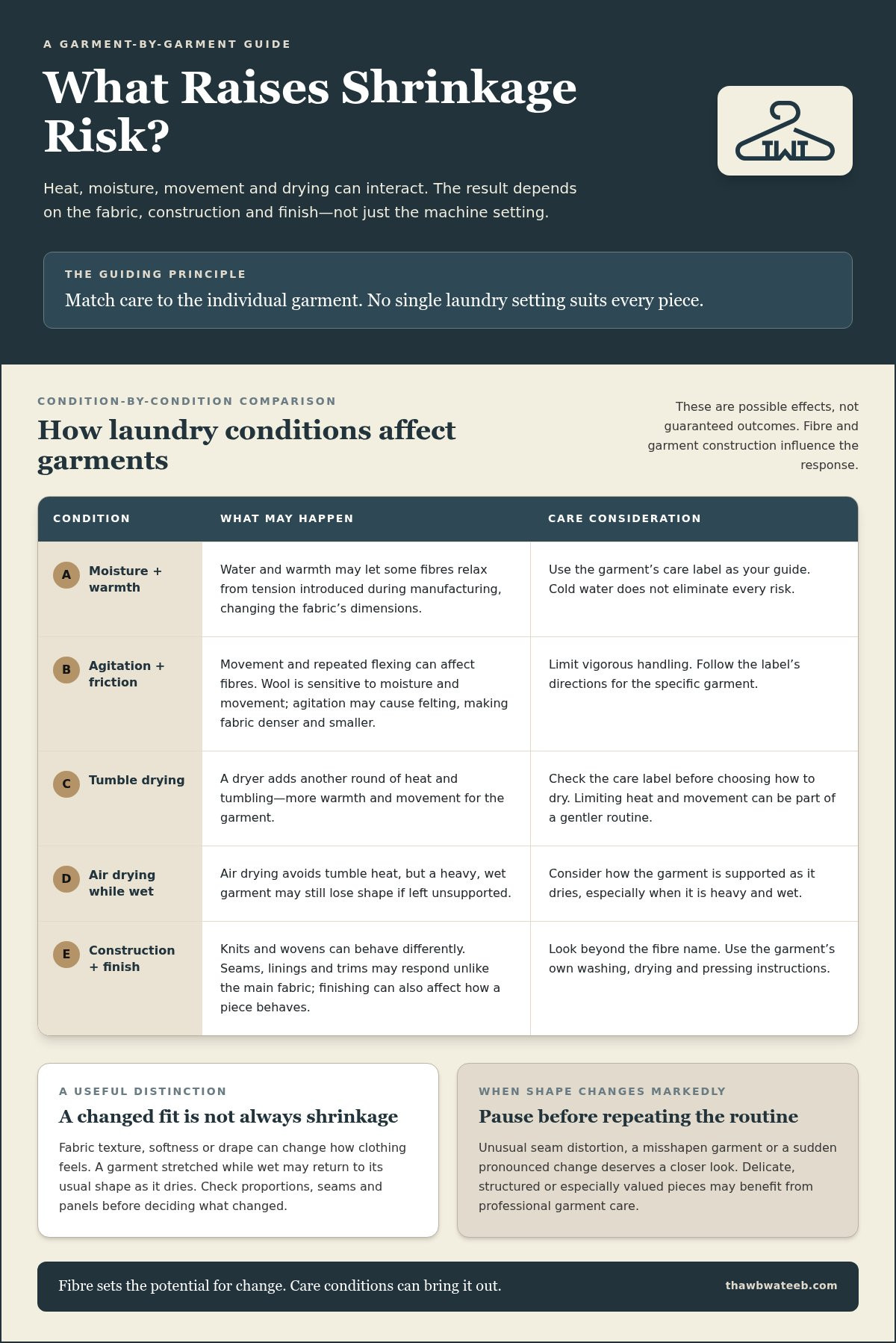
It’s also useful to distinguish shrinkage from other changes in fit. A garment may stretch while wet, then return to its usual shape as it dries. Seams can twist or distort, and a change in softness or drape can make clothing feel different without a clear reduction in its overall dimensions. If one area has changed markedly or the garment looks misshapen, don’t repeat the same care routine until you understand what happened.
No single laundry setting suits every garment. The right care depends on its fibres, construction and finish. That’s the principle behind how to prevent clothes from shrinking: make care decisions for the individual piece instead of relying on one rule for every load.
What does clothing shrinkage mean?
Think of a familiar cotton T-shirt. If it measures shorter from shoulder to hem or narrower across the body after laundering, its dimensions have changed. The effect may not be consistent across the whole garment. A body panel might draw in while the sleeves retain their shape, or seams may pucker and create an uneven outline.
Fit alone isn’t always proof of shrinkage. A fabric’s texture, drape or feel can change, and a garment stretched during wear may settle back into shape after washing. Compare its overall proportions and inspect the seams and panels before deciding what caused the difference.
Which laundry conditions can increase shrinkage risk?
Heat, moisture, mechanical movement and drying can interact. Warmth and water may encourage some fibres to relax, while agitation adds movement and friction. Tumble drying introduces further heat and motion. Air drying avoids tumble heat, but a heavy, wet garment may still lose shape if left unsupported. None of these conditions guarantees shrinkage. The fibre and construction influence how each piece responds.
Routine changes in feel or shape can happen with ordinary wear and care. A sudden, pronounced change, unusual seam distortion or damage to a structured garment is different. Don’t assume a hotter or more intensive wash will restore the original fit. Pause and consider professional garment care, particularly for delicate, tailored or especially valued clothing.
Why Clothes Shrink: The Role of Fibre, Heat, and Movement
Fabric doesn’t respond to laundering in isolation. Fibres have their own structure, and the way a garment was knitted, woven, stretched, dyed or finished also shapes how it behaves. During manufacturing, some natural fibres are held under tension. Moisture and warmth can allow them to relax towards a less stretched state, changing the fabric’s dimensions. The result depends on the fibre and garment, not just the washing machine setting.
Fibre properties set the potential for change; the laundry cycle determines the conditions that may bring it out. That helps explain why two garments washed together can emerge with different fits and feels. Understanding the difference is central to how to prevent clothes from shrinking without assuming one temperature or cycle suits everything.
How heat and agitation affect fabric
Water can soften or relax some fibres, while warmth may encourage that response. Movement adds friction and repeated flexing. Together, these conditions can shift how certain fibres sit within a fabric. Wool, for example, can be sensitive to moisture and movement. Agitation may cause fibres to interlock and create felting, which can make the fabric denser and smaller. Other fibres respond differently, so this isn’t a universal outcome.
A washing machine’s action is only part of the picture. A dryer adds heat and tumbling, exposing garments to another round of warmth and movement. Repeated high-stress care can compound wear: a garment may become less smooth, lose shape or change in fit over time. That doesn’t mean every wash causes measurable shrinkage, but repeated high heat and vigorous handling are poor defaults for garments that need more considered care.
Why garment construction and finishing matter
Knit fabrics have loops that can move and recover differently from the interlaced structure of woven cloth. Blends combine fibres, but that doesn’t guarantee a predictable middle ground. Fibre proportions, yarns, fabric construction and finishing treatments all influence how the finished garment responds. Even garments made from the same fibre can behave differently if one has been specially treated or constructed with more structure.
Look beyond the main fabric, too. A lining, seam, elastic detail or trim may react differently from the outer material. If one part changes more than another, the garment can pucker or sit unevenly instead of simply becoming smaller. This is one reason care instructions matter at the garment level. Follow the label’s directions for washing, drying and pressing rather than relying on a fabric name alone. The label is the most specific guidance for that piece.
For a delicate or structured item whose care needs are difficult to interpret, professional handling is an alternative to home laundering. Thawb Wa Teeb’s Signature Dry Cleaning & Couture Care provides garment care in Dubai. Wash & Iron and Steam Pressing suit different care needs.
How to Care for Cotton, Wool, Linen, and Blended Clothes
Fabric names are useful clues, not complete care instructions. Two cotton shirts may differ in weave, weight, finish and construction, so they may not respond alike to the same wash. Use the garment label as your guide, then consider how the fabric is made and whether the piece includes linings, trims or structured details.
Fibre content informs care, but it never replaces the garment’s own care label. The table below offers cautious starting points, not universal settings. Check the instructions on each piece before choosing a wash or drying method.
| Fibre or fabric | Common care concern | Cautious approach |
|---|---|---|
| Cotton | Heat and drying may affect dimensions, particularly in some untreated fabrics. | Follow the label’s temperature and drying guidance; avoid unnecessary high heat where the instructions permit. |
| Linen | Its weight, weave and finish can influence how it responds to washing and drying. | Use the care method on the label and handle the garment in a way that preserves its shape. |
| Denim | Dense fabric, seams and finishes may not respond uniformly to care. | Check the specific garment label instead of assuming all denim should be treated alike. |
| Wool and knits | Some pieces are sensitive to movement, moisture or shape changes during care. | Follow the label closely and avoid vigorous handling unless the instructions allow it. |
| Blends | Different fibres in one fabric may have different care needs. | Use the most restrictive relevant instruction and account for linings, trims and construction. |
Cotton, linen, and denim: manage heat and drying
Before washing cotton, linen or denim, read the label for water temperature and dryer instructions. If the label allows a cooler wash or air drying, those choices can reduce heat exposure, but they can’t guarantee that dimensions will never change. Avoid prolonged drying or unnecessary high heat where the garment’s instructions permit gentler care. A heavy denim piece, a light cotton knit and a crisp linen shirt may need different handling despite sharing familiar fibre names.
Construction matters, too. Weave, garment weight, pre-treatment and finishing can affect how fabric behaves. Seams and decorative details may respond differently from the main material. Treat the label as specific to the finished garment, not simply as advice for a fibre in the abstract.
Wool, knits, and blended fabrics: handle gently
Some wool and knit garments can be vulnerable to agitation or losing their shape while wet. That doesn’t mean every knit requires the same wash method: a fine sweater and a sturdy knitted item may have different label instructions. Blends add another consideration because their fibres can respond differently within one fabric. Follow the garment’s directions, using the most restrictive relevant guidance where care needs conflict. For a delicate or structured piece that feels difficult to assess, professional handling is a considered alternative to home laundering.
If you’re learning how to prevent clothes from shrinking, the practical takeaway is simple: identify the garment, inspect its label and choose care according to the complete piece rather than its headline fibre content.
A Practical Laundry Routine to Help Prevent Clothes from Shrinking
A little preparation can make laundry more garment-focused. Rather than defaulting every item to the same cycle, use these steps and let each piece’s care instructions guide your choices. Cold water may reduce heat exposure, but it doesn’t guarantee zero shrinkage. Fibre, construction and drying still matter.
- Read the care label first. Check the washing, drying and pressing symbols before placing a garment in the machine. If an item calls for a specific method, follow that instruction rather than assuming a cooler wash makes another approach suitable. For broader garment-care context, explore this premium laundry care guide.
- Sort by care needs, not just colour. Separate garments that need different temperatures, cycles or drying methods. Turn suitable items inside out to help protect the outer surface, and use a laundry bag for pieces whose labels or construction make that appropriate. Avoid overloading the machine so garments have room to move and rinse.
- Choose the cycle and water temperature the label allows. Select a gentler cycle when the garment instructions call for it. A cool wash can reduce heat exposure, but it isn’t a universal safeguard: movement, fabric properties and drying can also affect fit. Don’t use a more intensive cycle just because several items are in the same load.
- Remove items promptly and reshape where permitted. Take garments out when the wash finishes rather than leaving them bunched in the drum. Gently return suitable pieces to their intended shape, following the label’s guidance for handling them while damp. Avoid pulling or stretching fabric, especially if it feels delicate or heavy when wet.
- Dry with care and stop when the garment is ready. Air dry when the label allows, or choose a permitted low-heat dryer option. Check the item before it’s fully dry and stop the cycle if it no longer needs extra time. Avoid unnecessary overdrying, which adds heat and tumbling without benefit. If air drying, support the garment in a way that suits its shape and weight.
Make the routine work for each garment
Consistency helps, but the label remains the deciding guide. A T-shirt and a structured top may both be washable yet need different handling. If instructions are unclear, or the item is delicate, structured or especially valued, professional garment care is an alternative to experimenting at home. Thawb Wa Teeb provides professional garment care in Dubai, with door-to-door pickup and delivery.
For garments that need careful handling, you can arrange garment care pickup with Thawb Wa Teeb in Dubai.
When Professional Garment Care Is the More Reassuring Choice
Home laundering is practical for many everyday pieces, but some garments call for more considered handling. Delicate fabric, a structured shape, intricate embellishment or a special finish can make it harder to choose a suitable wash and drying method at home. The label is still essential: professional care should follow its instructions, not replace them. Expert handling can help care for a valued garment, but it can’t promise to reverse shrinkage or prevent every change in fabric or fit.
Which garments may benefit from specialist handling?
Pause before washing a tailored jacket with a lining, a delicate blouse with attached embellishment or a cherished garment whose finish you’re unsure how to care for. Their different components may not respond alike, and the full garment can be more complex than its main fabric suggests. Check the care label and consider whether its recommended method is practical at home. If the instructions call for dry cleaning, or the piece feels too valuable to risk experimenting with, professional handling may offer greater peace of mind.
Dry cleaning is a distinct care method, often relevant when a garment’s label specifies it or its fabric and construction need an approach different from a regular home wash. It isn’t necessary for every item, and it isn’t a universal guarantee against shrinkage. Wash & Iron is a laundry and finishing option, while Steam Pressing focuses on pressing garments. The right choice depends on the label and the care the piece needs. For couture garments, this guide to signature dry cleaning for couture offers more context on why construction and delicate details deserve attention.
If you’re unsure how to prevent clothes from shrinking without compromising a delicate or structured piece, choose a care approach that respects the garment rather than applying a routine meant for everyday laundry. Professional garment care can make handling valued clothing more convenient while keeping its specific care instructions central.
A convenient care option for Dubai wardrobes
Thawb Wa Teeb provides professional laundry and dry-cleaning services in Dubai, including Signature Dry Cleaning & Couture Care, Wash & Iron and Steam Pressing. Customers can arrange free door-to-door pickup and delivery across Dubai, scheduling online or through WhatsApp. It’s a convenient option for delicate, structured or especially valued garments that call for considered care, without suggesting every item needs professional attention.
For pieces you’d rather entrust to professional handling, arrange professional garment care with Thawb Wa Teeb.
Make Thoughtful Garment Care a Lasting Habit
Protecting a wardrobe is less about finding one perfect laundry setting and more about making considered choices over time. Let each garment’s needs guide your routine, and treat uncertainty as a reason to pause rather than guess. That small moment of attention can help you care for clothing with greater confidence.
To make how to prevent clothes from shrinking easier to put into practice, keep a note of pieces with special care instructions or details you tend to forget. Before their next clean, use that reminder to choose a suitable approach. Over time, you’ll build a clearer sense of what works for your wardrobe without expecting every fabric to behave the same way.
For delicate, structured or especially valued pieces, professional care can be a reassuring next step. Thawb Wa Teeb provides professional handling for garments and textiles, with convenient options for Dubai wardrobes.
Arrange convenient garment care with Thawb Wa Teeb, and take the next step towards caring for your wardrobe with confidence.
Frequently Asked Questions
Does cold water prevent clothes from shrinking?
Cold water can reduce heat exposure, but it can’t guarantee that clothes won’t shrink. Fabric construction, movement during washing and the drying method also matter. When considering how to prevent clothes from shrinking, treat cooler water as one possible precaution, not a substitute for the garment’s care instructions. If the label specifies a particular wash method, follow it. Some delicate fabrics can still change shape even in cold water.
Can clothes shrink even when I follow the care label?
Yes, a garment can still change despite following its care instructions. Fibres, seams, linings and trims may respond differently, and the label may not explain every detail of how a garment will behave. Check that you followed the instructions for both washing and drying, since the latter is easy to overlook. If a valued item changes noticeably, pause before washing it again and consider professional assessment rather than trying an untested fix.
What should I do if clothes shrink after washing?
First, don’t put the garment through another wash or apply heat in an attempt to restore its fit. If it’s still damp, check the care label before gently reshaping it. Avoid pulling firmly, which could distort seams or stretch the fabric unevenly. Let it dry as instructed, then assess the fit once fully dry. If the change is pronounced or the garment is valuable, professional garment care may help you decide on a suitable next step, though the original dimensions can’t be guaranteed.
Do pre-shrunk clothes still shrink?
Yes. “Pre-shrunk” means the fabric has been treated to reduce later dimensional change, not that it’s immune to it. The garment can still respond to care conditions, and the label’s washing and drying instructions remain important. A pre-shrunk cotton top, for example, shouldn’t automatically be treated as suitable for high-heat drying. Follow the instructions for that specific piece, especially if it has a finish, trim or construction detail that needs particular care.
How can I tell whether a garment has shrunk or stretched out of shape?
Look at the garment’s proportions rather than relying on how it feels alone. Shorter body length or sleeves, or a narrower fit across several areas, may suggest shrinkage. A stretched or distorted item may instead have uneven lengths, sagging areas, twisted seams or a changed outline. Consider where the difference appears: one misshapen seam doesn’t necessarily mean the whole garment shrank. If you’re unsure, avoid further washing until you’ve checked the care instructions.
Why do clothes sometimes shrink more in the dryer than in the washer?
A dryer can add heat and tumbling after a garment has already been exposed to water and movement in the washer. For fibres sensitive to warmth, that extra combination may increase the chance of a change in dimensions. The effect depends on the material and garment, so it won’t happen equally to every item. Check the label before drying, and don’t assume a garment safe to wash is also suitable for a heated dryer.